

Leo VI the Wise
Images

Leo VI CNG
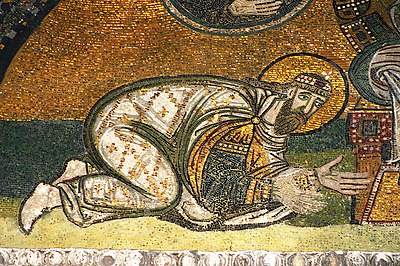


The Scholar-Emperor
Leo VI, reigning from 886 to 912 AD, stands as a distinctive figure in Byzantine history, primarily recognized for his profound intellectual engagement and the continuation of the Macedonian Renaissance. Unlike many rulers whose legacies are defined solely by military conquests or territorial expansion, Leo VI's epithet, 'the Wise,' underscores his deep commitment to scholarship, literature, and theological discourse. His reign built upon the foundations laid by his predecessor, Basil I, fostering an environment where classical learning was not only preserved but actively advanced.
This era saw a resurgence of interest in ancient Greek philosophy, rhetoric, and scientific texts, alongside the production of new theological treatises and historical accounts. Leo VI himself was a prolific writer, contributing to legal and religious scholarship, demonstrating a personal dedication that permeated his imperial administration. This intellectual climate was crucial for the Byzantine Empire, serving as a bulwark of classical knowledge in a rapidly changing world and solidifying its identity as a center of learning and culture.
Navigating the Currents of Conflict and Change
While Leo VI's reign is celebrated for its intellectual achievements, it was also a period marked by significant military pressures and geopolitical shifts. The Byzantine Empire faced formidable adversaries, including the Bulgarians under Tsar Simeon I, who posed a persistent threat in the Balkans, and Arab forces who continued to challenge Byzantine control in regions like Sicily and the Aegean. These military engagements, often resulting in defeats or costly stalemates, underscore the precarious balance of power in the Eastern Mediterranean.
Leo VI's administration had to contend with these external threats while simultaneously managing internal affairs and fostering cultural growth. This duality highlights the complex challenges faced by Byzantine emperors, who were expected to be both skilled military leaders and enlightened patrons of the arts and sciences. The empire's resilience during this period speaks to its robust administrative structures and the enduring cultural capital cultivated under rulers like Leo VI.
Administrative Evolution
A significant aspect of Leo VI's reign involved the deliberate modification and discontinuation of ancient Roman institutions, signaling a move towards a more distinctly Byzantine administrative framework. The formal cessation of certain offices, such as the separate Roman consul, represented a pragmatic adaptation rather than a rejection of Roman heritage. These institutions, by Leo's time, had largely become symbolic, their original functions having long since been absorbed into the imperial bureaucracy.
By streamlining the administrative apparatus and shedding these anachronistic titles, Leo VI aimed to enhance the efficiency and coherence of the empire's governance. This process of administrative evolution was crucial for maintaining the empire's strength and adaptability, allowing it to respond effectively to the challenges of its era. It reflects a sophisticated understanding of governance, where tradition was respected but not allowed to impede progress or the development of a unique imperial identity.
The Enduring Significance of Leo's Intellectual Legacy
The long-term impact of Leo VI the Wise's reign is multifaceted. His unwavering support for the Macedonian Renaissance cemented the Byzantine Empire's reputation as a custodian of classical knowledge and a vibrant center of intellectual activity. This cultural flourishing had profound implications, influencing the development of Byzantine art, literature, and theology, and indirectly impacting the intellectual traditions of both Western Europe and the Islamic world through the preservation and transmission of ancient texts.
Furthermore, his administrative reforms, particularly the discontinuation of outdated Roman offices, contributed to the evolution of a more centralized and efficient Byzantine state. Leo VI demonstrated that imperial power could be wielded not only through military strength but also through intellectual leadership and a commitment to cultural advancement. His reign serves as a testament to the enduring power of knowledge and the importance of adapting institutions to meet the demands of a changing world, leaving a legacy that continues to resonate in historical scholarship.
Connecting Leo VI to Broader Historical Narratives
Leo VI the Wise's reign offers a valuable lens through which to examine broader historical trends in the early medieval period. His engagement with classical learning places him within a context of intellectual continuity, bridging the gap between the ancient world and the emerging European and Islamic civilizations. The military challenges he faced are indicative of the constant geopolitical flux of the era, where empires vied for dominance and cultural exchange occurred alongside conflict.
His administrative reforms, such as the phasing out of Roman consuls, reflect a larger pattern of state-building and the formation of distinct regional identities in the post-Roman West and the Byzantine East. By studying Leo VI, we gain insight into the complex interplay of culture, politics, and military strategy that shaped the medieval world, highlighting how intellectual pursuits could coexist with and even bolster imperial power. His reign exemplifies the sophisticated governance and rich cultural tapestry of the Byzantine Empire, a civilization that played a pivotal role in shaping subsequent historical developments.
See also
Frequently Asked Questions
Who was Leo VI the Wise?+
Why was Leo VI called "the Wise"?+
What did Leo VI do to help the empire's learning?+
Did Leo VI fight wars?+
How did Leo VI change old Roman offices?+
Based on content from Wikipedia · Licensed under CC BY-SA 4.0