

Launch Vehicle
Images

Launch vehicle


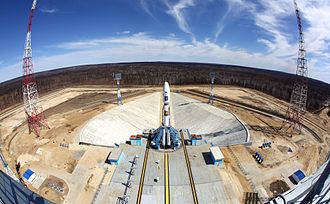


The Physics and Engineering of Escaping Earth's Grasp
Launch vehicles are sophisticated systems designed to overcome Earth's formidable gravitational pull and atmospheric resistance, enabling payloads to reach orbital velocity or escape velocity. Their design is dictated by fundamental physics, primarily Newton's laws of motion and thermodynamics. The immense thrust required is generated by controlled combustion of propellants, typically liquid or solid fuels and oxidizers.
Liquid-propellant rockets, like those using liquid hydrogen and oxygen, offer higher specific impulse and throttleability, crucial for precise mission control. Solid-propellant rockets, while simpler and providing high initial thrust, are generally less controllable. The concept of staging is paramount; by jettisoning spent stages, the vehicle's mass-to-thrust ratio improves dramatically, allowing subsequent stages to achieve higher velocities more efficiently.
This multi-stage approach is a cornerstone of modern rocket engineering, enabling payloads to reach speeds exceeding 28,000 km/h for low Earth orbit.
A Trajectory Through Rocketry's Past
The lineage of launch vehicles traces back to ancient Chinese fire arrows, evolving through centuries of incremental innovation. The theoretical groundwork for modern rocketry was laid by scientists like Konstantin Tsiolkovsky, who in the early 20th century derived the rocket equation, a fundamental formula relating a rocket's velocity change to its exhaust velocity and mass ratio. Robert Goddard's practical experiments, including the first liquid-fueled rocket launch in 1926, proved the viability of his theories.
The mid-20th century saw an explosive acceleration in development, largely driven by the geopolitical tensions of the Cold War and the ensuing Space Race. The Soviet Union's R-7 Semyorka, which launched Sputnik, and the American Saturn V, the behemoth that carried astronauts to the Moon, represent pivotal milestones, showcasing escalating capabilities in payload capacity and mission complexity.
The Indispensable Role in Global Infrastructure and Discovery
Launch vehicles are not merely instruments of exploration; they are critical components of contemporary global infrastructure and scientific advancement. They deploy the vast constellations of satellites that underpin modern communication, navigation (e.g., GPS, Galileo), and Earth observation systems. These systems are vital for everything from financial transactions and weather forecasting to disaster management and environmental monitoring.
Furthermore, launch vehicles provide access to platforms for unprecedented scientific research. Space telescopes, such as the James Webb Space Telescope, operate beyond the obscuring effects of Earth's atmosphere, offering unparalleled insights into cosmology and astrophysics. The ability to place experiments in microgravity environments on the International Space Station also facilitates research in fields like medicine, materials science, and biology, yielding discoveries that have direct terrestrial applications.
The Mechanics of Ascent
The launch sequence of a modern vehicle is a meticulously orchestrated ballet of engineering and physics. Ignition of the first stage engines generates immense thrust, overcoming the vehicle's weight and atmospheric drag. As the rocket ascends, it follows a carefully calculated trajectory, often a gravity turn, to efficiently gain horizontal velocity.
Once the first stage expends its propellant, it is jettisoned, and the second stage ignites, continuing the acceleration. This process repeats for subsequent stages. Fairings, which protect the payload during atmospheric ascent, are typically discarded once the vehicle reaches thinner atmospheric layers.
The final stage is responsible for achieving the precise velocity and altitude required for the intended orbit or trajectory, a process demanding extreme accuracy. The entire ascent phase is monitored and controlled by sophisticated guidance systems.
Evolutionary Trends and Future Horizons in Launch Systems
The landscape of launch vehicles is currently undergoing a significant transformation, driven by the pursuit of lower costs, increased launch cadence, and enhanced sustainability. The advent of reusable rocket technology, pioneered by companies like SpaceX with its Falcon 9 and Falcon Heavy, represents a paradigm shift. By recovering and refurbishing first stages and sometimes even payload fairings, the cost per launch is dramatically reduced, opening up space access to a wider range of actors. Future developments are exploring advanced propulsion systems, such as electric or nuclear propulsion, for deep space missions, and novel launch concepts like space elevators or skyhooks, though these remain largely theoretical.
The increasing demand for satellite constellations for global internet coverage and Earth observation is spurring the development of smaller, more frequent launch vehicles, often referred to as 'small launch vehicles,' catering to specific payload requirements and offering greater flexibility.
Go deeper
Based on content from Wikipedia · Licensed under CC BY-SA 4.0