

Kite Experiment
Images

Kite experiment




Challenging the Unknown
In the mid-18th century, the nature of lightning remained one of science's most profound enigmas. While the concept of 'electrical fluid' was emerging, its connection to the terrifying spectacle of thunderstorms was largely speculative. Benjamin Franklin, a polymath renowned for his scientific curiosity and inventive spirit, was deeply intrigued by this phenomenon. He proposed that lightning was not a divine act or a unique celestial event, but rather a colossal electrical discharge occurring naturally in the atmosphere.
To empirically validate this hypothesis, Franklin conceived of an audacious experiment: to capture atmospheric electricity using a kite flown during a thunderstorm. This was a high-stakes endeavor, as the forces involved were poorly understood and potentially lethal. The experiment, conducted in 1752 with the assistance of his son William, aimed to bridge the gap between theoretical electrical principles and the raw power of nature, seeking tangible proof of electricity's presence in the skies.
The Mechanics of Capturing Atmospheric Electricity
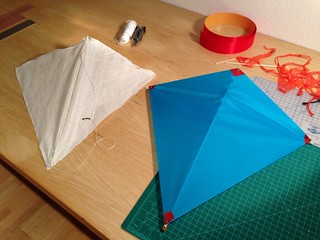
Franklin's experimental design was a masterclass in ingenuity, leveraging the properties of materials and electrical conductivity. He constructed a kite from silk, chosen for its relative resilience and insulating properties when dry. Crucially, a sharp metal wire was affixed to the apex of the kite, designed to act as a lightning rod, concentrating any atmospheric electrical charge.
The kite string, typically an insulator, was deliberately allowed to become saturated with rainwater during the storm, rendering it conductive. Franklin's setup involved holding a metal key by its insulating loop, attached to the lower end of the wet string. He maintained a safe distance from the string itself, ensuring that if electricity was conducted, it would arc from the key to his knuckle rather than directly through his body.
The successful collection of static electricity was indicated by sparks jumping from the key to his hand, a clear and undeniable manifestation of atmospheric electrical charge being channeled to the ground.
From Scientific Proof to Practical Application
The profound significance of the kite experiment lies not only in its confirmation that lightning is electrical but also in its direct contribution to public safety. Franklin's demonstration provided irrefutable evidence that electricity could be conducted from the atmosphere. This realization was the direct precursor to his invention of the lightning rod.
By understanding how to attract and safely dissipate electrical charges, Franklin devised a system to protect buildings from lightning strikes. The lightning rod, essentially a scaled-up application of the principles demonstrated in his kite experiment, intercepts lightning and channels its immense energy harmlessly into the earth, thereby preventing fires and structural damage. This innovation revolutionized architecture and safety standards, transforming a once-feared natural hazard into a manageable phenomenon and saving countless lives and properties.
Franklin's Enduring Impact on Electrical Science and Beyond
Benjamin Franklin's kite experiment stands as a pivotal moment in the history of science, marking a transition from superstition and speculation to empirical investigation of electrical phenomena. It not only solidified the understanding that lightning and terrestrial electricity were fundamentally the same but also spurred further research into electrical properties and applications. The experiment's success emboldened scientists to explore other electrical phenomena and paved the way for subsequent discoveries that would lead to the development of technologies like the telegraph, electric motors, and eventually, the widespread electrification of society.
Franklin's methodical approach and willingness to conduct a dangerous experiment underscore the spirit of scientific inquiry: to observe, hypothesize, test, and understand the world, even when facing the unknown. His legacy continues to inspire, reminding us of the power of curiosity and the transformative potential of scientific discovery.
Broader Implications and Related Scientific Pursuits
The kite experiment's success had ripple effects throughout the scientific community. It validated the burgeoning field of electricity and encouraged further experimentation. Scientists like Giovanni Battista Beccaria in Italy and Jacques de Romas in France conducted similar experiments, some even claiming to have achieved similar results independently or even prior to Franklin, though Franklin's detailed documentation and subsequent practical applications, particularly the lightning rod, cemented his place in history.
The experiment also highlighted the importance of understanding atmospheric electricity, leading to investigations into other meteorological phenomena and the electrical properties of the atmosphere. It underscored the interconnectedness of seemingly disparate natural events and the power of scientific methodology to reveal underlying unity. This pursuit of understanding natural forces, from the smallest spark to the grandest storm, continues to drive scientific exploration today.
See also
Frequently Asked Questions
What was Benjamin Franklin's kite experiment?+
How did Franklin use a kite to catch lightning?+
Why did Franklin choose silk for his kite?+
What did Franklin learn from the sparks that jumped from the key?+
How did Franklin's kite experiment help people stay safe?+
Based on content from Wikipedia · Licensed under CC BY-SA 4.0