

Kasbah
Images

Kasbah Taourirt in Ouarzazate 2011
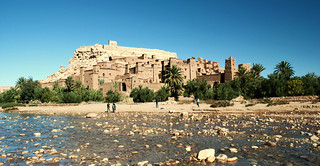


Defining the Kasbah
The term 'kasbah' denotes a specific type of urban fortification, most commonly referring to the citadel or the fortified quarter of a city. Originating from the Arabic word 'qaṣaba', which literally translates to 'fortress', the kasbah embodies a concentrated center of defense and authority within a larger urban settlement. Its architectural form could range from a singular, imposing fortress housing the ruling elite and military garrison, to an entire district characterized by defensive walls, narrow winding streets, and strategically placed watchtowers.
In certain contexts, particularly in Algeria, the term has been extended to encompass the entire historic medina, highlighting the pervasive influence of these fortified elements on urban morphology and identity. The concept is so fundamental that cognates like the Spanish 'alcazaba' share the same linguistic root, underscoring its widespread historical significance across different cultures and regions.
Historical Trajectory
The historical development of kasbahs is deeply intertwined with the evolution of urbanism and military strategy in North Africa and the Middle East. These structures emerged as essential components of city planning, designed to provide a robust defense against external threats and internal unrest. Their construction was often commissioned by rulers and powerful families who sought to consolidate their authority and protect their burgeoning cities.
Over centuries, kasbahs adapted to changing warfare techniques and societal needs, sometimes transforming from purely military strongholds into administrative centers, palaces, or even residential complexes. The strategic placement of kasbahs often dictated the growth patterns of cities, with newer developments frequently expanding outwards from these secure cores. This historical layering provides invaluable insights into the socio-political and economic forces that shaped these regions.
The Multifaceted Significance of the Kasbah
The significance of the kasbah extends far beyond its purely military function. As the citadel, it often represented the pinnacle of political power, housing the governor, administrative offices, and the treasury. This concentration of authority made the kasbah the nerve center of the city, influencing its governance, economy, and social hierarchy.
Furthermore, the kasbah served as a vital refuge during sieges or periods of instability, offering a secure haven for the population and safeguarding valuable resources. Its imposing architecture acted as a symbol of the city's resilience and the ruling power's strength, projecting an image of security and control. In essence, the kasbah was a complex organism, integral to the city's survival, governance, and collective identity.
Mechanisms of Defense
The defensive capabilities of a kasbah were achieved through a combination of strategic design and architectural features. Thick, high walls were paramount, often constructed from durable materials like stone or rammed earth, designed to withstand attacks. Towers, strategically placed along the perimeter, provided elevated vantage points for archers and lookouts, allowing defenders to survey the surrounding area and repel attackers.
Entrances were typically narrow and heavily guarded, often featuring complex layouts like bent entrances or inner courtyards to impede enemy progress. Some kasbahs incorporated moats or natural defensive features like cliffs. Internally, they were designed to be self-sufficient, often containing wells for water, granaries for food storage, and barracks for soldiers, enabling them to withstand prolonged sieges.
The layout of streets within the kasbah could also be designed to confuse and trap invaders.
Enduring Legacy
In contemporary times, the role of kasbahs has transitioned from active military fortifications to significant cultural and historical landmarks. Many well-preserved kasbahs are now recognized as UNESCO World Heritage sites or national monuments, attracting global attention for their architectural merit and historical importance. They serve as invaluable educational resources, offering tangible evidence of past urban planning, defensive strategies, and societal structures. Tourism centered around these sites contributes to local economies and fosters an appreciation for cultural heritage.
Furthermore, the architectural principles and aesthetic qualities of kasbahs continue to inspire contemporary architects and urban designers, demonstrating their lasting impact on the built environment and our understanding of historical urbanism.
Go deeper
Based on content from Wikipedia · Licensed under CC BY-SA 4.0