

John Bardeen: The Man Who Won Two Nobel Prizes!
Images
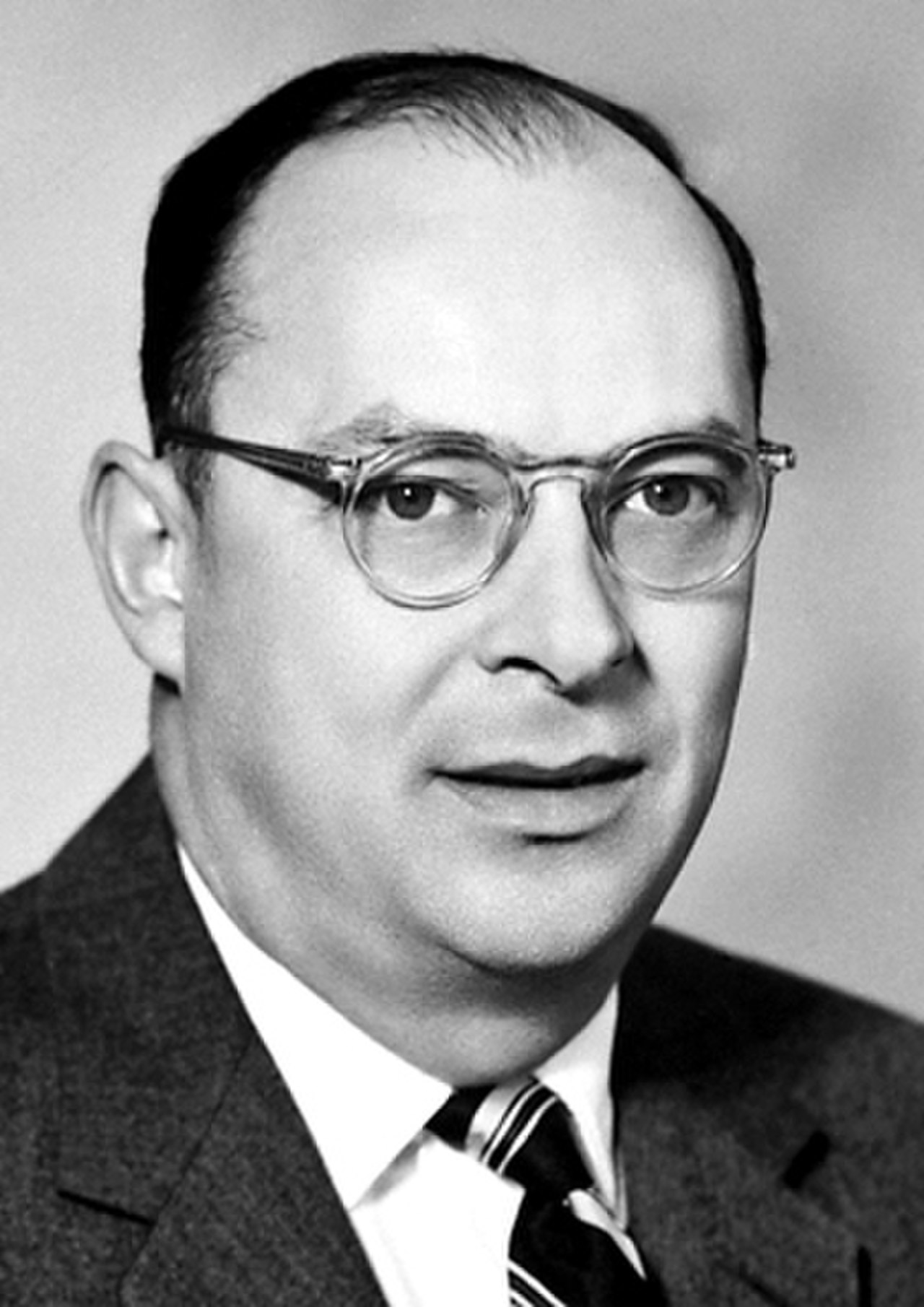
John Bardeen
Foundational Education and Early Career
John Bardeen was born on May 23, 1908, in Madison, Wisconsin. His academic journey was marked by exceptional talent and a deep curiosity for the fundamental principles of science and engineering. He earned his bachelor's and master's degrees in electrical engineering from the University of Wisconsin, a testament to his early interest in practical applications of science.
He then pursued advanced studies at Princeton University, where he obtained his Ph.D. in physics. Following his doctoral work, Bardeen served during World War II, contributing his expertise to the war effort. Post-war, he joined Bell Laboratories, a hub of scientific innovation, and later took on a professorship at the University of Illinois.
These environments provided the fertile ground for his groundbreaking research in condensed matter physics, a field dedicated to understanding the properties of solid and liquid materials.
The Transistor
Bardeen's first Nobel Prize in Physics, awarded in 1956 alongside William Shockley and Walter Brattain, was for their invention of the transistor. This semiconductor device was a monumental leap forward, replacing the bulky, power-hungry vacuum tubes that dominated electronics at the time. The transistor's ability to amplify and switch electronic signals with remarkable efficiency and reliability enabled the miniaturization of electronic components.
This innovation was the bedrock upon which the entire digital revolution was built, making possible the development of virtually every modern electronic device, from portable radios and televisions to complex computers and telecommunications systems. The transistor didn't just improve existing technology; it fundamentally reshaped society, initiating the Information Age and transforming global communication and data processing.
Unlocking New Frontiers
Bardeen's second Nobel Prize in Physics, received in 1972 with Leon Cooper and Robert Schrieffer, recognized their development of the microscopic theory of superconductivity, famously known as the BCS theory. This theory provided a profound explanation for how, under certain conditions, materials can conduct electricity with absolutely zero electrical resistance. This phenomenon, superconductivity, has immense practical implications.
It is crucial for technologies such as Magnetic Resonance Imaging (MRI), which allows non-invasive visualization of the human body, and Nuclear Magnetic Resonance (NMR) spectroscopy, a vital tool in chemistry and biology. Furthermore, advancements in superconductivity are critical for developing powerful electromagnets used in particle accelerators and for future energy transmission systems that could eliminate power loss.
A Legacy of Innovation and Influence
John Bardeen's unique achievement of winning two Nobel Prizes in Physics places him in an exceptionally elite group of scientists. He is one of only three individuals to have received multiple Nobel Prizes in the same scientific category. His profound impact extends beyond his specific inventions; he is celebrated for his rigorous scientific approach, his collaborative spirit, and his ability to bridge theoretical physics with practical engineering.
In 1990, Life magazine recognized his immense influence by including him on its list of '100 Most Influential Americans of the Century.' Bardeen's legacy is not merely historical; his work continues to inspire new generations of scientists and engineers, driving innovation in fields ranging from quantum computing to advanced materials science, underscoring his enduring significance in the scientific landscape.
Go deeper
Frequently Asked Questions
Who was John Bardeen?+
What did John Bardeen invent that won his first Nobel Prize?+
Why is the transistor important?+
What is superconductivity and why did Bardeen win his second Nobel Prize?+
How does superconductivity help in everyday life?+
Based on content from Wikipedia · Licensed under CC BY-SA 4.0