

Java War
Images

USS Constitution



The Erosion of Javanese Sovereignty and the Seeds of Revolt
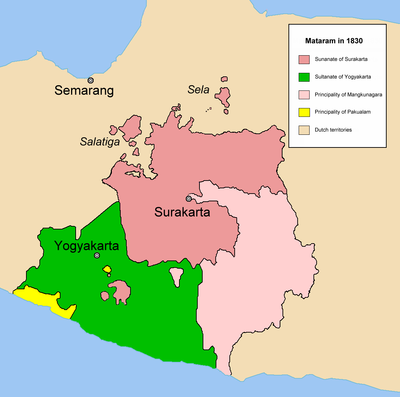
The Java War, also known as the Diponegoro War, erupted in 1825, marking a dramatic turning point in Javanese history. Its roots lie in the complex political landscape of 19th-century Java, where the Dutch colonial presence, though fluctuating due to brief French and British interregnums, was steadily reasserting and centralizing its authority. The traditional power structures, established by treaties like the 1755 Treaty of Giyanti, were being systematically undermined at the expense of native Javanese princely states.
The deaths of Sultans Hamengkubuwono III and IV created a power vacuum and increased Dutch influence within the Yogyakarta court. Prince Diponegoro, the eldest son of Hamengkubuwono III, found himself increasingly estranged from the new regency and the colonial administration. He perceived the Dutch actions as a betrayal of Javanese traditions and autonomy. Compounding these political grievances was a growing millenarian sentiment, with Diponegoro claiming divine visions that fueled his resolve.
The immediate trigger for the war was a seemingly minor dispute over a government road project in July 1825, which symbolized for many Javanese the encroaching and disrespectful nature of Dutch rule.
From Siege to Guerrilla Warfare
The initial phase of the Java War saw Prince Diponegoro's forces launch a bold siege of Yogyakarta. However, this was eventually broken by the arrival of a significant Dutch relief force led by General H. M. de Kock.
Diponegoro then shifted his operations northward towards Surakarta, engaging Dutch troops in a series of tactical victories throughout mid-1826. Despite these successes, his forces suffered a crucial defeat west of the city, forcing a strategic retreat. The rebellion was not confined to Diponegoro's immediate followers; allied leaders ignited uprisings along Java's north coast and in East Java, transforming the conflict into a widespread insurgency.
The war evolved into a protracted guerrilla campaign, characterized by Diponegoro's deep popular support and the Dutch struggle with insufficient manpower. This phase highlighted the challenges of counterinsurgency in a vast and familiar terrain for the rebels, where local knowledge and popular backing provided a significant advantage.
Fortifications and Fragmentation
By 1827, the Dutch military strategy underwent a significant transformation with the implementation of the 'Bentengsteelsel' system, a network of field fortifications. These strategically placed strongholds allowed the Dutch to gradually constrict Diponegoro's movements, limit his territorial control, and systematically dismantle his support base. This counter-insurgency tactic proved highly effective, gradually turning the tide of the war against the rebels.
Diponegoro's operational sphere was increasingly confined to the western regions of Yogyakarta. Subsequent years saw further setbacks for the Javanese forces in 1828 and 1829, leading to the depletion of their remaining armies and the capture or death of key commanders. The effectiveness of the Dutch fortification strategy, combined with dwindling resources and manpower for the rebels, created an insurmountable disadvantage.
The Capture of Diponegoro and the Aftermath of Devastation
The final stages of the Java War were marked by the systematic dismantling of rebel resistance. Following a decisive defeat in September 1829, Prince Diponegoro was left leading only a small band of guerrilla fighters. Ironically, his capture occurred during an attempt at negotiations with General de Kock in Magelang.
Diponegoro was subsequently exiled to Sulawesi, where he remained until his death in 1855. The consequences of the Java War were catastrophic for the island. It represented the last major armed challenge to Dutch rule until the Indonesian National Revolution over a century later.
The war resulted in the further erosion of the powers and territories of the Javanese princely states, solidifying Dutch uncontested dominance. The human toll was immense, with estimates suggesting at least 200,000 Javanese civilians perished due to direct violence, disease, and starvation. Military casualties were also substantial, with approximately 15,000 Dutch soldiers and around 20,000 Javanese rebels losing their lives.
Despite the enormous cost of the war, the Dutch colonial government implemented the Cultivation System in its aftermath, which generated vast revenues, underscoring the complex economic and political legacy of the conflict.
Key Figures and Societal Transformation
At the heart of the Java War was Prince Diponegoro, a figure of immense charisma and conviction, whose leadership galvanized widespread Javanese resistance against colonial encroachment. His claims of divine mandate and his deep connection to Javanese spiritual traditions resonated powerfully with the populace, transforming the conflict into a quasi-religious struggle for liberation. Opposing him was the Dutch military apparatus, personified by General H.
M. de Kock, whose strategic acumen, particularly the implementation of the Bentengsteelsel, proved decisive in quelling the rebellion. Beyond these central figures, the war involved numerous Javanese princes and local leaders whose allegiances were often complex and shifting, reflecting the fragmented political landscape. The war's conclusion irrevocably altered Javanese society.
The traditional aristocracy lost significant political and economic power, paving the way for a more direct and centralized form of Dutch colonial administration. The immense loss of life and the subsequent economic policies, like the Cultivation System, profoundly impacted the social fabric and economic development of Java for generations, leaving a lasting legacy of resistance and resilience.
See also
Frequently Asked Questions
What was the Java War and when did it start?+
Who was Prince Diponegoro and why did he fight?+
What sparked the war?+
How did the Dutch try to win the war?+
What happened to the war in the end?+
Based on content from Wikipedia · Licensed under CC BY-SA 4.0