

J. P. Morgan
Images
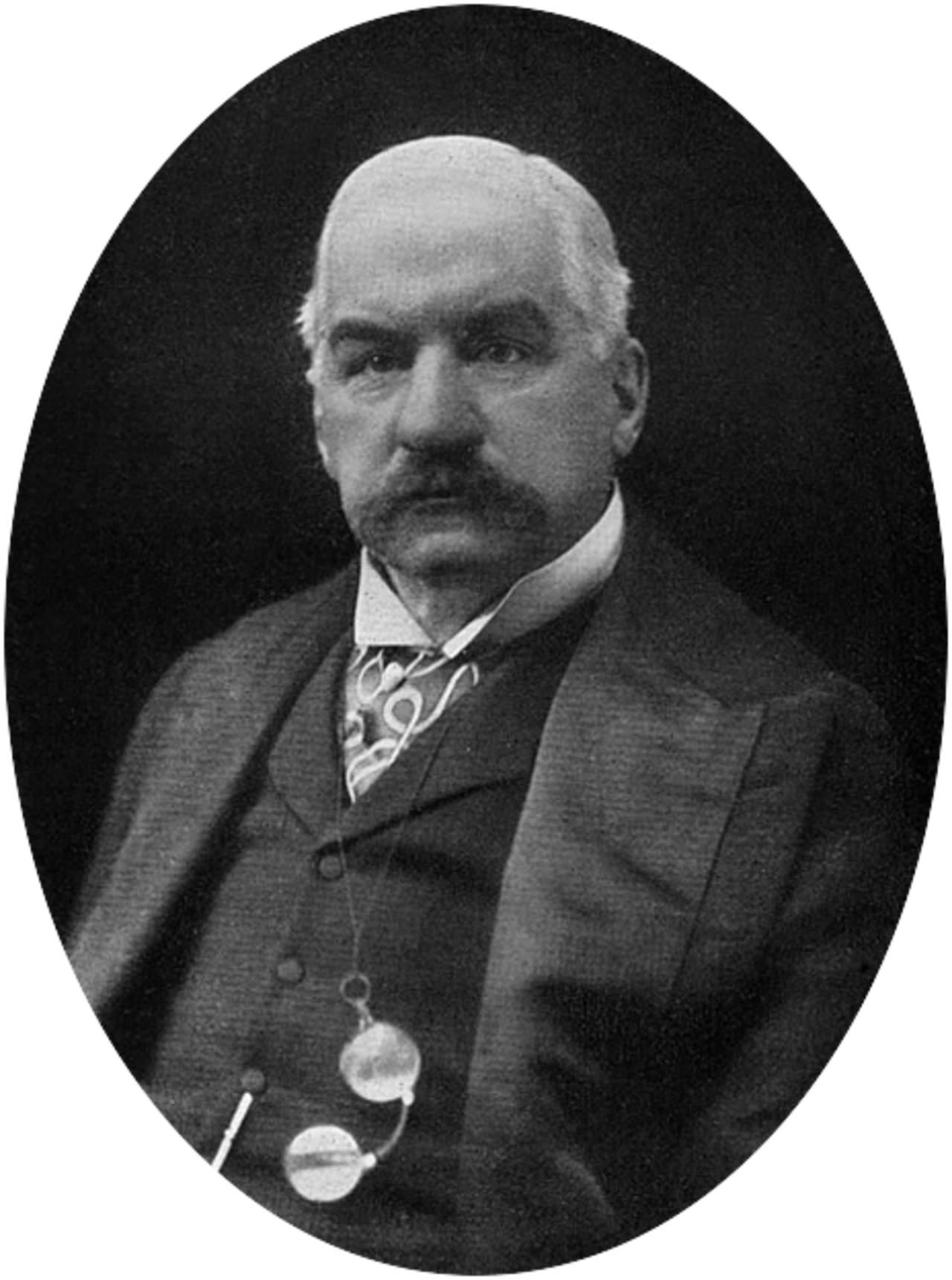
J. P. Morgan
The Genesis of a Financial Dynasty
J. P. Morgan was not merely a banker; he was an architect of modern American capitalism.
Born into privilege with a father, Junius Spencer Morgan, who was already a prominent financier, J. P. Morgan inherited and expanded upon a legacy of financial power.
His early career saw him working in his father's London firm and later establishing his own, Drexel, Morgan & Co. (which would evolve into J.P. Morgan & Co.). Morgan's genius lay in his ability to identify undervalued assets, orchestrate complex financial maneuvers, and consolidate disparate entities into powerful, vertically integrated corporations.
He operated in an era of rapid industrialization and often acted as a 'doctor' for ailing businesses, using his capital and influence to restructure them, streamline operations, and eliminate wasteful competition. This often involved hostile takeovers or the strategic merging of rivals, a practice that, while effective, frequently drew criticism for concentrating economic power.
Forging Industrial Monopolies
Morgan's most enduring achievements are the colossal industrial entities he helped create. In 1901, he orchestrated the merger of Andrew Carnegie's Carnegie Steel Company with several other major steel producers to form U.S. Steel, the world's first corporation valued at over $1 billion.
This single act demonstrated his unparalleled ability to consolidate vast industrial assets. Similarly, he was a driving force behind the formation of General Electric, a company that would revolutionize the application of electricity in homes and industries. His influence also extended to the railroad industry, where he famously reorganized and consolidated numerous struggling railroad lines, bringing a degree of stability and efficiency to a chaotic sector.
These consolidations, while fostering growth and innovation, also laid the groundwork for concerns about monopolistic practices and the immense power wielded by financiers over the nation's economy.
The Crisis Manager
J. P. Morgan's role as a crisis manager solidified his reputation as a pivotal figure in American finance.
The Panic of 1907, a severe financial downturn triggered by a failed stock manipulation attempt, threatened to collapse the entire U.S. banking system. With the government's resources limited, Morgan convened a meeting of the nation's leading financiers in his private library. He personally brokered deals, persuaded banks to lend money to struggling institutions, and even directed the flow of capital to prevent widespread bankruptcies.
His decisive actions, taken outside of formal government authority, are widely credited with averting a catastrophic economic depression and demonstrated the extraordinary influence a single, powerful individual could wield in stabilizing the financial markets. This event highlighted the lack of a central banking system and underscored Morgan's de facto role as a lender of last resort.
Patron of the Arts and Enduring Financial Legacy
Beyond his formidable business dealings, J. P. Morgan was a passionate bibliophile and art collector.
His private library, a testament to his refined tastes, housed an extraordinary collection of rare manuscripts, incunabula, and works of art. This collection formed the basis of the Morgan Library & Museum, a renowned institution that continues to preserve and share these cultural treasures. His legacy in finance is equally profound.
The institution he founded, J.P. Morgan & Co., evolved through mergers into the modern-day J.P. Morgan Chase & Co., one of the world's largest and most influential financial services firms.
While his methods were sometimes viewed as ruthless, Morgan's strategic vision and financial prowess undeniably shaped the trajectory of American industrial development and established precedents for corporate finance that continue to resonate in the global economy today.
See also
Frequently Asked Questions
Who was J. P. Morgan and what did he do?+
How did J. P. Morgan help the country during the Panic of 1907?+
What big companies did J. P. Morgan create or help create?+
Why did some people criticize J. P. Morgan?+
What did J. P. Morgan do with his love of books and art?+
Based on content from Wikipedia · Licensed under CC BY-SA 4.0