

Iran Air Flight 655
Images

Tasnim Poster – Iran Air Flight 655




The Unfolding Tragedy Over the Strait of Hormuz
On July 3, 1988, Iran Air Flight 655, an Airbus A300B2, embarked on its scheduled international passenger service from Tehran to Dubai, with a crucial stopover at Bandar Abbas International Airport. This flight, carrying 290 souls, including 66 children, was traversing a region fraught with tension due to the ongoing Iran-Iraq War. As the aircraft ascended from Bandar Abbas, it entered the airspace over the Persian Gulf, a vital waterway also patrolled by naval forces.
Unbeknownst to the passengers and crew, the USS Vincennes, an advanced Ticonderoga-class guided-missile cruiser of the United States Navy, was operating in the vicinity. The Vincennes had entered Iranian territorial waters after its helicopter engaged in a defensive action with Iranian speedboats. In this highly charged environment, the events that followed led to one of the most devastating aviation disasters in history, a stark illustration of the perils of armed conflict and miscommunication.
The Fog of War
The United States' official account posits that the crew of the USS Vincennes misidentified Flight 655 as an attacking Iranian F-14 Tomcat fighter jet. This misidentification is attributed to a confluence of factors: the ongoing war, the presence of a joint civil-military airport at Bandar Abbas, and the aircraft's flight profile. The Vincennes claimed that the Airbus A300 was climbing aggressively and transmitting transponder codes that they interpreted as military.
Despite the aircraft broadcasting civilian identification signals, the warship's command perceived it as a threat. The Vincennes reportedly attempted to hail the aircraft on multiple radio frequencies, both civilian and military distress channels, but received no response, which they interpreted as hostile intent. The decision to engage was made, resulting in the launch of two Standard SM-2 surface-to-air missiles that struck the airliner, causing it to disintegrate and fall into the sea.
This incident remains a deeply contentious point, with Iran vehemently disputing the US account and accusing the US of reckless aggression.
The Airbus A300
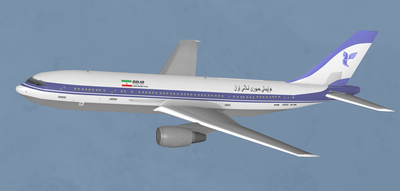
The aircraft that was tragically downed was an Airbus A300B2, a twin-engine, wide-body jet airliner manufactured by the European consortium Airbus. At the time, the A300 was a well-established and widely used aircraft, known for its safety record and efficiency in carrying passengers and cargo on medium to long-haul routes. Its capacity made it a staple for airlines like Iran Air.
The fact that this civilian airliner, designed for peaceful travel, became the target of military action underscores the catastrophic nature of the event. The loss of Flight 655 marked the deadliest aviation incident involving an Airbus A300, a tragic distinction that highlights the vulnerability of civilian air traffic in conflict zones.
Geopolitical Repercussions and Lingering Questions
The downing of Iran Air Flight 655 sent shockwaves through the international community, intensifying diplomatic tensions between the United States and Iran. While the US did not issue a formal apology, President Ronald Reagan conveyed a message of deep regret to Iran, and the US later agreed to pay $61.8 million in compensation to the victims' families through an ex gratia settlement at the International Court of Justice in 1996. Crucially, this settlement did not involve an admission of liability by the United States.
The incident fueled ongoing debates about the rules of engagement, the potential for miscalculation in high-stress military environments, and the ethical responsibilities of military forces operating near civilian populations. Some analyses have pointed to the aggressive posture of the Vincennes's captain, William C. Rogers III, while others have focused on systemic issues of command and control and inter-service communication.
The event continues to be a sensitive topic, serving as a potent symbol of the human cost of international conflict and the critical need for de-escalation and clear communication.
See also
Frequently Asked Questions
What happened to Iran Air Flight 655?+
Why did the U.S. ship think the plane was a fighter jet?+
How many people were on the flight?+
Where was the flight going and where did it stop?+
Did the U.S. say sorry or give money to the families?+
Based on content from Wikipedia · Licensed under CC BY-SA 4.0