

Information Systems: Your Digital Helpers!
Images

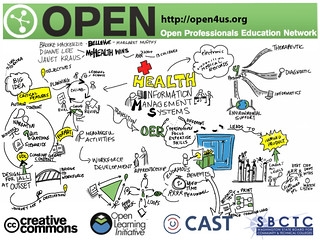
Members of Tanzania's Health and ICT network see a health management information system in action





Deconstructing Information Systems
An information system is a structured set of components that interact to collect, process, store, and disseminate information to support decision-making, coordination, control, analysis, and visualization in an organization. Its architecture typically comprises five key elements: hardware (physical devices like servers, workstations, and networks), software (operating systems, application programs, and system utilities), data (raw facts and figures stored in databases), people (users, administrators, and IT professionals), and processes (the rules and procedures governing how the system operates).
These elements are interdependent; for instance, effective software relies on appropriate hardware, and both require skilled personnel and well-defined processes to function optimally. The design of these systems can range from simple single-user applications to complex, distributed enterprise-wide networks, each tailored to specific functional and organizational needs.
The Evolutionary Trajectory of Information Management
The evolution of information systems mirrors the broader technological advancements of human history. Early forms involved manual record-keeping, papyrus scrolls, and libraries. The advent of mechanical calculators and punch cards in the late 19th and early 20th centuries marked the beginning of automated data processing.
The post-World War II era saw the rise of mainframe computers, enabling batch processing for large organizations. The development of minicomputers and personal computers in the 1970s and 1980s democratized computing power. The true revolution, however, came with the internet and the World Wide Web, facilitating networked systems, real-time data exchange, and the explosion of distributed and cloud-based information systems.
This continuous innovation has progressively increased the speed, capacity, and accessibility of information management.
The Indispensable Role of Information Systems in Modern Society
Information systems are foundational to the functioning of contemporary society and the global economy. They enable organizations to achieve strategic goals by improving operational efficiency, facilitating better decision-making through data analytics, and fostering innovation. In business, they are critical for customer relationship management, supply chain optimization, financial accounting, and e-commerce.
In government, they support public administration, defense, and citizen services. For individuals, they are the backbone of communication, education, entertainment, and access to services. The ability to effectively manage and leverage information has become a primary determinant of success and competitiveness in virtually every sector, underscoring their profound societal impact and strategic importance.
Operational Dynamics
Information systems operate through a fundamental cycle of input, processing, output, and storage, often augmented by feedback and communication mechanisms. Input involves capturing raw data from internal or external sources, such as user entries, sensor readings, or transaction records. Processing transforms this raw data into meaningful information through operations like sorting, classifying, calculating, and summarizing.
Output is the distribution of this processed information to users or other systems, presented in formats like reports, charts, or alerts. Storage ensures that data and information are retained for future reference, typically managed within databases. Feedback mechanisms allow the system's output to influence future inputs, creating adaptive and responsive systems.
Networked systems further enable seamless data flow and integration across geographically dispersed components.
Ubiquitous Applications
Information systems are pervasive, manifesting in diverse forms across numerous domains. Enterprise Resource Planning (ERP) systems integrate core business processes like finance, HR, and manufacturing. Customer Relationship Management (CRM) systems manage interactions with current and potential customers.
Supply Chain Management (SCM) systems oversee the flow of goods and services. Decision Support Systems (DSS) and Business Intelligence (BI) tools help analyze data for strategic planning. Transaction Processing Systems (TPS) handle routine business transactions.
Beyond business, academic institutions use Student Information Systems (SIS), healthcare utilizes Electronic Health Records (EHR), and governments employ various systems for taxation, defense, and public services. The internet itself is a massive, interconnected information system facilitating global communication and commerce.
See also
Frequently Asked Questions
What is an information system?+
What are the five main parts of an information system?+
How did information systems change over time?+
Why are information systems important for businesses and governments?+
How does an information system turn data into useful information?+
Based on content from Wikipedia · Licensed under CC BY-SA 4.0