

Howrah
Images

Howrah Pano 3




Geographical Significance and Urban Morphology
Howrah, situated on the western bank of the Hooghly River, is intrinsically linked to its geography. This position across from Kolkata, the capital of West Bengal, establishes it as a vital part of the Kolkata Metropolitan Area. The Hooghly River, a distributary of the Ganges, has historically shaped Howrah's development, serving as a natural boundary and a crucial artery for trade and transportation.
The city's urban fabric is characterized by a dense population and a mix of industrial zones, commercial areas, and residential neighborhoods. Its role as a gateway is amplified by its location, making it a primary entry point for many travelers and goods entering West Bengal from the west. The city's development is a testament to human adaptation and engineering in harnessing the potential of its riverine environment.
Historical Trajectory and Urban Evolution
The history of Howrah is one of transformation from a small village into a major industrial powerhouse. Its strategic location along the Hooghly River facilitated early trade and settlement. The advent of the railway in the mid-19th century was a pivotal moment, with the establishment of Howrah Junction railway station in 1854.
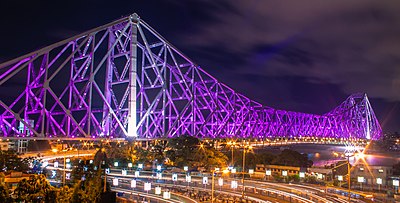
This event catalyzed rapid industrialization and population growth, as the city became a central hub for goods and passenger traffic. The construction of the Howrah Bridge in the early 20th century further cemented its importance, physically linking it to Kolkata and enhancing its connectivity. Over time, Howrah evolved from a trading post to a manufacturing center, absorbing influences from various communities and becoming a dynamic urban entity.
Socio-Cultural Dynamics and Linguistic Landscape
Howrah is a melting pot of cultures, reflecting the diverse population that inhabits this bustling metropolis. Bengali is the predominant language, deeply embedded in the region's cultural heritage, literature, and daily life. The city's social fabric is woven from threads of various communities, each contributing to its unique character.
Daily life is characterized by the rhythm of its industrial activities and the constant movement of people through its extensive transport networks. Festivals, religious observances, and local traditions are integral to the social calendar, fostering a sense of community and shared identity. Despite its industrial nature, Howrah retains a rich cultural heritage, evident in its arts, cuisine, and social customs.
Economic Backbone
The economic landscape of Howrah is dominated by its status as a major industrial and transportation hub. It hosts a wide array of industries, including jute mills, engineering works, and manufacturing units, making it a significant contributor to West Bengal's economy. The city's robust transportation infrastructure, particularly Howrah Junction railway station and the Howrah Bridge, facilitates the efficient movement of raw materials, finished goods, and passengers.
This connectivity is not merely logistical; it is a cornerstone of its economic vitality, enabling trade and commerce to flourish. The city's industrial output and its role as a transit point underscore its importance in the regional and national economic framework.
Governance and Educational Framework
Howrah functions as a key administrative center within West Bengal. It is the headquarters of the Howrah district and the Howrah Sadar subdivision, overseeing local governance and development initiatives. The city is also part of the Kolkata Metropolitan Development Authority (KMDA) area, indicating its integration into a larger regional planning framework.
Educationally, Howrah offers a range of institutions catering to diverse learning needs. From primary schools to higher education facilities, the city provides avenues for academic and vocational training. These educational establishments play a crucial role in shaping the future workforce and contributing to the intellectual capital of the region, ensuring that Howrah continues to evolve and adapt.
See also
Frequently Asked Questions
What is Howrah and where is it located?+
Why is the Howrah Bridge important?+
How did the railway help Howrah grow?+
What kinds of factories are found in Howrah?+
What language do most people in Howrah speak?+
Based on content from Wikipedia · Licensed under CC BY-SA 4.0