

Helena Bonham Carter
Images

Danny Elfman, Helena Bonham Carter and Tim Burton at The Royal Albert Hall




Navigating the Archetype
Helena Bonham Carter's ascent in the film industry began with her captivating performances in period dramas during the 1980s. Early roles, such as Lucy Honeychurch in 'A Room with a View' (1985) and the titular character in 'Lady Jane' (1986), established her as a prominent figure embodying the 'English rose' archetype. However, this initial categorization proved to be a constraint she actively sought to transcend.
Bonham Carter's inherent desire to explore more complex, often darker, and unconventional characters soon became evident. This deliberate departure from her early typecasting allowed her to showcase a remarkable range, paving the way for her reputation as an actress drawn to roles that defy conventional expectations and explore the fringes of societal norms. Her discomfort with being pigeonholed fueled a career path defined by artistic exploration and a willingness to challenge audience perceptions.
The Aesthetic of the Unconventional
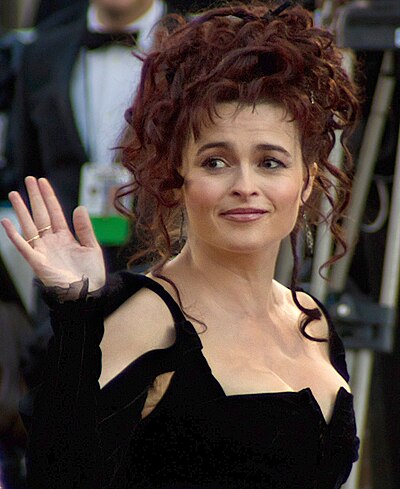
Bonham Carter's artistic identity is intrinsically linked to her distinctive personal style and her significant collaborations, most notably with director Tim Burton. Her fashion sense is characterized by an avant-garde, often gothic-inspired aesthetic, which resonates deeply with the visually rich and often macabre worlds crafted by Burton. Their extensive working relationship, spanning films like 'Big Fish' (2003), 'Charlie and the Chocolate Factory' (2005), 'Corpse Bride' (2005), and 'Alice in Wonderland' (2010), highlights a profound creative synergy.
Bonham Carter's ability to inhabit characters with a pronounced visual signature, from the whimsical to the menacing, aligns perfectly with Burton's directorial vision. This partnership has allowed her to fully express her talent for portraying characters who are visually striking and psychologically complex, solidifying her status as an icon of alternative cinema and fashion.
Critical Acclaim and Iconic Roles Across Genres
The breadth of Helena Bonham Carter's filmography is a testament to her versatility and enduring talent, earning her numerous accolades. Her performance as Kate Croy in 'The Wings of the Dove' (1997) earned her a prestigious Academy Award nomination for Best Actress, underscoring her dramatic capabilities. Further solidifying her status, she received a BAFTA Award and an Academy Award nomination for Best Supporting Actress for her portrayal of Queen Elizabeth in 'The King's Speech' (2010).
Beyond these critically lauded roles, she has become indelibly associated with iconic characters that have left a significant cultural footprint. Her portrayal of Bellatrix Lestrange in the 'Harry Potter' franchise (2007–2011) is a masterclass in villainy, while her appearances in adaptations like 'Great Expectations' (2012) as Miss Havisham and 'Cinderella' (2015) as the Fairy Godmother demonstrate her ability to captivate audiences across vastly different genres and tones.
Enduring Relevance and Cultural Impact
Helena Bonham Carter's career trajectory demonstrates a consistent ability to remain relevant and impactful in the ever-evolving entertainment landscape. Her recent critically acclaimed role as Princess Margaret in the Netflix series 'The Crown' (2019–2020) garnered two Primetime Emmy Award nominations, showcasing her continued prowess in television drama and her capacity to embody complex historical figures. Beyond her acting achievements, Bonham Carter serves as a cultural touchstone for individuality and artistic integrity.
She has consistently championed roles that challenge societal norms and celebrate unique perspectives, inspiring audiences to embrace their own distinctiveness. Her legacy is not merely defined by awards or box office success, but by her profound influence on how unconventional characters are portrayed and appreciated in mainstream and independent cinema alike, making her a truly significant figure in contemporary arts.
See also
Based on content from Wikipedia · Licensed under CC BY-SA 4.0