

Gymnastics at the Summer Olympics
Images
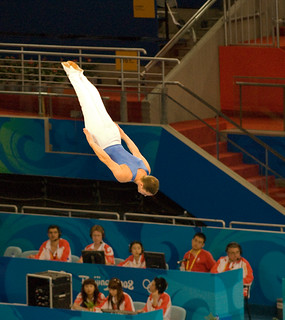
Dive


The Enduring Legacy of Gymnastics in the Olympic Movement
Gymnastics has been an integral part of the Summer Olympic Games since their inception in 1896, serving as a foundational sport that showcases a unique blend of strength, agility, grace, and artistry. Initially, the Olympic gymnastics program was exclusively for men, reflecting the societal norms of the era. This exclusivity persisted for over three decades until the 1928 Amsterdam Games, which saw the introduction of women's artistic gymnastics events.
This pivotal moment marked a significant expansion of the sport's inclusivity at the highest level of international competition. The subsequent additions of rhythmic gymnastics in 1984 and trampoline in 2000 further diversified the Olympic gymnastics portfolio, catering to a broader spectrum of athletic skills and aesthetic expressions, solidifying its status as a premier Olympic sport.
Tracing the Trajectory
The practice of gymnastics can be traced back to ancient civilizations, where physical conditioning was paramount for military readiness and overall well-being. However, the formalization of gymnastics as a sport is largely attributed to 19th-century European educators, notably Friedrich Ludwig Jahn of Germany, who developed apparatus and training methods that laid the groundwork for modern gymnastics. When the modern Olympic Games were revived in Athens in 1896, gymnastics was among the original sports contested.
The early Olympic gymnastics competitions were characterized by a focus on strength-based exercises and rudimentary routines. Over the ensuing decades, the sport underwent a profound transformation, driven by innovation in training techniques, evolving aesthetic ideals, and the continuous pursuit of athletic excellence. This evolution led to the development of distinct disciplines, each with its own set of apparatus and scoring criteria, culminating in the sophisticated and highly specialized events seen today.
The Arsenal of Excellence
The apparatus used in Olympic gymnastics are meticulously designed to test the limits of human physical capability. In artistic gymnastics, the vault requires a powerful sprint and explosive jump, with athletes launching themselves over a table typically standing over 5 feet tall, executing complex aerial maneuvers. The uneven bars, set at distinct heights, demand exceptional upper body strength, coordination, and timing for seamless transitions.
The balance beam, a narrow 4-inch wide surface, is a test of extreme precision, concentration, and stability. The floor exercise utilizes a sprung mat to amplify tumbling passes, allowing for dynamic leaps and intricate choreography. Rhythmic gymnastics introduces apparatus like the hoop, ball, clubs, and ribbon, which are manipulated with fluid movements and dance-like artistry.
Trampoline gymnastics, a relatively recent addition, involves athletes performing multiple flips and twists at significant heights, showcasing aerial prowess and control.
Governance and the Evolving Rulebook
The International Gymnastics Federation (FIG) serves as the ultimate authority for gymnastics worldwide, establishing and enforcing the rules and regulations for all its disciplines, including those contested at the Olympics. The FIG's Code of Points is a comprehensive document that dictates how routines are constructed and scored, detailing requirements for difficulty, execution, and artistry. This code is periodically revised to reflect the sport's progression and to ensure fair and objective judging.
The introduction and evolution of specific events, such as the inclusion of women's artistic gymnastics and the addition of rhythmic and trampoline disciplines, highlight the FIG's role in adapting the sport to contemporary athletic standards and global appeal. The governance ensures a standardized and competitive environment across all international competitions.
Pioneers and Prodigies
While the provided source does not enumerate specific athletes, the history of Olympic gymnastics is indelibly marked by individuals who have transcended the sport to become global icons. These gymnasts, through their unparalleled skill, dedication, and groundbreaking performances, have not only achieved personal glory but have also profoundly influenced the trajectory of gymnastics. Their achievements often involve mastering skills of extreme difficulty, pushing the boundaries of human potential, and demonstrating extraordinary resilience in the face of intense competition.
The legacies of these athletes extend beyond medal counts; they inspire future generations, popularize the sport, and contribute to the enduring narrative of athletic excellence that defines the Olympic Games. Their impact resonates through the sport's development and its continued appeal to audiences worldwide.
See also
Frequently Asked Questions
When did gymnastics first appear in the Summer Olympics?+
When were women allowed to compete in Olympic gymnastics?+
What new gymnastics events were added in 1984 and 2000?+
What is the balance beam and why is it special?+
Who makes the rules for Olympic gymnastics?+
Based on content from Wikipedia · Licensed under CC BY-SA 4.0