

Guam: The Island Where America's Day Begins!
Images
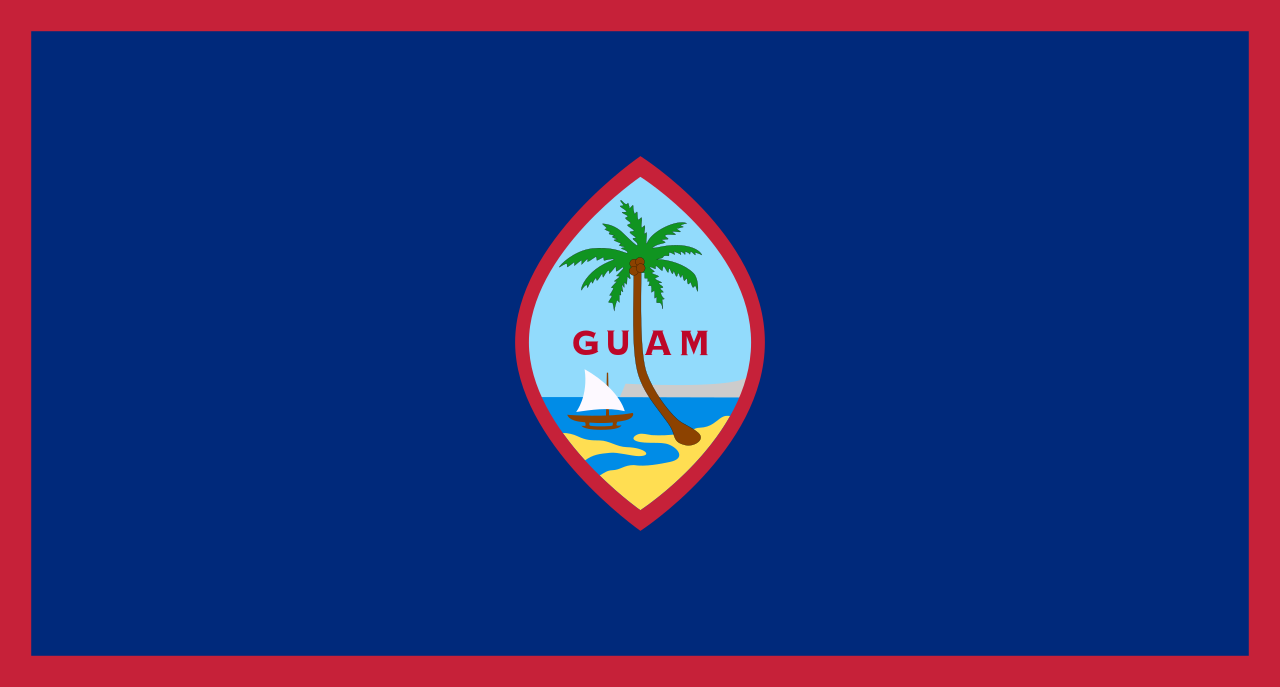
Guam
Guam's Strategic Geography and Environmental Context
Guam occupies a pivotal position in the western Pacific Ocean, serving as the largest and southernmost island of the Mariana Islands archipelago and the largest landmass in Micronesia. Its geographical coordinates place it as the westernmost point of the United States, a fact that lends it the de facto motto 'Where America's Day Begins' due to its proximity to the International Date Line.
This strategic location has historically made it a significant waypoint and, in modern times, a crucial military asset. The island's topography is characterized by volcanic origins, featuring elevated limestone plateaus and dramatic coastal cliffs, interspersed with fertile valleys and fringed by coral reefs. Its tropical maritime climate is marked by consistent warmth and humidity, with distinct wet and dry seasons, supporting a rich biodiversity, though also presenting challenges such as vulnerability to typhoons.
The total area of 210 square miles supports a population density of approximately 775 people per square mile, indicating a relatively concentrated population, with the majority residing in villages rather than the capital city.
A Tapestry of Time
The human history of Guam stretches back approximately 3,500 years, initiated by Austronesian voyagers who established the foundational Chamorro culture. This indigenous civilization developed sophisticated social structures and navigational skills, thriving in isolation for millennia. The arrival of Ferdinand Magellan in 1521 marked the beginning of European contact, culminating in Spanish colonization in 1668.
For over two centuries, Guam served as an indispensable resupply point for the Spanish Manila Galleons, linking the Americas with Asia and embedding the island within global trade routes. The Spanish-American War in 1898 dramatically altered Guam's political status, with Spain ceding the territory to the United States under the Treaty of Paris. The 20th century brought further upheaval; Guam was captured by Japanese forces shortly after the attack on Pearl Harbor in December 1941 and occupied for two and a half years.
The subsequent U.S. recapture in July 1944, commemorated as Liberation Day, solidified its U.S. territorial status and underscored its strategic importance during World War II and the Cold War era. This complex history has shaped Guam's identity, blending indigenous traditions with colonial and American influences.
Chamorro Identity and Cultural Dynamics in Modern Guam
The indigenous inhabitants of Guam are the Chamorro people, whose ancestral roots connect them to the broader Austronesian expansion across the Pacific. Their language, Chamorro, is linguistically distinct, potentially forming an independent branch of the Malayo-Polynesian family, setting it apart from neighboring Micronesian languages. Despite being the largest ethnic group, Chamorros constitute a minority on the multiethnic island, reflecting waves of migration and settlement over centuries.
This demographic reality presents ongoing dialogues about cultural preservation and political status. Chamorro culture is characterized by strong kinship systems, reverence for ancestors, and a deep connection to the natural environment. Traditional practices, including intricate weaving, distinct culinary traditions, and unique artistic expressions, continue to be vital elements of cultural identity.
The island's society is a dynamic blend of these indigenous traditions, Spanish colonial legacies, and the pervasive influence of American culture and governance, creating a unique cultural landscape that is constantly evolving.
Economic Pillars and Political Aspirations
Guam's economy is predominantly supported by two major sectors: tourism and the substantial presence of the U.S. military. The island's tropical allure, featuring pristine beaches, vibrant coral reefs, and a warm climate, draws a significant number of international tourists, primarily from East Asia. Concurrently, Guam hosts critical U.S. military installations, including naval and air force bases, which serve as strategic assets in the Indo-Pacific region.
These bases contribute significantly to employment and the local economy through procurement and personnel spending. While these sectors drive the economy, discussions persist regarding economic diversification and sustainability. Politically, Guam is an organized, unincorporated territory of the United States, meaning it is subject to U.S. federal law but does not have full representation in Congress.
The question of its future political status remains a prominent issue, with public opinion polls frequently indicating a strong preference among residents for U.S. statehood, reflecting a complex relationship with the federal government and a desire for greater self-determination within the American framework.
Education and Societal Development
The educational system in Guam is structured similarly to that of the United States, administered by the Guam Department of Education, which oversees public schools from kindergarten through twelfth grade. Higher education is available through the University of Guam and Guam Community College, providing opportunities for local residents to pursue advanced studies and vocational training. The curriculum generally aligns with U.S. educational standards, incorporating English as the primary language of instruction, though efforts are made to preserve and teach the Chamorro language.
Access to quality education is considered a cornerstone for societal advancement and economic mobility on the island. The educational landscape reflects the broader societal dynamics, balancing the integration of American educational models with the imperative to foster and celebrate indigenous Chamorro culture and language. This dual focus is crucial for equipping future generations with the skills needed to navigate both local and global contexts, while also ensuring the continuity of their unique cultural heritage.
Go deeper
Frequently Asked Questions
What is Guam and why is it called "Where America's Day Begins"?+
Where is Guam located in the world?+
How does Guam's climate affect its people and animals?+
Who are the Chamorro people and what is special about their language?+
What happened to Guam during World War II?+
Based on content from Wikipedia · Licensed under CC BY-SA 4.0