

Grand Teton National Park
Images

Measuring Stream Discharge in Grand Teton National Park




Geological Grandeur
Grand Teton National Park is defined by the Teton Range, a geologically unique and visually striking mountain range that lacks foothills, rising abruptly from the valley floor. The highest point, Grand Teton, reaches 13,775 feet, presenting a formidable vertical relief of over 7,000 feet above Jackson Hole. The park encompasses the majority of this 40-mile-long range and much of the northern Jackson Hole valley.
The park's geological story is exceptionally ancient; some of its rocks are among the oldest in any U.S. national park, with radiometric dating revealing ages of nearly 2.7 billion years. These Precambrian rocks provide a profound glimpse into Earth's early history. The landscape is further sculpted by glacial activity, evidenced by the U-shaped valleys and moraines, and the persistence of a dozen small glaciers at higher elevations, though these are notably in recession due to climate change.
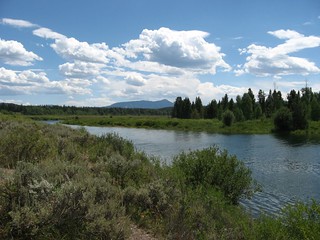
The park also features significant water bodies, including the expansive Jackson Lake and the upper reaches of the Snake River, vital components of the regional hydrology.
A Tapestry of Human History
The human narrative within Grand Teton National Park is deep and layered, dating back at least 11,000 years. Archaeological evidence points to continuous occupation by Indigenous peoples, including the Eastern Shoshone, who utilized the region's resources. The early 19th century marked the arrival of European fur traders, who competed for the lucrative beaver pelt trade, significantly impacting the local ecology and economy.
U.S. government expeditions followed in the mid-19th century, leading to increased exploration and eventual settlement by Euro-Americans in the 1880s. The modern era of the park's existence began with conservation efforts in the late 19th century, culminating in the establishment of Grand Teton National Park in 1929, primarily protecting the Teton Range. A pivotal chapter involved John D.
Rockefeller Jr.'s extensive land acquisitions in Jackson Hole during the 1930s. His vision, despite considerable public and political opposition, led to the creation of the Jackson Hole National Monument in 1943. The subsequent abolition of the monument in 1950 and its incorporation into Grand Teton National Park dramatically expanded the park's protected area, solidifying its current boundaries and ecological integrity.
Ecological Significance
Grand Teton National Park is celebrated as an almost pristine ecosystem, remarkably preserving the flora and fauna that have inhabited the region since prehistoric times. It supports an impressive biodiversity, with over 1,000 species of vascular plants, ranging from alpine wildflowers to diverse forest types. The park is a critical habitat for numerous mammal species, including iconic megafauna like grizzly bears, black bears, elk, moose, and bison, alongside smaller mammals.
Avian diversity is also significant, with over 300 bird species recorded, including raptors, waterfowl, and migratory birds. The aquatic ecosystems are equally rich, supporting more than a dozen fish species, notably the native Snake River fine-spotted cutthroat trout, which is a focus of conservation efforts. The park's ecological health is intrinsically linked to the broader Greater Yellowstone Ecosystem, a vast, interconnected landscape crucial for the survival of wide-ranging species.
Current conservation challenges include addressing human-induced ecosystem changes and protecting vulnerable species like native fish and the threatened whitebark pine.
Recreation, Conservation, and the Future of Grand Teton
Grand Teton National Park is a premier destination for a wide array of recreational activities, drawing millions of visitors annually. Its dramatic landscapes offer unparalleled opportunities for mountaineering, rock climbing, and extensive hiking, with over 200 miles of trails providing access to diverse environments, from valley floors to high alpine zones. The park is globally recognized for its world-renowned trout fishing, particularly in the Snake River and its tributaries.
Other popular activities include boating, wildlife viewing, and photography. The National Park Service manages visitor centers that offer educational programs and interpretive exhibits, enhancing the visitor experience and fostering appreciation for the park's natural and cultural resources. Concurrently, privately operated concessions provide essential services like lodging, dining, and fuel.
The park's management faces the ongoing challenge of balancing increasing visitor use with the imperative of preserving its ecological integrity and historical character for future generations, ensuring its continued role as a vital sanctuary and a testament to American conservation ideals.
See also
Frequently Asked Questions
What is the tallest mountain in Grand Teton National Park?+
Why are the rocks in Grand Teton so old?+
How did Grand Teton become a national park?+
What animals can I see in Grand Teton?+
How do glaciers affect Grand Teton?+
Based on content from Wikipedia · Licensed under CC BY-SA 4.0