

George Orwell: The Writer Who Warned Us!
Images
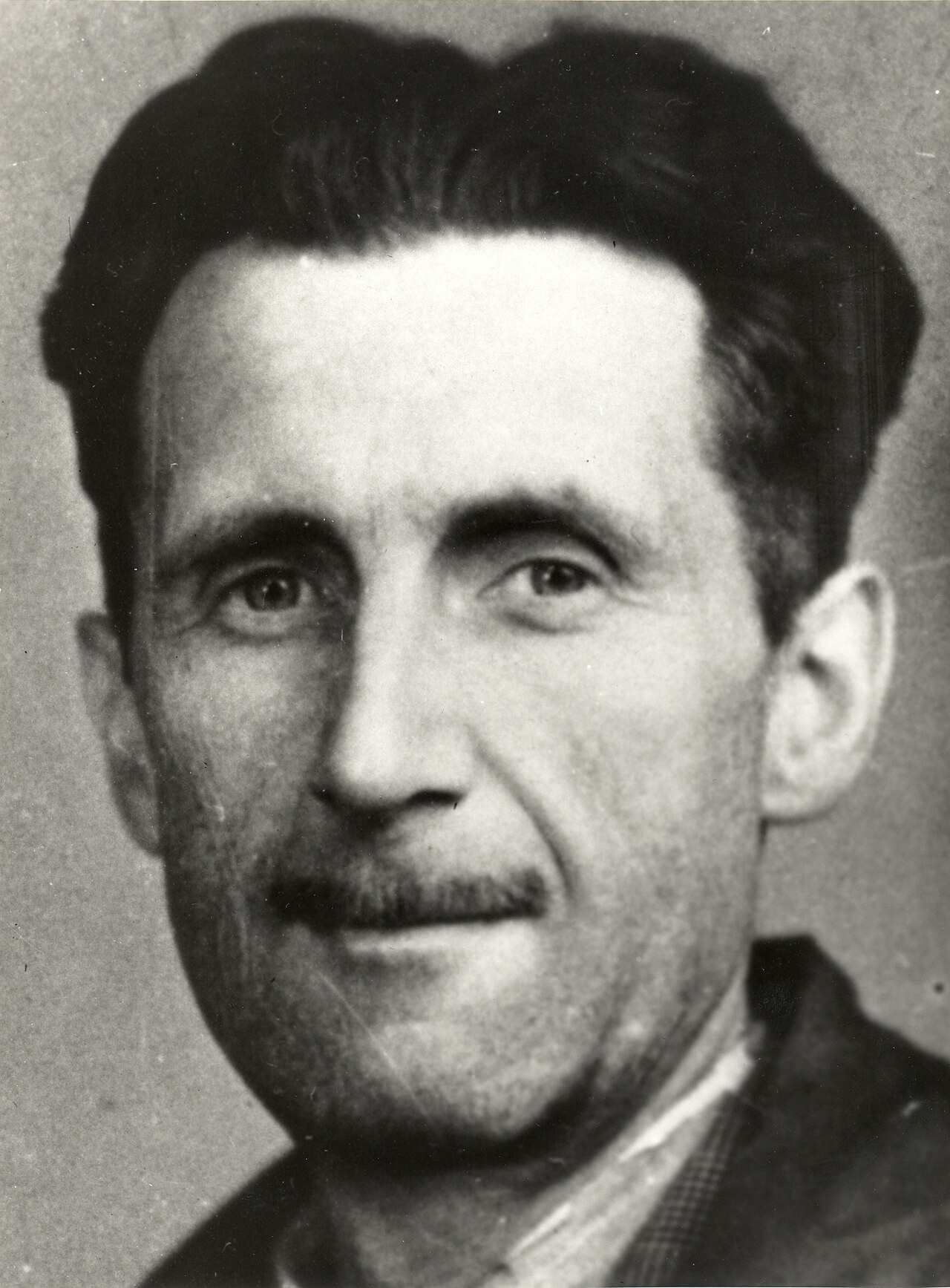
George Orwell
The Genesis of a Literary Icon
Eric Arthur Blair, born on June 25, 1903, in Motihari, British India, would later become the globally recognized George Orwell. His early life was marked by a sense of displacement and a keen observation of social hierarchies, first as the son of a colonial administrator and later as a student at prestigious English boarding schools where he felt like an outsider. His five years as an Imperial Police officer in Burma (1922-1927) were pivotal, exposing him to the brutal realities of imperialism and fostering a deep-seated anti-authoritarianism that would define his literary output.
Upon returning to Europe, he deliberately chose to live among the poor and working class, an experience meticulously documented in 'Down and Out in Paris and London' (1933) and later in 'The Road to Wigan Pier' (1937). These immersive journeys were not mere research; they were acts of solidarity and a quest for authentic understanding, shaping his commitment to lucid prose and unflinching social criticism. His adoption of the pen name George Orwell in 1933 signaled his departure from his past and the embrace of a new identity dedicated to speaking uncomfortable truths.
War, Ideology, and the Crucible of 'Homage to Catalonia'
Orwell's intellectual and political development was significantly forged in the fires of the Spanish Civil War (1936-1939). Fighting for the Republican faction, he witnessed firsthand the complexities of ideological conflict, the pervasive nature of propaganda, and the devastating consequences of infighting among anti-fascist forces. His harrowing experiences, detailed in 'Homage to Catalonia,' revealed the dangers of dogmatic adherence to political dogma and the manipulation of truth by various factions, including Soviet-backed communists.
This period solidified his opposition to totalitarianism in all its forms, whether fascist or Stalinist, and cemented his belief in democratic socialism as a viable alternative that prioritized individual liberty and social justice. His direct involvement in combat and his subsequent near-death experience from a sniper's bullet underscored the visceral reality of the political struggles he would so powerfully articulate in his later works.
Masterpieces of Warning
George Orwell's enduring fame rests largely on two monumental works that serve as potent allegories and chilling prophecies. 'Animal Farm' (1945), a deceptively simple novella, uses the fable of farm animals rebelling against their human farmer only to be subjugated by a new, more ruthless elite of pigs, to critique the betrayal of the Russian Revolution and the rise of Stalinist tyranny. Its enduring power lies in its accessible narrative and its sharp dissection of how power corrupts and how language can be twisted to control populations. 'Nineteen Eighty-Four' (1949), published just months before his death, presents a stark vision of a totalitarian future dominated by 'Big Brother,' constant surveillance, and the systematic manipulation of reality through 'Newspeak' and 'doublethink.' This novel introduced a lexicon of oppression-'Thought Police,' 'Room 101,' 'memory hole'-that has become deeply embedded in our cultural consciousness, serving as a perpetual warning against the erosion of privacy, truth, and individual freedom.
These works are not merely literary achievements; they are vital contributions to political thought.
The Enduring 'Orwellian' Legacy
The adjective 'Orwellian' has transcended literature to become a critical descriptor of oppressive political and social conditions, a testament to the profound and lasting impact of Orwell's insights. His lifelong commitment to clarity in language-'Good prose is like a windowpane'-was intrinsically linked to his defense of truth and his opposition to the obfuscation employed by totalitarian regimes. He understood that controlling language was a primary tool for controlling thought and reality itself.
His essays, such as 'Politics and the English Language,' remain essential reading for anyone concerned with the integrity of public discourse. Recognized by 'The Times' as the second-greatest British writer since 1945, Orwell's legacy is not one of passive observation but an active call to vigilance. His works compel readers to critically examine power structures, resist propaganda, and fiercely protect the principles of freedom, truth, and individual autonomy in an ever-complex world.
Go deeper
Frequently Asked Questions
Who was George Orwell and why is he famous?+
What did George Orwell do before he wrote his famous books?+
Why did George Orwell write Animal Farm and Nineteen Eighty‑Four?+
What lesson does Animal Farm teach?+
What words from Nineteen Eighty‑Four are still used today?+
Based on content from Wikipedia · Licensed under CC BY-SA 4.0