

Göbekli Tepe
Images

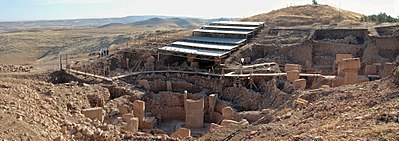
The archaeological site of Göbekli Tepe - main excavation area




The Enigmatic Genesis of Monumental Construction
Göbekli Tepe, situated in Upper Mesopotamia, stands as a profound testament to the ingenuity of early Neolithic peoples. Dating back to approximately 9500 BCE, this sprawling archaeological site features a series of large, circular enclosures dominated by massive T-shaped limestone pillars, some reaching heights of over 5 meters. These pillars, weighing several tons, are intricately carved with reliefs of wild animals, abstract symbols, and anthropomorphic features, representing some of the earliest known examples of monumental art and sculpture.
The sheer scale and complexity of Göbekli Tepe challenge the long-held assumption that sophisticated building projects and organized labor only emerged after the development of agriculture and settled village life. Its existence suggests that hunter-gatherer societies possessed a level of social cohesion, planning, and symbolic thought previously thought unattainable for this era.
Challenging the Neolithic Revolution Paradigm
The prevailing narrative of the Neolithic Revolution posits that the advent of agriculture led to sedentary lifestyles, which in turn enabled the development of complex societies and monumental architecture. Göbekli Tepe complicates this model significantly. While evidence suggests some domestic structures and cereal processing were present, the site lacks clear indications of extensive farming or permanent residential settlement during its primary construction phases.
This has led to theories that Göbekli Tepe may have served as a central gathering place for nomadic or semi-nomadic groups, a ritualistic center where communities converged for religious ceremonies or social events. The immense effort required to quarry, transport, carve, and erect these megaliths implies a sophisticated social structure capable of mobilizing and coordinating large workforces, potentially driven by shared beliefs or ideology rather than immediate agricultural necessity.
Iconography and Ritual
The detailed iconography found on the Göbekli Tepe pillars offers invaluable insights into the worldview and symbolic systems of its creators. The prominent depiction of wild animals, often in dynamic poses, suggests a deep connection to and perhaps reverence for the natural world. The abstract symbols and anthropomorphic elements hint at a complex mythology and cosmology.
While the exact purpose of the structures remains debated – with theories ranging from astronomical observatories to shamanistic ritual sites – their monumental nature and elaborate decoration strongly indicate a significant role in the spiritual or social life of the people who built them. The recurring collapse and rebuilding of these structures suggest a continuous, evolving tradition, with new generations maintaining and expanding upon the work of their predecessors.
An Ongoing Excavation
Despite decades of research, Göbekli Tepe remains largely unexplored, with current excavations revealing only about 10% of the estimated total site area. Geophysical surveys indicate the presence of at least 20 additional large enclosures buried beneath the tell. This vast, unexcavated portion holds the potential to dramatically expand our understanding of the site's chronology, function, and the society that created it.
The ongoing work, a collaboration between Turkish and German institutions, continues to uncover new artifacts and architectural features, promising further revelations about this pivotal moment in human history. Göbekli Tepe is not just an ancient ruin; it is a dynamic research frontier that continues to reshape our perception of early human civilization.
Legacy and Modern Relevance
Göbekli Tepe's designation as a UNESCO World Heritage Site underscores its global significance as a 'manifestation of human-made monumental architecture.' Its discovery has spurred a re-evaluation of the capabilities of pre-agricultural societies and the origins of complex social organization. In a modern world grappling with the impacts of societal development and cultural heritage, Göbekli Tepe serves as a powerful reminder of the deep roots of human creativity, cooperation, and the enduring quest for meaning.
It prompts us to consider how ancient peoples navigated their world and laid the foundations for subsequent human civilizations, offering a profound connection to our collective past.
See also
Frequently Asked Questions
What is Göbekli Tepe and why is it special?+
How tall are the pillars at Göbekli Tepe?+
Why did people build Göbekli Tepe if they didn't farm?+
What kinds of pictures are carved on the pillars?+
How much of Göbekli Tepe has been dug up so far?+
Based on content from Wikipedia · Licensed under CC BY-SA 4.0