

Fuzuli: The Poet Who Painted with Words!
Images
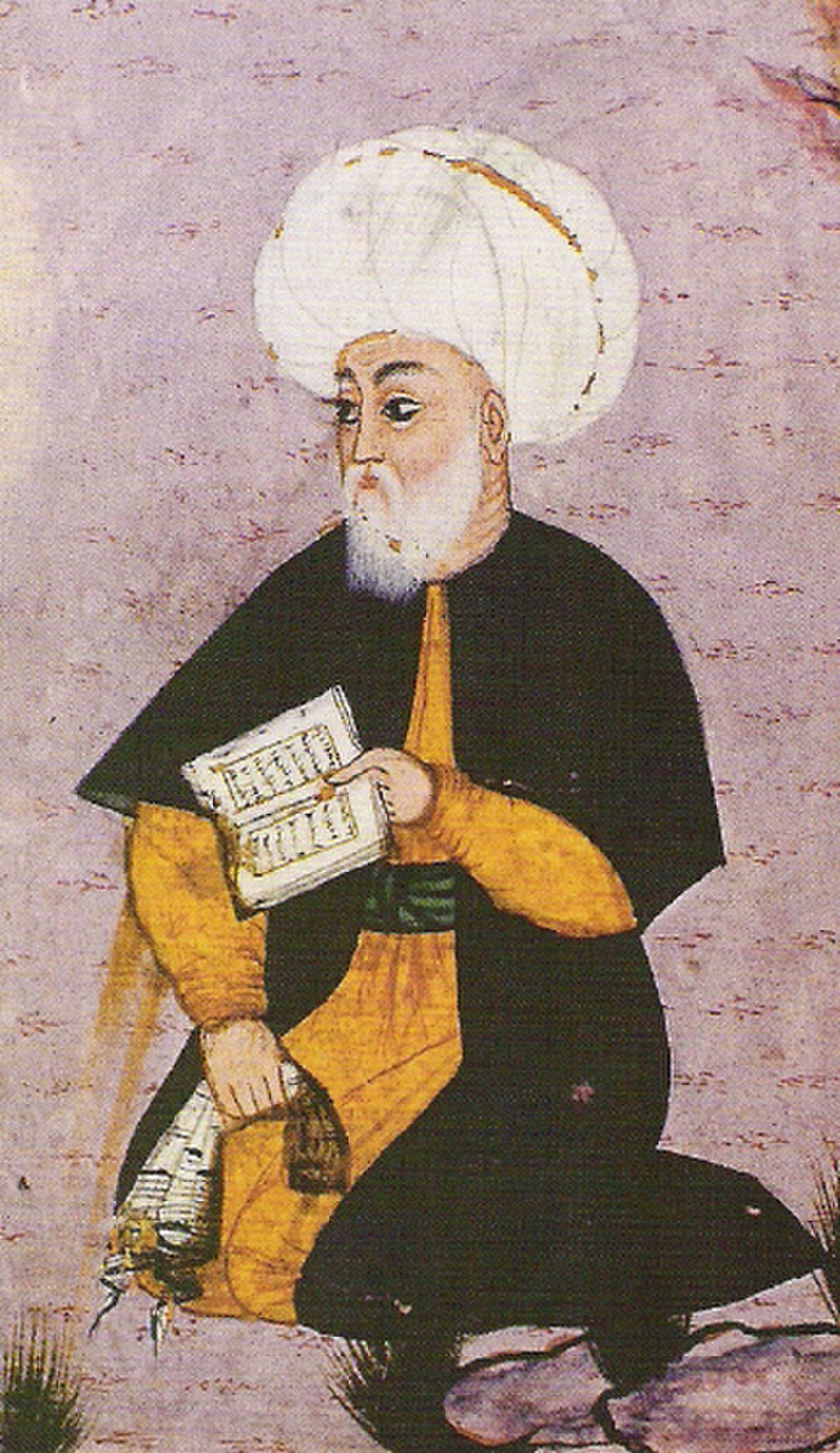
Fuzuli (poet)
The Intellectual Crucible of 16th-Century Baghdad
Born Muhammad bin Suleyman around 1494 in Baghdad, Fuzuli emerged as a towering figure in the literary landscape of the 16th-century Ottoman Empire. Baghdad, though experiencing shifts in political power, remained a vibrant center of Islamic scholarship and culture, providing a fertile ground for Fuzuli's prodigious intellect. He was not merely a poet but a true polymath, demonstrating exceptional fluency and mastery in Arabic, Persian, and Ottoman Turkish.
This linguistic prowess was not just a display of erudition but a strategic tool, enabling him to engage with diverse intellectual traditions and reach a broad readership across the vast empire. His education likely encompassed traditional Islamic sciences, philosophy, and literature, shaping his worldview and informing the complex themes that would characterize his work. Fuzuli's early life and education in this dynamic environment laid the foundation for a literary career that would leave an indelible mark on world literature.
'Layla and Majnun'
Fuzuli's magnum opus, the epic poem 'Layla and Majnun,' stands as a pinnacle of classical Islamic literature. Based on a pre-existing Arab legend, Fuzuli elevated the narrative into a profound exploration of divine and human love, often interpreted through a Sufi lens. His rendition is celebrated for its exquisite lyrical quality, its intricate symbolism, and its raw emotional power.
The poem delves into the agony of separation, the ecstasy of devotion, and the philosophical contemplation of love's transformative, and often destructive, nature. Fuzuli masterfully employs rich imagery and a sophisticated command of language to convey the lovers' intense spiritual and emotional journey. The enduring appeal of 'Layla and Majnun' lies not only in its romantic narrative but also in its deep philosophical insights into the human condition, making it a timeless work that continues to captivate and inspire readers and scholars alike.
A Literary Tapestry
While 'Layla and Majnun' is his most famous work, Fuzuli's literary output was remarkably diverse and intellectually rich. His extensive collection of ghazals, particularly those in Ottoman Turkish, showcases his mastery of this intricate poetic form, often exploring themes of love, wine, and mystical union with profound sensitivity. His qasidas, or odes, demonstrate his ability to engage with political and social commentary, most notably in 'The Complaint of Baghdad,' a poignant lament on the city's decline, reflecting his deep connection to his homeland.
Furthermore, his Arabic works, such as 'The Grapes of the Garden' (Riyad al-Jannah), reveal his scholarly depth and his ability to engage in sophisticated prose. This multilingual and multi-genre approach underscores Fuzuli's status as a true literary giant, capable of expressing complex ideas and emotions across different linguistic and cultural contexts.
Fuzuli's Enduring Influence and Scholarly Significance
Fuzuli's legacy extends far beyond his own time, cementing his position as one of the most significant poets of the Ottoman period and a foundational figure in Azerbaijani literature. His sophisticated linguistic artistry, his profound emotional resonance, and his intellectual rigor set a benchmark for subsequent generations of poets and writers. His works have been continuously studied, translated, and admired, influencing literary movements and inspiring countless artists.
The continued academic interest in Fuzuli's poetry highlights its enduring relevance, offering critical insights into 16th-century Ottoman society, Islamic philosophy, and the universal themes of love, loss, and the search for meaning. His ability to weave together diverse cultural influences and linguistic traditions makes him a subject of ongoing scholarly exploration and a testament to the power of poetry to transcend time and borders.
Key Facts and Scholarly Context
Fuzuli's life and work are situated within the broader context of the flourishing Ottoman literary tradition, which drew heavily on Persian and Arabic models while developing its own distinct characteristics. His multilingualism was not uncommon among elite scholars of the era, but his ability to achieve such profound artistic expression in each language was exceptional. His poems often engage with Sufi mysticism, exploring concepts of divine love and the annihilation of the self, reflecting the spiritual currents of his time.
The study of Fuzuli's manuscripts and their various interpretations continues to be an active area of literary scholarship, revealing new layers of meaning and confirming his status as a poet of unparalleled genius and enduring global significance.
See also
Frequently Asked Questions
Who was Fuzuli and when was he born?+
What languages did Fuzuli write in?+
What is Fuzuli's most famous poem?+
What other kinds of poems did Fuzuli write?+
Why is Fuzuli important to literature?+
Based on content from Wikipedia · Licensed under CC BY-SA 4.0