

Franklin Delano Roosevelt Memorial
Images

Franklin Delano Roosevelt Memorial First Term 1933-1937


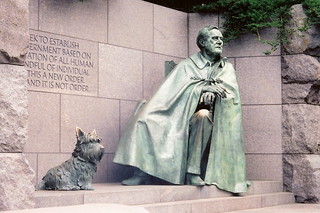


A Chronological Journey Through Four Terms
The Franklin Delano Roosevelt Memorial is a monumental testament to the 32nd President of the United States, designed not merely as a static monument but as a dynamic narrative space. Spanning 7.5 acres along the Tidal Basin, its most distinctive architectural feature is its division into four outdoor 'rooms.' This deliberate layout mirrors the four terms of FDR's presidency, each room representing a distinct period and offering a curated experience of the era.
The memorial’s progression guides visitors chronologically, allowing them to engage with the historical context of the Great Depression and World War II through a series of sculptures and water features. Sculptures depicting FDR, often accompanied by his Scottish Terrier, Fala, are inspired by iconic photographs, providing a tangible connection to the man. The inclusion of scenes like bread lines and radio-equipped rooms for 'fireside chats' powerfully evokes the struggles and resilience of the American people during his tenure, making the historical narrative accessible and emotionally resonant.
Commemorating a Transformative Presidency and Its Challenges
Franklin Delano Roosevelt's presidency (1933-1945) was one of the most consequential in American history, marked by unprecedented economic crisis and global conflict. The memorial aims to encapsulate the spirit of his leadership, which was characterized by innovation, determination, and a profound connection with the populace. His famous 'fireside chats,' delivered via radio, were instrumental in building public trust and morale during the Great Depression.
The memorial’s depiction of these moments underscores the importance of communication and reassurance from leadership. Furthermore, the memorial acknowledges the immense challenges faced by the nation, from widespread unemployment to the global fight against fascism. By presenting these historical realities, the memorial serves as a crucial educational tool, prompting reflection on the enduring impact of FDR's policies and decisions on the trajectory of the United States and the world.
Eleanor Roosevelt
A particularly significant aspect of the Franklin Delano Roosevelt Memorial is its prominent inclusion of First Lady Eleanor Roosevelt. A bronze statue of her stands before the United Nations emblem, a powerful tribute to her post-presidency work as a diplomat and human rights advocate. Eleanor Roosevelt was a driving force behind the creation of the Universal Declaration of Human Rights, a landmark document that continues to shape international human rights law.
Her inclusion at this memorial is unique; it is the only presidential memorial in Washington D.C. to feature a statue of a First Lady. This deliberate choice elevates her contributions beyond the traditional role of a presidential spouse, recognizing her as a pivotal figure in her own right and highlighting the collaborative nature of their impact on American and global affairs.
The Complexities of Accessibility and Design
The design of the Franklin Delano Roosevelt Memorial grappled with the critical issue of accessibility, particularly given President Roosevelt's disability. The intention was to create an inclusive space, incorporating features like ramps and tactile elements with Braille for visually impaired visitors. However, the execution of these accessibility features drew criticism from disability activists.
Complaints included the improper spacing of Braille dots and the placement of tactile reliefs at a height of eight feet, rendering them largely inaccessible to many individuals. This discrepancy highlights the ongoing challenges in universal design and the importance of consulting with intended users throughout the design process. The memorial, therefore, stands not only as a commemoration of a president but also as a case study in the evolving understanding and implementation of accessibility in public spaces.
Enduring Relevance and Historical Context
Dedicated in 1997, the Franklin Delano Roosevelt Memorial remains a vital site for understanding 20th-century American history. It offers a multi-layered perspective on a presidency that navigated profound economic hardship and global warfare. The memorial's thematic organization, focusing on FDR's four terms, provides a framework for comprehending the sustained leadership required during such tumultuous periods.
Its artistic representations of daily life during the Depression and the global conflict serve as powerful reminders of the nation's capacity for resilience and collective action. In contemporary times, the memorial encourages contemplation on leadership qualities, the role of government in times of crisis, and the ongoing pursuit of social justice, as exemplified by Eleanor Roosevelt's work. It prompts visitors to consider how the challenges of the past continue to inform present-day issues and the enduring importance of historical memory.
See also
Frequently Asked Questions
What is the Franklin Delano Roosevelt Memorial?+
How many rooms does the memorial have and why?+
Who is Fala and why is he in the memorial?+
Why is there a statue of Eleanor Roosevelt at the memorial?+
Is the memorial accessible for people who are blind or have low vision?+
Based on content from Wikipedia · Licensed under CC BY-SA 4.0