

Fractions: Sharing is Caring!
Images
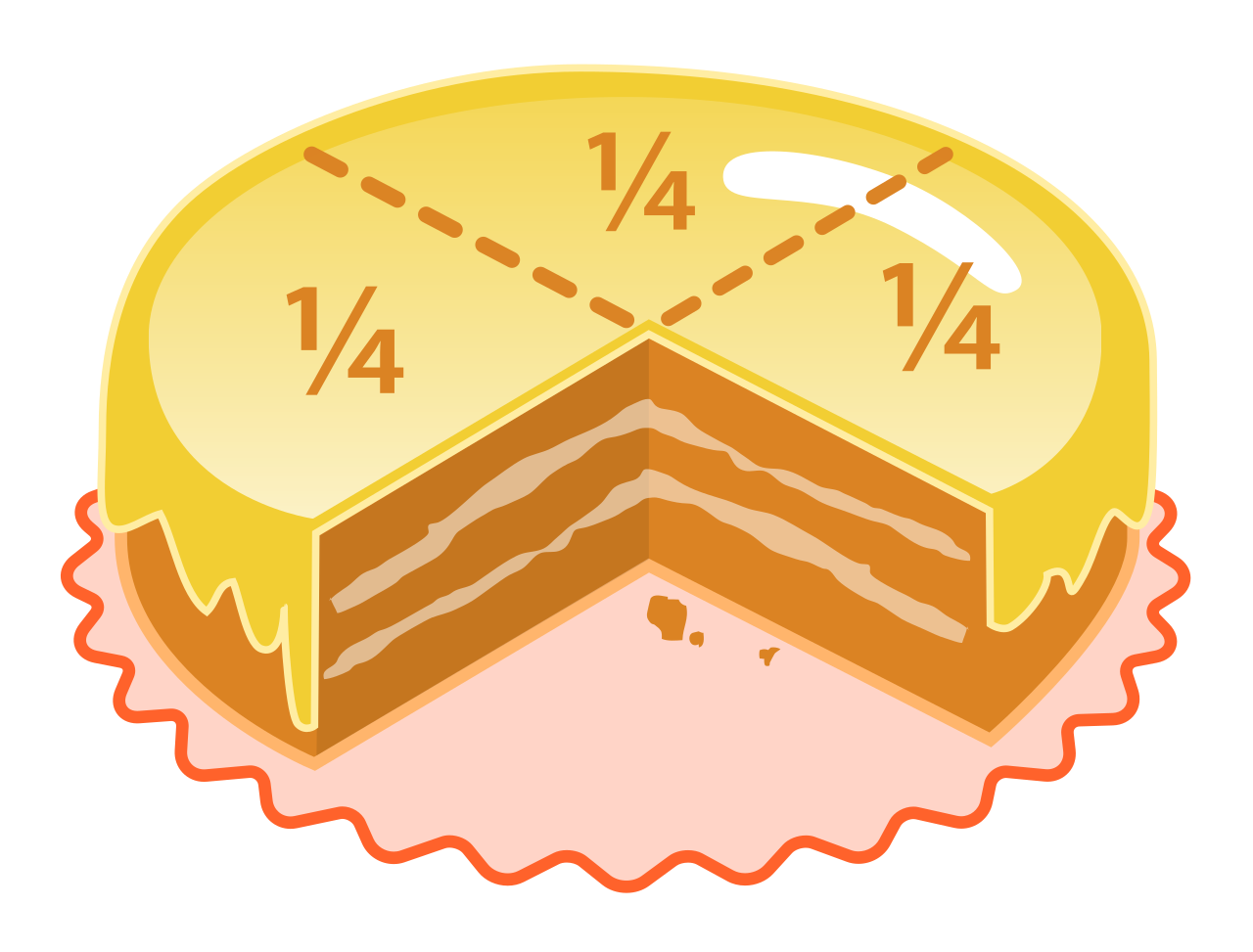
Fraction
The Genesis of Rational Numbers
The concept of fractions arose organically from humanity's need to quantify parts of a whole, a necessity that predates formal mathematical systems. Early civilizations like the Sumerians and Egyptians employed rudimentary fractional notations, often based on unit fractions, to manage trade, land division, and astronomical observations. The formalization of fractions as rational numbers, numbers that can be expressed as a ratio of two integers (p/q, where q is not zero), was a significant leap.
This development allowed for a more robust and universal arithmetic, enabling precise calculations and the resolution of problems that whole numbers alone could not address. The evolution from practical division to an abstract mathematical entity highlights the power of mathematical generalization.
A Historical Tapestry
The journey of fractional notation is a rich historical narrative. While ancient Egyptians used hieroglyphs for fractions, often with special symbols for common fractions like 1/2 and 3/4, it was the Indian mathematicians, notably Brahmagupta in the 7th century CE, who introduced a system remarkably similar to our modern notation, using a horizontal bar to separate the numerator and denominator. Arab mathematicians further refined and disseminated these concepts throughout the Islamic Golden Age, influencing European mathematics.
The widespread adoption of the current fractional notation in Europe, however, was a gradual process, solidifying by the Renaissance, which paved the way for advancements in algebra, calculus, and beyond.
The Indispensable Role of Fractions in Modern Science and Technology
Fractions are not merely an academic exercise; they are integral to the fabric of modern science, engineering, and economics. In physics, they are ubiquitous, from describing wave-particle duality (e.g., Planck's constant divided by frequency) to calculating probabilities in quantum mechanics. In chemistry, molarity and concentration are expressed using fractional relationships.
Engineering disciplines rely heavily on fractions for scaling, ratios, and tolerances in design and manufacturing. Economists use fractions to model market shares, interest rates, and financial instruments. Even in computer science, algorithms and data structures often involve fractional representations and calculations, underscoring their pervasive relevance.
The Structure of Fractions
A fraction, p/q, fundamentally represents the division of an integer p (the numerator) by a non-zero integer q (the denominator). The denominator signifies the number of equal parts into which a whole is divided, while the numerator indicates how many of those parts are being considered. This structure allows for the representation of all rational numbers.
A crucial concept is that of equivalent fractions, where different fractions can represent the same value (e.g., 1/2 = 2/4 = 3/6). Understanding this equivalence is key to simplifying fractions, performing arithmetic operations, and comparing their magnitudes, forming the basis for algebraic manipulation.
Fractions as a Gateway
Fractions serve as a critical bridge to more abstract mathematical domains. They are the building blocks of rational numbers, which form a dense subset of the real number line. The concept of limits, central to calculus, often involves sequences of fractions approaching a specific value.
Furthermore, fractions are essential for understanding ratios, proportions, and percentages, which are applied across virtually all quantitative fields. In abstract algebra, the field of rational numbers (Q) is constructed from the integers (Z) using equivalence classes of fractions, illustrating their foundational importance in higher mathematics and their role in constructing more complex number systems.
Go deeper
Frequently Asked Questions
What is a fraction?+
Why do we use fractions?+
How did ancient people write fractions?+
Are fractions used in science and everyday life?+
What does it mean when two fractions are equivalent?+
Based on content from Wikipedia · Licensed under CC BY-SA 4.0