

Flag of Mexico
Images

Monument to the flag of Mexico, in the historic area of the battle of May 5, in Puebla, Mexico.


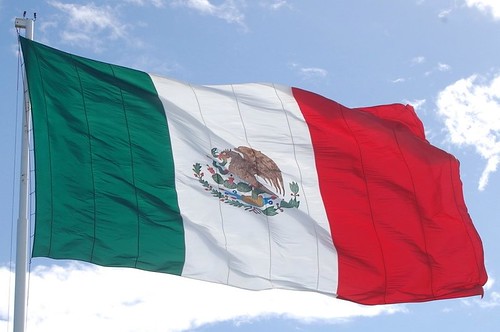


Evolution of a National Emblem
The national flag of Mexico, a striking vertical tricolor of green, white, and red, is far more than a mere national symbol; it is a palimpsest of Mexican history and identity. Its origins are deeply intertwined with the nation's struggle for independence from Spain. The three colors were initially adopted by the Army of the Three Guarantees, a unified force that secured Mexico's sovereignty.
The green represented independence and hope, the white symbolized the Roman Catholic faith (a unifying force at the time), and the red signified the union of Spaniards and Mexicans. While the religious connotation of white has largely faded, the core meanings of hope, unity, and the blood of heroes have endured and evolved. The flag’s design reflects a deliberate effort to forge a distinct national identity, moving away from colonial ties and embracing indigenous heritage, a process that has continued to shape its interpretation and significance over centuries.
The Aztec Legacy
Central to the Mexican flag's visual identity is the national coat of arms, prominently displayed on the white stripe. This emblem is not a European heraldic design but a direct descendant of the Aztec symbol for Tenochtitlan, the magnificent capital of the Aztec Empire. The iconic image of a golden eagle perched on a nopal cactus, devouring a serpent, is rooted in a foundational Aztec legend.
This legend recounts how the god Huitzilopochtli instructed the Aztecs to found their city where they witnessed this specific scene. By incorporating this powerful indigenous motif, the flag serves as a profound connection to Mexico's pre-Hispanic past, validating and celebrating its rich cultural heritage. It transforms the flag from a simple national marker into a living testament to the continuity of Mexican civilization, bridging the ancient world with the modern nation-state and fostering a sense of deep historical pride.
Symbolic Resonance
The symbolic weight of the flag's colors continues to resonate deeply within Mexican society. The green stripe embodies hope for the future and the nation's abundant natural resources, from its lush forests to its fertile agricultural lands. It speaks to the aspirations of a people constantly striving for progress and prosperity.
The white stripe, originally representing religious unity, now primarily signifies peace and integrity, crucial elements for social cohesion and national stability. It reflects a desire for harmonious coexistence and a commitment to ethical governance. The red stripe stands as a solemn tribute to the sacrifices of those who fought and died for Mexico's liberty and sovereignty.
It is a perpetual reminder of the struggles endured and the courage displayed in defending the nation, instilling a sense of solemn respect and patriotic duty among citizens.
The Flag as a Dynamic Symbol of Modern Mexico
In contemporary Mexico, the flag functions as a dynamic and multifaceted symbol. It is a constant presence in national life, appearing at official ceremonies, sporting events, and public gatherings, serving to unify diverse populations under a common banner. Beyond its historical and symbolic dimensions, the flag also represents Mexico's place on the global stage.
As a recognized emblem of a sovereign nation, it facilitates international relations and cultural exchange. For Mexicans living abroad, the flag often becomes an even more potent symbol of connection to their homeland, heritage, and community. Its enduring presence and evolving interpretations underscore its vital role in shaping and reinforcing a collective sense of national identity, resilience, and pride in the face of contemporary challenges and opportunities.
See also
Frequently Asked Questions
What do the colors green, white, and red mean on the Mexican flag?+
Why is there an eagle on the Mexican flag?+
Where does the eagle on the flag come from?+
What does the flag look like when it is flown?+
Why is the flag important to Mexico today?+
Based on content from Wikipedia · Licensed under CC BY-SA 4.0