

The Amazing Italian Flag!
Images

Flag of Italy (vertical display)




Echoes of Revolution
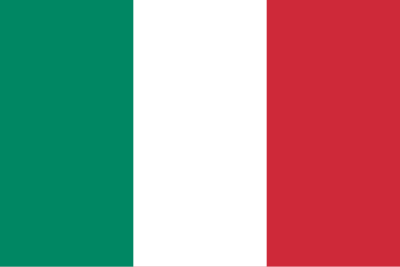
The Italian flag, or 'Il Tricolore,' is a potent emblem whose origins are inextricably linked to the revolutionary fervor that swept across Europe in the late 18th century. Its formal adoption as a national flag occurred on January 7, 1797, by the Cispadane Republic, a Napoleonic sister republic established in northern Italy. This act, taking place in Reggio Emilia, was a direct consequence of the ideals of national self-determination championed by the French Revolution.
The choice of three vertical pales of green, white, and red was not arbitrary. These colors had begun appearing in Italian revolutionary movements prior to 1797. Notably, they were present on a tricolour cockade adopted in Genoa on August 21, 1789, and later on the military war flag of the Lombard Legion on October 11, 1796.
These earlier appearances signify a growing consciousness and desire for a distinct Italian identity, predating the formal establishment of the Cispadane Republic and foreshadowing its eventual adoption as a national symbol.
Semantic Layers
The symbolic meanings attributed to the green, white, and red of the Italian flag have evolved over time, reflecting the nation's historical context and aspirations. While Article 12 of the Italian Constitution defines the flag's appearance, it does not explicitly assign meanings to its colors. However, popular interpretation and historical context offer rich insights.
The green is widely understood to represent the country's verdant landscapes, its rolling hills, plains, and the hope for the future. The white is often associated with the snow-capped peaks of the Alps and Apennines, or alternatively, with the purity of faith that has historically been central to Italian culture. The red is most commonly interpreted as a tribute to the blood shed by patriots and soldiers during the struggles for independence and unification, a solemn reminder of the sacrifices made to forge the modern Italian state.
These interpretations collectively weave a narrative of Italy's geography, its spiritual heritage, and its hard-won sovereignty.
The Tricolour as a Unifying Force
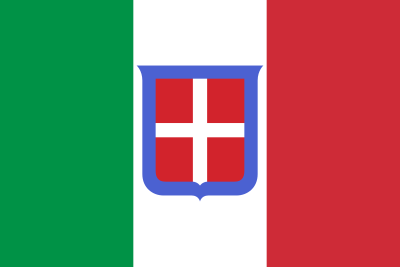
The Italian Tricolour played a pivotal role as a unifying symbol during the Risorgimento, the 19th-century movement for Italian unification. In a peninsula fragmented into numerous states and kingdoms, the tricolour emerged as a rallying point for nationalist sentiment, transcending regional differences. Its adoption as the national flag of the newly proclaimed Kingdom of Italy on March 17, 1861, marked a crucial moment in the nation's history.
From that point forward, the tricolour became an enduring emblem of Italian statehood and national identity, recognized both domestically and internationally. Its significance is so profound that Italian law protects its dignity, making insults against it a criminal offense. Furthermore, the flag's importance is reinforced through education, with its teaching mandated in Italian schools alongside other national symbols, ensuring that future generations understand its historical weight and cultural value.
Commemorating the Tricolour
The deep historical and cultural significance of the Italian flag is formally recognized through 'Festa del Tricolore' (Tricolour Day), celebrated annually on January 7th. This date was established by law in 1996 to commemorate the historic adoption of the tricolour by the Cispadane Republic in 1797. The celebration serves as a vital opportunity for Italians to reflect upon their national heritage, the principles of liberty and unity that the flag embodies, and the long journey towards becoming a unified nation.
It is a day when the flag is prominently displayed, and educational institutions often organize events to deepen understanding of its historical context and symbolic meaning. This annual observance underscores the enduring connection between the Italian people and their iconic banner, reinforcing its status as a cornerstone of national identity and pride.
See also
Frequently Asked Questions
What colors are on the Italian flag?+
When did Italy first use its flag?+
Why are the colors green, white, and red?+
When is Tricolour Day celebrated?+
Why is the Italian flag protected by law?+
Based on content from Wikipedia · Licensed under CC BY-SA 4.0