

Field Coil: The Invisible Magnet Maker!
Images

Field coil




The Electromagnet's Role
A field coil is a specialized electromagnet designed to produce a precise and often adjustable magnetic field, serving as a critical component in numerous electromechanical systems. Its fundamental construction involves a coil of conductive wire, typically copper, wound around a ferromagnetic core, usually iron or a specialized alloy. When a direct current, known as the field current, is passed through the coil, it generates a magnetic field proportional to the current and the number of turns in the coil.
This ability to control the magnetic field strength by varying the current is a key advantage over permanent magnets, allowing for dynamic regulation of machine performance. Field coils are integral to the operation of rotating electrical machines, such as DC motors, generators, and AC synchronous motors, where they establish the main magnetic flux necessary for torque production or voltage generation. The design of the coil, including its winding configuration, core material, and insulation, is optimized to handle the required current, dissipate heat, and withstand mechanical stresses.
Historical Trajectory
The conceptualization and application of field coils are rooted in the foundational discoveries of electromagnetism during the 19th century. Hans Christian Ørsted's observation in 1820 that an electric current produces a magnetic field, followed by André-Marie Ampère's formulation of the relationship between current and magnetic force, laid the theoretical groundwork. Michael Faraday's subsequent work on electromagnetic induction and his invention of the dynamo demonstrated the practical potential of generating electricity using magnetism.
As the demand for electric power grew, engineers like Werner von Siemens and Zénobe Gramme developed practical DC generators and motors that relied heavily on field coils wound on iron cores to create robust magnetic fields. These advancements were pivotal in the Second Industrial Revolution, enabling the widespread adoption of electric power for factories, transportation, and lighting, transforming society and industry.
Electromechanical Principles
In rotating electrical machines, field coils are strategically placed, often on the stator, to generate the primary magnetic field. The magnetic core, typically laminated to reduce eddy currents, is divided into a stator (stationary part) and a rotor (rotating part). The field coils are wound onto pole pieces within the core, which are shaped to direct the magnetic flux.
This flux forms a closed magnetic circuit, passing from the stator poles, across an air gap, through the rotor, and back to the stator via the yoke. The air gap is a critical design element, as it significantly influences the reluctance of the magnetic circuit and thus the strength of the magnetic field. The number and arrangement of poles, determined by the field coil configuration, dictate the machine's operating characteristics, such as speed and torque.
For instance, a machine with more poles will generally operate at a lower speed for a given frequency.
Diverse Applications
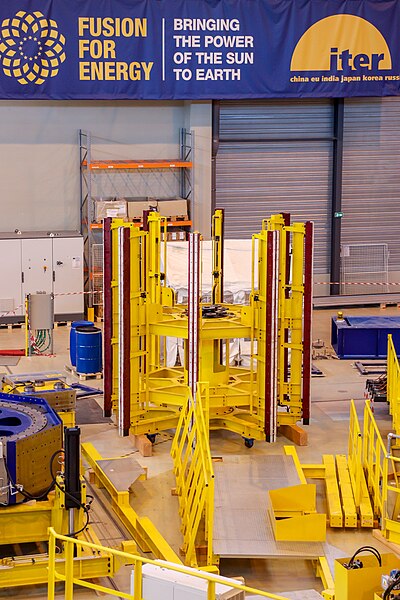
While indispensable in electric motors and generators, field coils find application in a broader spectrum of technologies. They are the heart of simple electromagnets used in scrapyards for lifting ferrous materials. In scientific research, high-strength field coils are crucial for particle accelerators and fusion research devices like tokamaks, where they confine and manipulate charged particles.
Advanced analytical instruments, such as mass spectrometers and Nuclear Magnetic Resonance (NMR) spectrometers, utilize precisely shaped and controlled magnetic fields generated by field coils for high-resolution analysis of matter. Historically, field coils were fundamental to early loudspeakers, generating the magnetic field that interacted with a voice coil to produce sound waves. Their versatility underscores their enduring importance in engineering and scientific innovation.
See also
Frequently Asked Questions
What is a field coil?+
How does a field coil make a magnetic field?+
Why do field coils need a core?+
Where are field coils used?+
What happens when the current in a field coil changes?+
Based on content from Wikipedia · Licensed under CC BY-SA 4.0