

Fernando Botero
Images

Fernando Botero Sculpture
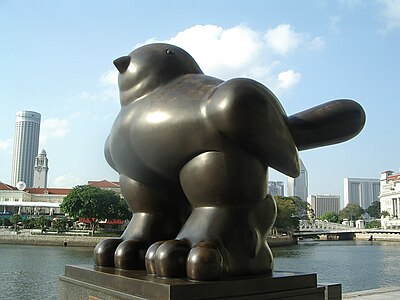


The Genesis and Evolution of Botero's Volumetric Aesthetic
Fernando Botero Angulo, born in 1932, emerged as a pivotal figure in 20th and 21st-century art, renowned for his unique stylistic signature, 'Boterismo.' This style is defined by the deliberate and consistent exaggeration of volume in his subjects, rendering figures and objects with a characteristic plumpness that is both immediately recognizable and thematically rich. Botero's artistic journey began in Colombia, where he honed his skills and developed an early appreciation for pre-Columbian art and the vibrant local culture.
His move to Europe, particularly Paris in 1973, marked a significant expansion of his practice, leading him to explore sculpture. This transition allowed him to imbue his volumetric concepts with tangible, monumental presence. Botero's work consistently engaged with the human form, but through a lens that defied conventional proportions, challenging viewers to reconsider perceptions of beauty, mass, and presence.
His dedication to this singular vision solidified his status as a globally celebrated artist.
From National Acclaim to International Art Stardom
Botero's ascent to international prominence was a testament to his distinctive artistic voice and persistent dedication. His breakthrough moment arrived in 1958 when he secured first prize at the prestigious Salón de Artistas Colombianos, an event that brought him significant national recognition. This early validation provided the momentum for his artistic ambitions to grow.
Relocating to Paris in 1973 was a crucial step, opening doors to a broader European art scene and facilitating his exploration of sculpture. Over the subsequent decades, Botero meticulously built an international reputation through consistent exhibitions in major galleries and museums across continents. By the 1990s, his work was not only widely exhibited but also highly sought after by collectors and institutions worldwide.
This global reach cemented his position as one of the most influential and recognized artists originating from Latin America, a status he maintained throughout his lifetime.
The Multifaceted Significance of Botero's Art
The enduring significance of Fernando Botero's art stems from its remarkable capacity to operate on multiple levels simultaneously. His signature volumetric style, while visually striking and often humorous, serves as a sophisticated vehicle for social and political commentary. Botero himself stated that his art could represent political criticism or humor, depending on the piece.
For instance, his depictions of historical events or figures, rendered in his characteristic style, can serve to both monumentalize and subtly critique, creating a distance that allows for a more objective, or perhaps more emotionally resonant, interpretation. Beyond commentary, Botero's work celebrates the richness and sensuality of form, often evoking a sense of abundance and vitality. He famously described his figures as 'voluptuous,' and this emphasis on fullness can be seen as a celebration of life and culture, particularly his Colombian heritage, which he identified with profoundly.
His art's accessibility, due to its bold visual language, also democratized engagement with complex themes, making it relevant to a broad audience.
Botero's Public Art
Fernando Botero's commitment to making art accessible extended beyond museum walls, manifesting in numerous large-scale public installations that have become iconic landmarks. His monumental sculptures, often cast in bronze and standing several meters tall, have been strategically placed in highly visible urban settings worldwide. Notable examples include installations on Park Avenue in New York City and along the prestigious Champs-Élysées in Paris.
These public displays are not mere decorations; they represent a deliberate effort to integrate art into the fabric of everyday life, engaging a diverse public that might not otherwise visit galleries or museums. The sheer scale and distinctive form of his sculptures command attention, transforming urban spaces and prompting dialogue. The widespread presence and significant market value of his work, with pieces selling for millions of dollars, underscore Botero's profound impact on the global art landscape and his success in bringing his unique artistic vision to the masses.
Botero's Enduring Influence and Legacy
Fernando Botero's legacy is that of an artist who forged an unmistakable visual language and used it to explore the human condition with both levity and depth. His style, Boterismo, is not merely an aesthetic choice but a conceptual framework that allowed him to comment on society, politics, and the very nature of representation. He achieved a rare feat: becoming both critically acclaimed and immensely popular, with his work collected by major international museums, corporations, and private collectors alike.
His dedication to public art ensured his creations reached a broad audience, making him a truly global cultural figure. In 2012, he was honored with the International Sculpture Center's Lifetime Achievement in Contemporary Sculpture Award, a fitting recognition of a career dedicated to shaping and expanding the possibilities of art. Botero remains a towering figure, celebrated as 'the most Colombian of Colombian artists' and a master of volumetric expression.
See also
Frequently Asked Questions
What is Fernando Botero famous for?+
Why did Botero move to Paris?+
How did Botero win recognition in Colombia?+
What does Botero's big style say about politics?+
When was Fernando Botero born?+
Based on content from Wikipedia · Licensed under CC BY-SA 4.0