

Federation Tower
Images
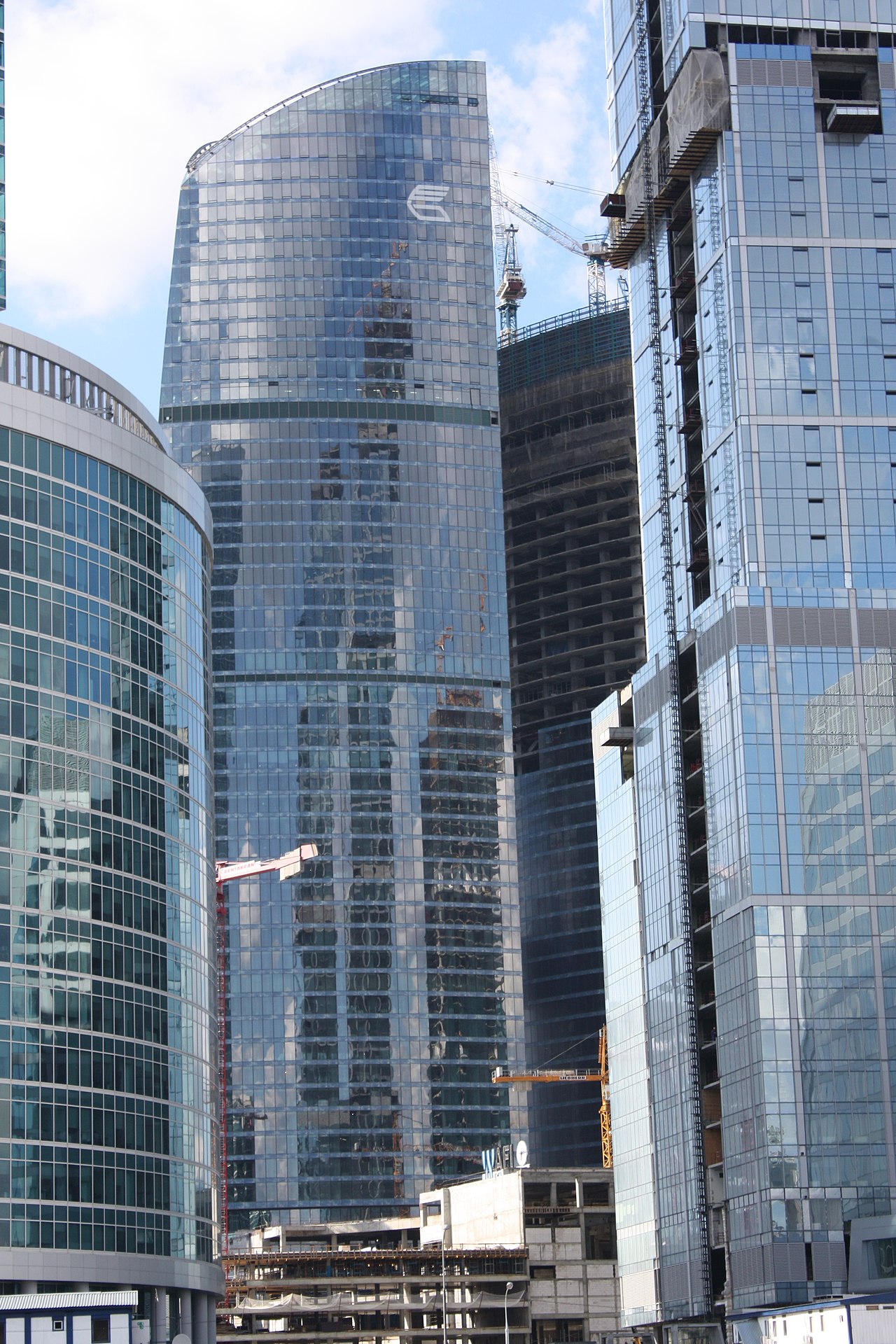
The Federation Tower in Moscow. 21 July 2008


Conception and Design
Federation Tower, situated within the Moscow International Business Center (MIBC), is a dual-skyscraper complex that represents a significant chapter in contemporary Russian architecture. The project was spearheaded by the collaborative vision of German-Russian engineer Sergei Tchoban and German professor Peter Schweger, with architectural design executed by nps+partner and Schweger Associated Architects.
This collaboration aimed to create a landmark that would not only define the skyline but also serve as a functional hub for business and commerce. The design itself is notable for its distinct yet complementary forms, with the taller Vostok tower and the slightly shorter Zapad tower rising from a unified podium. This approach ensures a cohesive aesthetic while allowing for differentiated heights and functionalities, a common strategy in supertall skyscraper development to create visual interest and optimize urban space.
A Construction Saga
The construction of Federation Tower is a compelling narrative of ambition meeting economic reality. Ground was broken in 2005, with the initial phase focusing on the Zapad tower, which was completed in 2008 at a height of 242 meters. However, the global financial crisis, known as the Great Recession, brought construction to an abrupt halt in August 2011.
This extended pause presented significant challenges, including potential structural integrity concerns and the need for project reevaluation. The resumption of construction in 2011 marked a critical turning point, allowing for the eventual completion of the Vostok tower on December 7, 2017. Vostok's impressive height of 374 meters not only made it the tallest building in Moscow but also the second-tallest in Europe at the time of its completion, a testament to the project's enduring vision and the successful navigation of economic downturns.
Architectural Dominance and Urban Significance
Federation Tower's significance extends beyond its impressive stature. The Vostok tower's ascent to become the tallest skyscraper in Russia and Europe (surpassing the South Tower of OKO, also within the MIBC) underscores Moscow's growing prominence in global architecture and development. This achievement is not merely symbolic; it signifies the city's capacity to undertake and complete world-class megaprojects.
The complex, owned by the AEON Corporation, is a vital component of the MIBC, contributing to its status as a premier business district. The presence of such supertall structures influences urban planning, infrastructure development, and the overall economic vitality of the area, creating a dynamic environment for businesses and residents alike. The initial plan for a spire, which would have extended the height to 450 meters, further illustrates the relentless pursuit of architectural superlatives.
Functionality and Integration
The Federation Tower complex is designed as a self-contained vertical ecosystem within the bustling metropolis of Moscow. The Vostok tower comprises 97 stories, while the Zapad tower features 63 stories, offering substantial space for diverse functions, primarily commercial and office use. These towers are constructed on a single, expansive podium, creating a unified base that anchors the two distinct structures.
The complex is strategically integrated into the urban fabric, bordered by a network of three named alleyways (Krasnopresnenskaya Embankment) and a driveway (3rd Main Street). This intricate network ensures accessibility and connectivity to the surrounding city. The complex's active role in the urban environment was underscored by an incident in July 2023, where a drone impacted a building within the complex, highlighting the realities of modern urban living and security considerations for such prominent structures.
See also
Frequently Asked Questions
What are the Federation Towers and where are they located?+
Who helped design the Federation Towers?+
How tall are the Vostok and Zapad towers?+
When were the towers built and when did construction stop?+
Why are the Federation Towers important for Moscow?+
Based on content from Wikipedia · Licensed under CC BY-SA 4.0