

Farah Province
Images
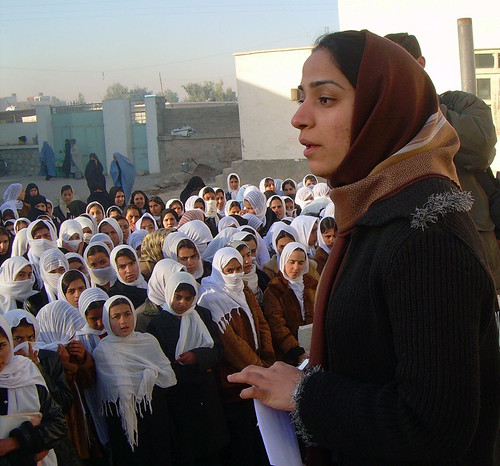
Malalai Joya visits a girls school in Farah province in Afghanistan


![US Consul General and PRT Farah meet with provincial governor [Image 4 of 7]](https://live.staticflickr.com/8386/8643416700_b8dea43896_n.jpg)
Geopolitical Significance and Geographic Landscape
Farah Province occupies a strategically vital position in western Afghanistan, sharing an extensive border with Iran. This proximity makes it a crucial interface for cross-border relations, trade, and security. Spanning approximately 48,000 square kilometers, it ranks as the fourth largest province in Afghanistan by area, yet it is characterized by its sparse population, making it the second least densely populated province.
This vastness implies significant natural resources and diverse geographical features, though specific details are not provided in the source. Its location places it adjacent to several other key Afghan provinces: Herat to the north, Ghor to the northeast, Helmand to the southeast, and Nimroz to the south. The province's geography is predominantly rural, with a landscape that supports a predominantly agrarian economy and a dispersed settlement pattern of hundreds of villages.
Historical Crossroads and Cultural Mosaic
While the provided text focuses on contemporary aspects, Farah's location suggests a rich historical tapestry woven from centuries of interaction. As a border province, it has undoubtedly been a conduit for cultural exchange, trade routes, and historical movements. The province is administratively divided into eleven districts, each potentially holding unique historical narratives and local traditions.
The capital city, Farah City, serves as the administrative and economic nucleus, further enhanced by the presence of Farah Airport, which facilitates connectivity. The connection to Iran through the border town of Mahirud highlights a long-standing relationship that has shaped the region's identity and economic activities. The mention of specific tourism sites like Pul Garden, New Garden, Kafee Garden, Sultan Amir shrine, and Kafer castle hints at historical settlements and cultural landmarks that merit further exploration.
Demographics and Societal Structure
Farah Province is home to approximately 563,026 inhabitants, a population that is both multi-ethnic and predominantly rural. The Pashtun ethnic group forms a significant portion of the population, with many belonging to the influential Durrani clan. They primarily speak a southern dialect of Pashto, known as Kandahari Pashto.
The presence of Dari speakers indicates the broader linguistic diversity of Afghanistan, reflecting historical and ongoing interactions. The societal structure is largely characterized as a rural tribal society, where kinship, tradition, and community play central roles in daily life and governance. This demographic makeup and social organization are fundamental to understanding the province's dynamics and development challenges.
Economic Foundations and Connectivity
The economic base of Farah Province is overwhelmingly agrarian, driven by its rural population engaged in farming and animal husbandry. The extensive land area provides the foundation for these activities, which are central to the livelihoods of hundreds of villages. Beyond agriculture, Farah's strategic border location with Iran fosters economic interdependence through trade.
The town of Mahirud on the Iranian side serves as a key point for this exchange. The existence of Farah Airport in proximity to the capital city signifies a level of infrastructure development aimed at improving logistical capabilities and potentially supporting other economic sectors beyond primary production. This blend of traditional agriculture and cross-border trade defines the economic landscape of Farah.
Governance and Education in Farah
As one of Afghanistan's 34 provinces, Farah operates within the national governmental framework. The province is administered through its capital, Farah City, and its eleven districts. The specific structure of local governance, including the roles of district governors and local councils, would align with Afghanistan's broader administrative policies. Information on the political system or specific governance challenges within Farah is not detailed in the provided source, but its status as a border province likely influences its administrative priorities and security considerations.
Similarly, while the source mentions the population and its distribution, specific details regarding the educational system, such as the number of schools, enrollment rates, or educational challenges, are not elaborated upon. However, it can be inferred that educational access and quality in a predominantly rural and tribal society like Farah's would be a significant aspect of its development and human capital.
See also
Frequently Asked Questions
What is Farah Province?+
Where is Farah Province located?+
Why is Farah Province important?+
How do people in Farah Province make a living?+
What are some places to visit in Farah Province?+
Based on content from Wikipedia · Licensed under CC BY-SA 4.0