

Eva Braun
Images

Germany-00449 - Eva Braun's Tea Room




The Genesis of a Relationship
Eva Anna Paula Braun entered Adolf Hitler's orbit in 1929, a mere 17-year-old working as an assistant and model for Heinrich Hoffmann, Hitler's personal photographer in Munich. This initial professional connection rapidly evolved into a personal one, with Hitler, significantly older at 40, taking a keen interest in her. Their relationship was characterized by a degree of secrecy and intensity, underscored by Braun's two documented suicide attempts during their early years, suggesting the emotional toll and precariousness of their association.
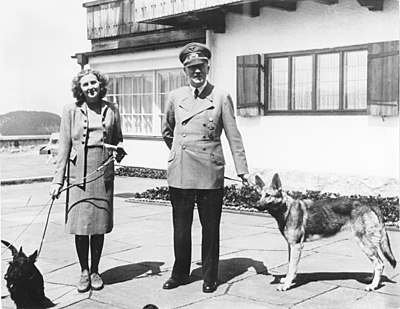
By 1936, Braun had transitioned from a peripheral figure to a permanent resident within Hitler's household at the Berghof, his mountain retreat near Berchtesgaden. This move marked the beginning of a life lived largely in seclusion, a deliberate choice to shield her from the public gaze and the escalating political machinations of the Third Reich, allowing her to cultivate a private existence within Hitler's immediate sphere.
A Life Apart
Throughout the tumultuous years of World War II, Eva Braun maintained a remarkably sheltered existence. While the world grappled with unprecedented conflict and atrocity, Braun's life was largely confined to the opulent and isolated settings of the Berghof and later, Hitler's various residences. She became an integral, albeit discreet, member of Hitler's inner social circle, privy to aspects of his personal life that remained hidden from the broader public and even many high-ranking Nazi officials.
Her public appearances were rare; she did not attend official functions with Hitler until mid-1944. This shift coincided with the marriage of her sister, Gretl, to Hermann Fegelein, an SS liaison officer on Hitler's staff. This familial connection provided a pretext for Braun's occasional presence at public events, momentarily bridging the gap between her private life and the regime's public face, yet her fundamental role remained that of a companion removed from the political arena.
Unwavering Loyalty
As the Third Reich faced imminent collapse in the spring of 1945, Eva Braun's commitment to Adolf Hitler solidified into an act of profound personal loyalty. Rejecting any notion of escape or survival independent of him, she traveled to Berlin to be by his side in the Führerbunker, a subterranean command center beneath the Reich Chancellery. This decision placed her directly in the path of the advancing Red Army, amidst the chaos and destruction of the capital.
In the bunker's claustrophobic confines, with Soviet forces closing in, Braun and Hitler were married in a brief civil ceremony on April 29, 1945. Braun, at 33, became Hitler's wife just two days before their deaths, a symbolic act of union in the face of absolute defeat and a testament to their enduring, albeit deeply problematic, bond.
Death and Revelation
The tragic end came swiftly. Less than 40 hours after their wedding, on April 30, 1945, Eva Braun and Adolf Hitler committed suicide within the bunker. Braun ingested a capsule of cyanide, a method chosen for its speed and certainty, while Hitler died by a gunshot to the head.
Their deaths signaled the final moments of the Nazi regime. Crucially, the vast majority of the German populace and the world remained unaware of the depth and duration of Braun's relationship with Hitler until after their demise. Her most tangible legacy lies in the extensive collection of color photographs and films she meticulously created, documenting Hitler's private life.
These visual records, while controversial due to their subject matter, offer an unparalleled, albeit filtered, perspective on the personal world of one of history's most reviled figures.
See also
Frequently Asked Questions
Who was Eva Braun?+
How did Eva Braun meet Adolf Hitler?+
Where did Eva Braun live with Hitler?+
Did Eva Braun ever go to public events?+
What happened to Eva Braun at the end of World War II?+
Based on content from Wikipedia · Licensed under CC BY-SA 4.0