

Eswatini
Images
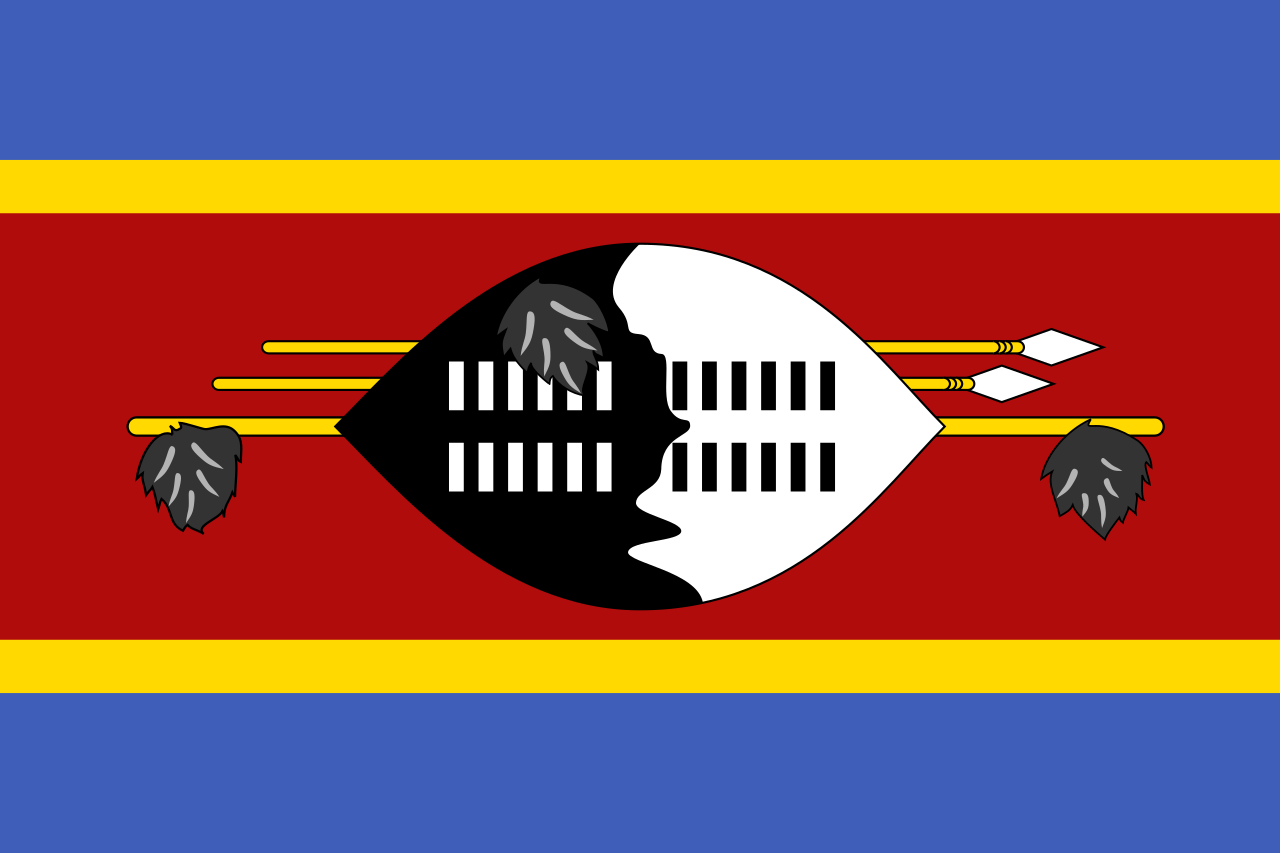
Eswatini
Opens Google Maps in new tab
Geographic and Demographic Tapestry
Eswatini, a diminutive landlocked nation in Southern Africa, presents a striking contrast of landscapes within its compact borders. Measuring no more than 200 km north to south and 130 km east to west, it is one of the continent's smallest countries. This limited area encompasses a diverse topography, ranging from the cool, mountainous Highveld in the north to the hot, dry Lowveld in the south.
This geographical variation supports distinct ecosystems and agricultural potentials. The nation's population is predominantly ethnic Swazi, speaking siSwati as their primary language, though English is also an official language, facilitating international relations and commerce. The capital cities, Mbabane (executive) and Lobamba (legislative), serve as centers of governance and cultural significance, respectively.
The country's relatively young population, with 35% aged 14 or younger and a median age of 22, presents both opportunities and challenges for future development.
The Enduring Swazi Monarchy
The Kingdom of Eswatini stands as Africa's last absolute monarchy, a system of governance that has persisted through centuries of change. The Swazi kingdom was established in the mid-18th century, with its modern boundaries largely defined during the colonial era's 'Scramble for Africa' in 1881. The nation and its people derive their name from King Mswati II, who significantly expanded and unified the kingdom in the 19th century.
After a period as a British High Commission territory from 1903 until regaining full independence in 1968, the country, then known as Swaziland, reverted to its traditional monarchical rule. In 2018, the official name was changed to Eswatini, aligning with the vernacular usage. The current monarch, King Mswati III, has reigned since 1986.
While elections are held every five years to determine the composition of the House of Assembly and the Senate, political parties are prohibited from participating, underscoring the monarch's ultimate authority. A constitution was adopted in 2005, outlining the framework of governance.
Cultural Pillars
The cultural identity of Eswatini is deeply interwoven with its royal traditions, most vividly expressed through two major annual ceremonies: the Umhlanga, or Reed Dance, and the Incwala, or Kingship Dance. The Umhlanga, typically held in late August or early September, is a spectacular event where tens of thousands of young, unmarried women gather reeds from riverbeds to present to the Queen Mother. This ritual symbolizes their purity, hard work, and readiness for marriage, serving as a significant cultural display and a rite of passage.
The Incwala, celebrated in December and January, is a more sacred and complex ceremony that marks the beginning of the new year and is central to the reaffirmation of the king's divine right to rule and the nation's prosperity. These events are not merely festivals but are critical components of Eswatini's social fabric and national cohesion, reinforcing traditional values and the monarchy's central role.
Economic Realities and Global Integration
Eswatini operates as a developing nation with a lower-middle income economy, heavily influenced by its geographical proximity and economic ties to South Africa. As a member of the Southern African Customs Union (SACU) and the Common Market for Eastern and Southern Africa (COMESA), its trade policies are often integrated with regional partners. The national currency, the lilangeni, is pegged to the South African rand, providing a degree of economic stability and facilitating trade.
Key sectors driving employment and economic activity include agriculture and manufacturing. While South Africa remains its principal trading partner, Eswatini also engages in significant trade with overseas partners such as the United States and the European Union. Membership in organizations like the Southern African Development Community (SADC), the African Union, and the United Nations highlights its participation in broader international and continental frameworks.
Health Challenges and Societal Well-being
Despite its rich cultural heritage and economic aspirations, Eswatini faces significant public health challenges, most notably the high prevalence of HIV/AIDS and tuberculosis. With 28% of the adult population living with HIV, the country has one of the highest rates globally. This epidemic, coupled with other health issues, has contributed to a low life expectancy, recorded at 58 years as of 2018, placing it among the lowest worldwide.
These health crises place a considerable strain on the nation's resources and its young demographic. Addressing these complex health issues is paramount for Eswatini's sustainable development and the well-being of its citizens, requiring ongoing national and international efforts.
Go deeper
Frequently Asked Questions
What is Eswatini?+
Why did the country change its name from Swaziland to Eswatini?+
Where are the capital cities of Eswatini?+
What is the Umhlanga or Reed Dance?+
Who is the king of Eswatini?+
Based on content from Wikipedia · Licensed under CC BY-SA 4.0