

The Duchy of Milan: A Land of Dukes and Dreams!
Images

Osso Buco in the making 9july09


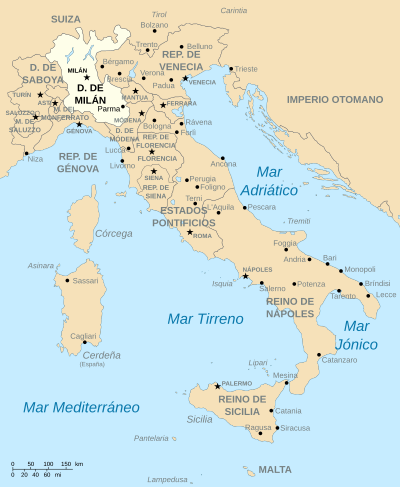


Genesis and Early Consolidation
The Duchy of Milan emerged in 1395, not from a vacuum, but from the established power of the Visconti family, who had governed Milan since 1277. Gian Galeazzo Visconti, then Lord of Milan, elevated his territory to a duchy, a significant political maneuver that legitimized and expanded his authority. The initial territory encompassed twenty-six towns and a substantial rural hinterland in the central Padan Plain, strategically positioned east of the Montferrat hills.
This created a compact, defensible state with a strong agricultural base. Its geographical position, however, was inherently precarious, wedged between the expanding Republic of Venice to the east, the formidable Swiss Confederacy to the north, and the maritime Republic of Genoa to the south, which acted as a buffer to the Mediterranean. This geopolitical reality shaped its foreign policy and internal development for centuries, making it a constant object of desire for its neighbors.
The Sforza Era
Following the Visconti line's end, the Duchy passed to the Sforza family, ushering in what is often considered its golden age. Under Sforza rule, Milan transformed into one of the most prosperous states of the Italian Renaissance. This economic boom was significantly fueled by the development and dominance of the silk industry.
The cultivation of silkworms and the intricate process of silk production became a cornerstone of Milanese economy, creating a sophisticated manufacturing sector and generating substantial wealth. This prosperity wasn't merely economic; it fostered a vibrant cultural environment. Milan became a major center for arts, architecture, and humanist scholarship, attracting renowned artists and intellectuals.
This period of flourishing cultural and economic activity cemented Milan's status as a leading Italian state, making its control a primary objective for larger European powers.
Centuries of Contention
The Duchy's wealth and strategic importance inevitably drew the attention of major European powers, leading to prolonged periods of conflict. From the late 15th century, Milan became a key battleground in the Italian Wars, primarily contested between the Habsburg Monarchy and the Kingdom of France. These two colossal powers saw control of Milan as essential for their dominance in Italy and broader European ambitions.
This rivalry meant the duchy frequently changed hands. It was ruled by Habsburg Spain from 1556, a period marked by significant political maneuvering and economic strain. In 1707, during the War of the Spanish Succession, control shifted to Habsburg Austria.
This continuous struggle for dominance not only defined Milan's foreign policy but also had profound impacts on its internal administration, economy, and the lives of its inhabitants, who endured decades of uncertainty and warfare.
The End of an Era and Legacy
The Duchy of Milan's independent existence concluded with the advent of the French Revolution and the subsequent Napoleonic Wars. In 1796, Napoleon Bonaparte conquered the territory, effectively ending the duchy's centuries-old political identity. Following Napoleon's defeat, the Congress of Vienna in 1815 aimed to restore the European order.
However, the Duchy of Milan was not re-established. Instead, its former territories were incorporated into the Austrian-controlled Kingdom of Lombardy–Venetia. This marked a significant shift, placing the region under direct Austrian imperial rule.
The eventual unification of Italy saw Lombardy, the heartland of the former duchy, ceded to the Kingdom of Piedmont-Sardinia in 1859, paving the way for the formation of the Kingdom of Italy in 1861. Though the duchy itself is a historical artifact, its legacy endures in the rich cultural heritage, economic dynamism, and complex political history of modern northern Italy.
Mechanisms of Governance and Economy
The Duchy of Milan operated as a hereditary domain, with power vested in the Duke and passed down through his family line. The Visconti and Sforza families established administrative structures that, while evolving, maintained a degree of continuity. Key to its economic success was the sophisticated management of its agricultural resources, particularly in the fertile Po Valley, and the strategic promotion of specialized industries like silk production.
This involved guilds, trade regulations, and the patronage of artisans, fostering a highly skilled workforce. The duchy also engaged in complex diplomatic relations and military alliances, often navigating the treacherous waters between larger European powers. Its financial strength, derived from taxation and trade, funded both its cultural projects and its participation in frequent wars, highlighting the intricate interplay between economic prosperity and geopolitical ambition that characterized its existence.
See also
Frequently Asked Questions
What was the Duchy of Milan?+
Who were the Visconti and Sforza families?+
Why was silk so important to Milan?+
When and how did the Duchy of Milan end?+
Who fought over Milan during the Italian Wars?+
Based on content from Wikipedia · Licensed under CC BY-SA 4.0