

Druid Oak
Images

Druid's Oak


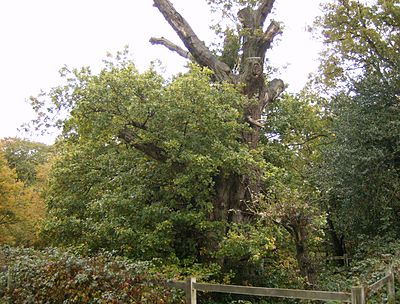


Arboreal Chronometers
The designation 'Druid Oak' refers not to a distinct botanical classification but to individual oak trees (genus Quercus) that have attained exceptional age, typically spanning several centuries. These venerable specimens are primarily concentrated within the ancient woodland ecosystems of Britain, with notable examples preserved in locations such as Salcey Forest, Northamptonshire. Their immense longevity positions them as living historical records, having endured through numerous epochs and societal shifts.
The appellation 'Druid Oak' signifies a profound historical and cultural association, elevating these trees beyond mere flora to the status of significant natural landmarks and sacred sites. Their imposing stature, extensive canopy, and deeply fissured bark are physical manifestations of their protracted existence, contributing immeasurably to the ecological complexity and aesthetic grandeur of their forest environments. These trees represent the pinnacle of arboreal maturity within their habitats.
The 'Knower of Oak Trees'
The nomenclature 'Druid Oak' is inextricably tied to the historical Druids, the priestly and learned class of ancient Celtic societies. These individuals held a deep reverence for the natural world, and oak woodlands were particularly esteemed as sites of spiritual power and ritual. It is widely theorized that Druids conducted significant ceremonies, deliberated on matters of law and governance, and imparted knowledge within the sheltering embrace of these ancient oaks.
The very term 'Druid' is believed by many scholars to originate from the Proto-Celtic 'dru-wid,' translating to 'oak-knower' or 'one who knows the oak.' This linguistic connection underscores the central role that oak trees played in Druidic cosmology, spirituality, and their perceived understanding of natural forces. Consequently, these ancient oaks are not merely old trees but potent symbols of a sophisticated, nature-centric belief system that has largely vanished.
Ecological Keystone Species and Cultural Heritage Anchors
The significance of Druid Oaks extends across ecological and cultural domains. Ecologically, their advanced age translates into highly complex microhabitats. The decaying heartwood, extensive root systems, and fissured bark provide crucial niches for a vast array of organisms, including specialized invertebrates, saproxylic beetles, diverse fungal communities, and numerous avian species that rely on mature trees for nesting and foraging.
These ancient trees act as ecological anchors, supporting biodiversity that is often diminished in younger, managed forests. Culturally, Druid Oaks serve as irreplaceable tangible links to Britain's deep past. They offer a direct connection to the natural landscapes and spiritual practices of pre-Roman and early medieval peoples, preserving a sense of continuity and historical depth.
Their preservation is thus paramount for maintaining both ecological integrity and the cultural landscape, embodying a unique intersection of natural history and human heritage.
From Acorn to Arboreal Monument
The genesis of a Druid Oak lies in the humble acorn, a seed that embarks on a multi-century journey of growth. Germination requires specific environmental conditions, and the sapling faces numerous challenges before establishing itself. Over decades, the young oak slowly develops its characteristic form, its trunk gradually increasing in girth and its branches extending outwards, potentially reaching heights comparable to a 4-5 story building.
This protracted growth phase is a testament to the tree's resilience, enabling it to withstand environmental stressors such as extreme weather, disease, and competition. As the oak matures into antiquity, it often develops features like hollows, cavities, and extensive deadwood, which are not signs of decay but indicators of its advanced ecological value. These ancient trees continue to play a vital role in their ecosystems, supporting life and contributing to the forest's character until their eventual, natural senescence, marking the end of a remarkable arboreal lifespan.
See also
Frequently Asked Questions
What is a Druid Oak?+
Why are Druid Oaks special?+
Where can you find Druid Oaks?+
How old can a Druid Oak be?+
What animals live in Druid Oaks?+
Based on content from Wikipedia · Licensed under CC BY-SA 4.0