

Downtown: The Heart of the City!
Images

Downtown Dallas, 10-12-10


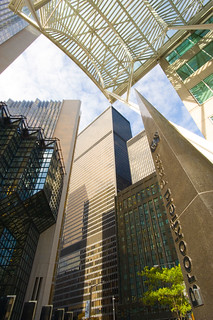
The Genesis and Evolution of Downtown
The concept of 'downtown' primarily originates from American and Canadian urban development, denoting the city's historical, geographical, and often commercial nucleus. It is frequently synonymous with the Central Business District (CBD), a concentrated area characterized by high-density commercial and office buildings. Historically, downtowns emerged as the earliest settlements, serving as initial hubs for trade, governance, and social interaction.
Over time, as cities expanded, downtown areas evolved, often retaining their core functions while adapting to new economic realities. This evolution has led to a unique urban fabric where historical architecture frequently coexists with modern skyscrapers, symbolizing the city's journey from its origins to its present state. The term itself reflects a spatial orientation, often implying the 'down' direction from a higher elevation or simply the central point of activity.
Economic Powerhouse and Service Concentration
Economically, downtowns are disproportionately significant, acting as the primary engines for a city's service-based economy. Despite often comprising a small percentage of a city's total land area, they concentrate a vast majority of employment, particularly in high-value sectors such as finance, law, technology, and corporate management. This concentration of 'white-collar' jobs means that downtowns are critical for a city's economic output and its position in regional and global markets.
They attract significant investment and are often the first adopters of innovative business practices and technologies. While some downtowns may exhibit lower population densities and income levels compared to surrounding suburban areas, their role as employment centers and hubs for specialized services remains paramount, driving the broader urban economy.
The Cultural and Civic Nexus
Beyond commerce, downtown areas serve as vital cultural and civic centers. They are frequently the locations for major cultural institutions, including museums, theaters, art galleries, and concert halls, which contribute to a city's identity and attract tourism. Downtowns are also the focal points for civic life, housing government buildings such as city halls and courthouses, where political decisions are made and public services are administered.
This concentration of cultural and governmental functions makes downtown a place of public gathering and discourse. Furthermore, downtowns are typically well-served by public transit networks, facilitating access for residents from all parts of the metropolitan area and reinforcing their role as inclusive public spaces.
Urban Dynamics and Social Geography
The social geography of downtowns can be complex. While they are centers of economic opportunity and cultural vibrancy, they can also present challenges. In some cities, downtowns may experience gentrification, leading to increased housing costs and displacement of long-term residents or lower-income businesses.
The contrast between high-rise corporate offices and the needs of the surrounding community is a recurring theme in urban planning discussions. Understanding downtown requires acknowledging its multifaceted nature: it is a site of intense economic activity, a repository of historical memory, a stage for cultural expression, and a critical node in the city's transportation and governance systems. Its continued relevance depends on its ability to adapt and serve the diverse needs of its inhabitants and visitors.
Go deeper
Frequently Asked Questions
What is downtown in a city?+
Why is downtown important for jobs?+
Where can you find museums and theaters in downtown?+
How does downtown help people get around?+
Why can downtown sometimes be hard for some people?+
Based on content from Wikipedia · Licensed under CC BY-SA 4.0