

Dominguinhos: The Accordion Star!
Images

Dominguinhos


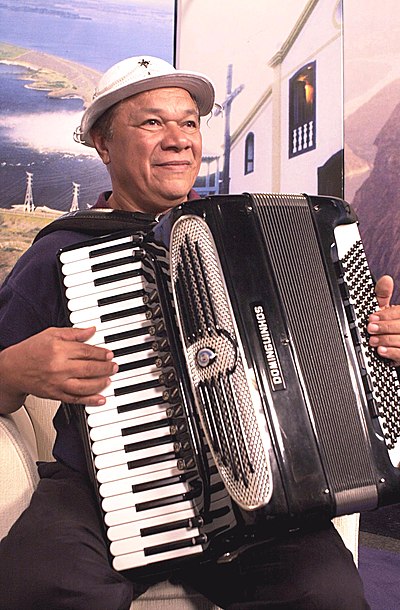
The Genesis of a Musical Innovator
José Domingos de Morais, universally known as Dominguinhos, emerged from the vibrant cultural landscape of Pernambuco, Brazil, in 1941. His formative years were steeped in the sonic traditions of the Brazilian Northeast, particularly the influential music of Luiz Gonzaga, the undisputed 'King of Baião,' and the energetic genre of Forró. Forró itself is a complex musical synthesis, a rich tapestry woven from European harmonic structures, African polyrhythms, and Indigenous melodic sensibilities that coalesced in the northeastern region.
Dominguinhos did not merely adopt these influences; he engaged in a profound process of musical alchemy. He absorbed the essence of these traditions, reinterpreted their melodic and rhythmic frameworks, and infused them with his own distinctive improvisational flair and compositional ingenuity. This deep engagement with his roots allowed him to transcend mere imitation, laying the groundwork for his unique artistic voice and his significant contributions to Brazilian Popular Music (MPB).
Synthesizing Tradition and Innovation in MPB
Dominguinhos' enduring legacy is intrinsically linked to his remarkable ability to forge a singular musical identity from a confluence of diverse influences. As an accordion virtuoso, he possessed an extraordinary command of his instrument, capable of eliciting a vast spectrum of emotional expression and melodic complexity. His compositions frequently served as evocative narratives of the Sertão, the challenging yet culturally rich semi-arid region of Northeast Brazil, capturing its stark beauty, its social realities, and its resilient spirit.
His work significantly advanced the evolution of MPB, a genre characterized by its eclectic nature and its reflection of Brazil's multifaceted cultural heritage. Dominguinhos' artistry was instrumental in elevating regional music forms to national and international acclaim. His extensive collaborations with luminaries such as Caetano Veloso, Gilberto Gil, Gal Costa, and Maria Bethânia underscore his stature within the Brazilian music pantheon, demonstrating a profound artistic dialogue that enriched the broader musical landscape.
Cultural Resonance and Critical Acclaim
The impact of Dominguinhos transcends his personal discography; he stands as a crucial conduit in the ongoing narrative of Brazilian musical development, ensuring that the traditions of the Northeast not only endured but thrived with contemporary relevance. The widespread adoption and recording of his compositions by other prominent Brazilian artists, including Chico Buarque, Elba Ramalho, and Fagner, serve as a powerful testament to the universal appeal and artistic merit of his songwriting.
His receipt of the prestigious Latin Grammy in 2002 for his album 'Chegando de mansinho' represented a significant international validation of his artistic contributions. Furthermore, his integral involvement in significant cultural projects, such as composing the soundtrack for the film 'O Cangaceiro' (1997) and participating in the documentary 'O Milagre de Santa Luzia,' highlights his role as a cultural ambassador, effectively disseminating the soul and sophistication of Brazilian accordion music to diverse audiences and platforms.
The Enduring Influence and Artistic Philosophy
Dominguinhos' artistic trajectory was defined by a relentless pursuit of innovation coupled with an unwavering fidelity to his cultural origins. He embodied the role of a cultural custodian, meticulously preserving and dynamically evolving the musical heritage of his homeland. His accordion playing was celebrated for its technical virtuosity, its profound emotional resonance, and its capacity to articulate both exuberant joy and poignant melancholy.
As a vocalist, his delivery possessed an innate authenticity that resonated deeply with the spirit of the Brazilian Northeast. His collaborative endeavors were far more than mere artistic pairings; they were profound exchanges that amplified the creative output of all involved. His contributions to film scores and documentaries expanded the reach of his music, introducing its distinctive character to new contexts and demographics.
Dominguinhos' enduring legacy is a vibrant testament to music's unparalleled capacity to foster human connection, safeguard cultural identity, and serve as an enduring source of inspiration for successive generations of musicians and artists.
Dominguinhos' Place in the Pantheon of Brazilian Music
Dominguinhos' career is a masterclass in artistic integrity and cultural stewardship. He was not simply a performer but a vital architect of modern Brazilian music, demonstrating how tradition can be a springboard for innovation. His influence can be traced in the work of contemporary artists who continue to explore the rich textures of Northeastern Brazilian music.
The fact that he performed and recorded with such a wide array of artists, from the experimental Gilberto Gil to the more traditional Elba Ramalho, speaks to the versatility and universal appeal of his musical language. His commitment to his craft, recognized by accolades like the Latin Grammy, solidified his status as a national treasure. His music continues to be celebrated, studied, and enjoyed, ensuring that his unique contribution to the global soundscape remains vibrant and influential for years to come.
See also
Based on content from Wikipedia · Licensed under CC BY-SA 4.0