

Desert Fungi: Tiny Survivors of the Sands!
Images

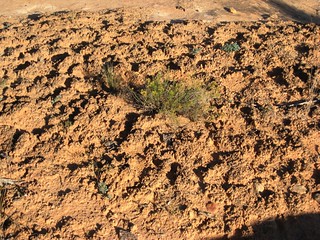
Cryptobiotic Soil (I thnk so anyway...)




Colonizing the Extremes
Desert fungi represent a fascinating group of extremophiles, thriving in arid environments characterized by scarce water, high temperatures, and intense solar radiation. They primarily inhabit the biological soil crusts (BSCs) of these regions, forming a critical component of these complex microbial communities alongside cyanobacteria, algae, and lichens. BSCs are vital for desert ecosystems, contributing to soil stability, preventing erosion, and facilitating nutrient cycling.
The fungi within BSCs are not merely passive inhabitants; they actively participate in these processes, often forming symbiotic relationships with other organisms or breaking down organic matter. Their presence underscores the surprising biodiversity that can exist even in landscapes considered inhospitable, challenging our perceptions of where life can flourish. These fungi are pioneers, paving the way for other life forms by modifying the soil environment.
Physiological Fortifications
The survival of desert fungi hinges on a suite of sophisticated physiological and biochemical adaptations. Many species exposed to direct sunlight possess melanin, a complex pigment that provides significant protection against damaging ultraviolet (UV) radiation and thermal stress. This endogenous photoprotection is crucial for preventing DNA damage and cellular dysfunction in high-energy environments.
Beyond sun protection, these fungi exhibit remarkable desiccation tolerance, enabling them to withstand prolonged periods of extreme dryness. This involves mechanisms such as the accumulation of compatible solutes (like trehalose), the synthesis of protective proteins, and the ability to rapidly rehydrate and resume metabolic activity upon water availability. Their low nutritional requirements further enhance their ability to persist in oligotrophic desert soils, where organic carbon and essential nutrients are severely limited.
Reproductive Resilience
Ensuring reproductive success in a challenging environment requires specialized strategies. Desert fungi often produce large, dark, unicellular spores. The dark pigmentation, again linked to melanin, offers protection against UV radiation during dispersal and germination phases.
The size and morphology of these spores may also confer advantages in terms of water retention or resistance to physical abrasion. For sexually reproducing Ascomycetes, evolutionary pressures have led to the development of highly resilient reproductive structures. Species like Chaetomium spp. form thick-walled, dark perithecia.
These protective casings shield the developing ascospores from desiccation, heat, and mechanical damage, increasing the probability of survival until favorable conditions permit germination. This intricate reproductive biology is key to the long-term persistence of these fungal populations.
Habitat Heterogeneity
The desert landscape is not uniform, and neither are the habitats of its fungi. While some species are adapted to the full intensity of desert conditions, others occupy more protected microhabitats. Beneath the canopy of desert shrubs, for instance, conditions are moderated: temperatures are lower, and soil moisture is retained for longer periods.
These shaded environments support fungal species, such as Gymnoascus reesii, that may be less robust in their UV and desiccation resistance compared to those found in exposed areas. This ecological segregation highlights the importance of microhabitat heterogeneity in supporting fungal diversity within arid regions. It demonstrates that even within extreme environments, a range of ecological niches can exist, allowing for the coexistence of species with varying degrees of adaptation.
Ecological Significance and Future Perspectives
Desert fungi play a disproportionately significant role in arid ecosystems. As integral components of biological soil crusts, they contribute substantially to soil aggregation and stabilization, mitigating wind and water erosion – a critical function in fragile desert environments. They also participate in the decomposition of organic matter and the cycling of essential nutrients, making these resources available to other desert flora.
Furthermore, some desert fungi form mycorrhizal associations with desert plants, enhancing water and nutrient uptake for their hosts. Understanding these fungi is increasingly important as climate change leads to desertification in many parts of the world. Research into their resilience mechanisms could offer insights into developing drought-resistant crops or improving soil health in degraded lands, showcasing their potential relevance beyond their immediate ecological context.
See also
Frequently Asked Questions
What are desert fungi and where do they live?+
How do desert fungi protect themselves from the sun?+
Why are desert fungi important for desert soil?+
How do desert fungi survive when there is almost no water?+
How do desert fungi reproduce in harsh conditions?+
Based on content from Wikipedia · Licensed under CC BY-SA 4.0