

Damascus Governorate
Images

Damascus in Syria (+Golan hatched)



Geopolitical and Environmental Context
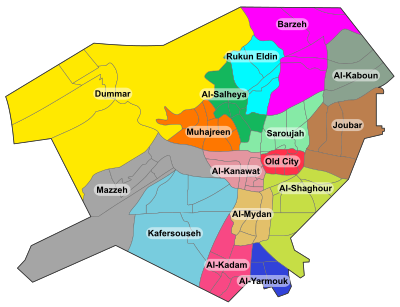
Damascus Governorate presents a fascinating case study in administrative geography, being one of Syria's fourteen governorates yet comprising solely the capital city, Damascus. Its diminutive area of approximately 107 km² stands in stark contrast to its immense historical and political weight. This unique configuration means the governorate is entirely urbanized, a densely populated core surrounded by the more agriculturally and geographically diverse Rif Dimashq Governorate.
This juxtaposition creates a distinct urban ecosystem, heavily reliant on resources and infrastructure that extend beyond its formal boundaries, yet maintaining its own administrative and governance structures. The climate, characterized by hot, arid summers and mild, rainy winters, influences the city's architecture, water management strategies, and the surrounding region's agricultural potential, historically shaping settlement patterns and economic activities.
A Palimpsest of Civilizations
The historical narrative of Damascus Governorate is inextricably linked to Damascus itself, a city whose continuous habitation stretches back millennia, making it one of the planet's most ancient urban centers. Archaeological evidence suggests settlement dating to the Neolithic period, and its strategic location has made it a coveted prize for numerous empires throughout history, including the Aramaeans, Assyrians, Babylonians, Persians, Greeks, Romans, and Byzantines.
Its zenith as a political and cultural capital was arguably during the Umayyad Caliphate (661–750 CE), when it served as the seat of an empire stretching from Spain to India, leaving an indelible mark on its architecture and urban planning, most notably the Great Mosque of Damascus. This profound historical layering, a palimpsest of civilizations, continues to define the governorate's identity, influencing its cultural landscape, heritage sites, and the collective memory of its inhabitants.
Cultural Synthesis and Social Dynamics
With a population exceeding 2.5 million, Damascus Governorate is a vibrant crucible of Syrian culture. Arabic is the dominant language, serving as the lingua franca and the medium for a rich literary and intellectual tradition. The social fabric is woven from threads of ancient traditions, religious diversity (predominantly Sunni Muslim, with significant Christian and other minority communities), and the adaptations necessitated by modern urban life.
The city is renowned for its traditional arts and crafts, such as damascene metalwork and mosaic tile production, which are sustained by generations of artisans. Its culinary heritage is equally celebrated, reflecting centuries of regional influences and offering a complex array of flavors. Despite external pressures and internal challenges, the people of Damascus maintain a strong sense of identity, characterized by resilience, hospitality, and a deep connection to their city's enduring legacy.
Economic Engine and Educational Nexus
As the primary economic and administrative center of Syria, Damascus Governorate anchors the nation's economy. Its economic activities are diverse, encompassing trade, finance, government services, manufacturing, and a burgeoning service sector. While the surrounding governorates often rely on agriculture, Damascus thrives on its role as a hub for commerce and administration.
The city hosts major national institutions, businesses, and diplomatic missions, contributing significantly to Syria's GDP. Furthermore, Damascus is a critical educational nexus. It is home to numerous universities, including Damascus University, the largest in Syria, alongside specialized institutes and research centers.
These institutions not only serve the vast student population within the governorate but also draw scholars and students from across the country and the wider region, fostering intellectual growth and contributing to Syria's human capital development.
Governance and Contemporary Relevance
The governance of Damascus Governorate mirrors the broader Syrian administrative structure, headed by a governor appointed by the President. As the seat of the Syrian government, the governorate is the focal point for national political decision-making, policy implementation, and international relations. Its status as the capital city imbues it with immense strategic importance, influencing national development priorities and resource allocation.
In contemporary times, the governorate, like the rest of Syria, has faced significant challenges, including the impact of protracted conflict, economic sanctions, and demographic shifts. However, its enduring role as a center of culture, history, and governance ensures its continued relevance in shaping Syria's future trajectory and its place on the global stage.
See also
Frequently Asked Questions
What is Damascus Governorate?+
How big is Damascus Governorate?+
Why is Damascus Governorate important?+
What is the weather like in Damascus Governorate?+
What cultures and traditions can you find in Damascus Governorate?+
Based on content from Wikipedia · Licensed under CC BY-SA 4.0