

Cytoskeleton
Images
Cytoskeleton
The Cytoskeleton
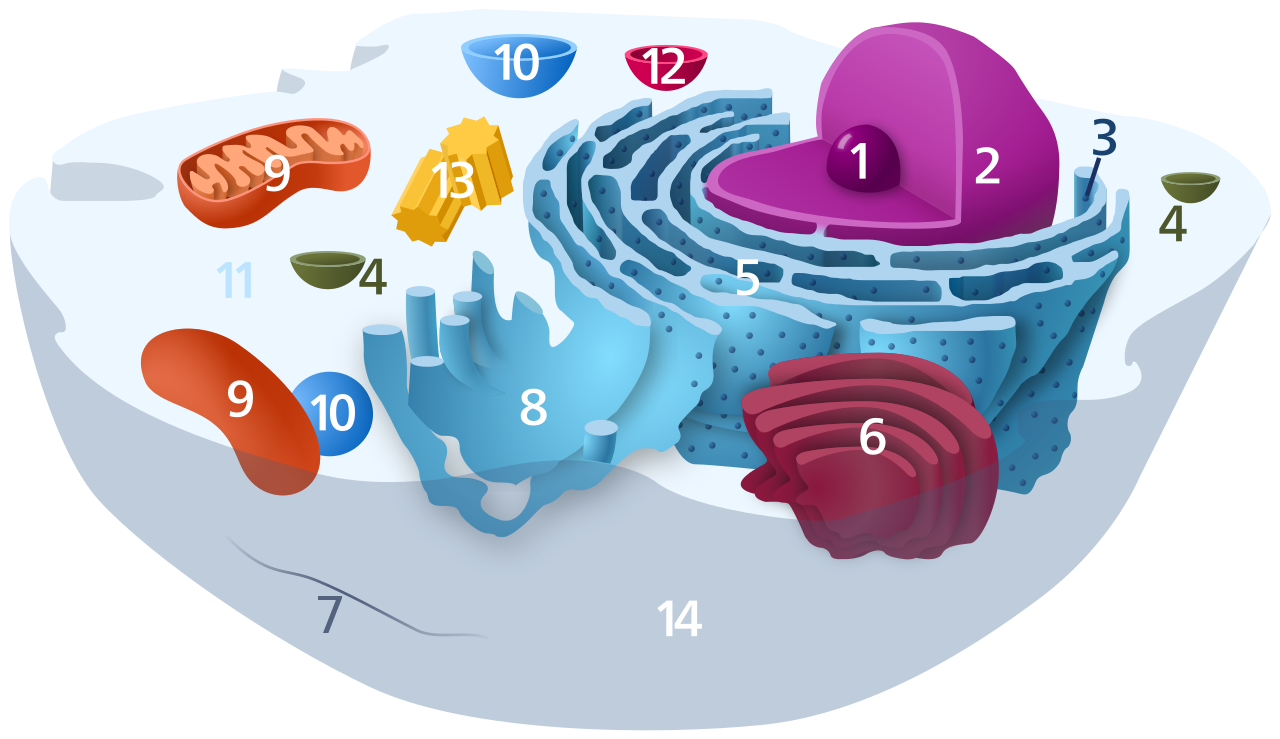
The cytoskeleton is a complex, three-dimensional network of protein polymers that permeates the cytoplasm of eukaryotic cells. Far from being a mere passive scaffold, it is a highly dynamic system that dictates cell shape, provides mechanical resilience, and enables a myriad of cellular functions. Composed primarily of three distinct filament systems-actin microfilaments, intermediate filaments, and microtubules-each possesses unique structural properties and functions.
Actin filaments, the thinnest, are crucial for cell surface structures like microvilli, cell crawling, and muscle contraction. Intermediate filaments, with their rope-like structure, provide tensile strength and resist mechanical stress, anchoring organelles and maintaining tissue integrity. Microtubules, the largest, form the cell's internal framework, serving as tracks for intracellular transport and forming the mitotic spindle essential for chromosome segregation during cell division.
The interplay between these filament systems, regulated by a host of associated proteins, allows cells to adapt to their environment and perform specialized roles.
Intracellular Transport and Cellular Dynamics
The cytoskeleton is indispensable for intracellular transport, a process vital for distributing organelles, vesicles, and molecules throughout the cell. Motor proteins, such as kinesin and dynein, bind to cargo and 'walk' along microtubule tracks, while myosin motors facilitate movement along actin filaments. This molecular machinery ensures that essential components reach their destinations efficiently, a feat critical for cellular homeostasis and function.
Beyond transport, the cytoskeleton is central to cell motility, enabling cells to migrate through tissues. This process involves coordinated polymerization and depolymerization of actin filaments, leading to the formation of pseudopods or lamellipodia that pull the cell forward. This capability is fundamental for processes like wound healing, immune surveillance, and embryonic development.
Furthermore, the cytoskeleton plays a pivotal role in cell signaling, acting as a platform for signal transduction pathways and influencing the localization and activity of signaling molecules.
Historical Evolution of Cytoskeletal Understanding
The recognition of the cytoskeleton as a fundamental cellular component has been a gradual process, accelerating with advancements in microscopy and molecular biology. Early cytologists observed filamentous structures within cells, but their dynamic nature and functional significance remained elusive. The development of the electron microscope in the mid-20th century provided the resolution needed to visualize the distinct filament types. Landmark discoveries, such as the identification of actin and tubulin as the primary protein subunits of microfilaments and microtubules, respectively, were pivotal. Research into muscle contraction elucidated the role of actin and myosin, while studies on cilia and flagella revealed the structure and function of microtubules.
The subsequent discovery of intermediate filaments and the vast array of associated proteins that regulate cytoskeletal assembly and dynamics solidified its status as a central player in cell biology. Modern techniques, including live-cell imaging and super-resolution microscopy, continue to unveil the intricate choreography of cytoskeletal remodeling in real-time.
Cytoskeletal Dysregulation
Disruptions in cytoskeletal structure and function are implicated in a wide spectrum of human diseases, underscoring its critical role in health. Genetic mutations affecting cytoskeletal proteins or their regulators can lead to inherited disorders. For instance, mutations in dystrophin, a protein that links actin filaments to the cell membrane, cause Duchenne muscular dystrophy, characterized by progressive muscle degeneration. Similarly, defects in intermediate filaments are linked to various keratinopathies and neurodegenerative diseases.
The cytoskeleton's role in cell adhesion, migration, and proliferation makes it a key player in cancer. Cancer cells often exhibit altered cytoskeletal dynamics, facilitating invasion, metastasis, and resistance to therapy. Consequently, the cytoskeleton has become a significant target for therapeutic interventions.
Drugs that interfere with microtubule dynamics, such as taxanes and vinca alkaloids, are widely used in chemotherapy. Ongoing research aims to develop more targeted therapies that can selectively modulate cytoskeletal functions to treat cancer, neurodegenerative disorders, and other diseases.
The Cytoskeleton in Cellular Processes
The cytoskeleton is intimately involved in fundamental cellular processes that drive life. During cell division (mitosis and meiosis), microtubules form the spindle apparatus, meticulously segregating chromosomes to ensure accurate genetic inheritance. Actin and myosin are crucial for cytokinesis, the physical division of the cytoplasm into two daughter cells.
Furthermore, the cytoskeleton plays a vital role in cell differentiation, where cells acquire specialized functions. Changes in cytoskeletal organization often accompany differentiation, providing the structural basis for specialized cell morphologies and functions, such as the elongated shape of neurons or the contractile machinery of muscle cells. In developmental biology, the cytoskeleton orchestrates cell movements, tissue morphogenesis, and the establishment of body axes.
The coordinated action of cytoskeletal elements guides cell migration, cell-cell adhesion, and cell shape changes that sculpt developing tissues and organs. Understanding these intricate cytoskeletal roles is essential for comprehending normal development and the origins of developmental abnormalities.
Go deeper
Based on content from Wikipedia · Licensed under CC BY-SA 4.0