

Cyclone
Images
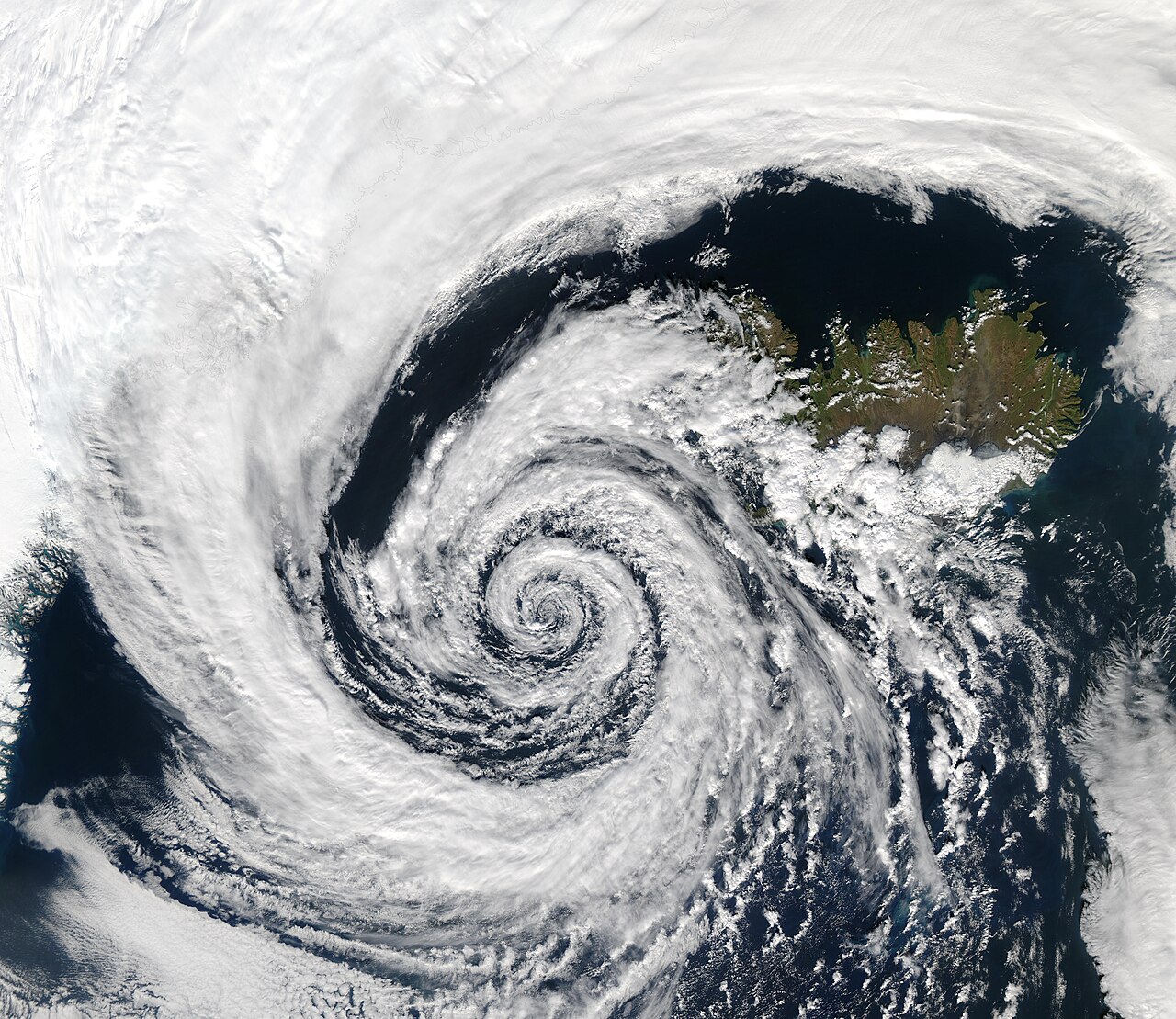
Cyclone
The Genesis and Evolution of Cyclonic Systems
Cyclones, in meteorological terms, are large-scale air masses rotating around a strong center of low atmospheric pressure. Their formation, known as cyclogenesis, is a complex process often initiated by atmospheric instability and temperature contrasts. Extratropical cyclones, for instance, begin as waves along baroclinic zones – regions with significant temperature gradients.
As these waves develop, the cyclonic circulation intensifies, forming weather fronts that mark boundaries between air masses of differing temperature, humidity, and density. These fronts are associated with prominent weather phenomena, such as thunderstorms along cold fronts and stratiform precipitation ahead of warm fronts. Over their lifespan, typically 2 to 6 days, extratropical cyclones can evolve, occluding as cold air undercuts warmer air, leading to a 'cold core' system.
The track of these storms is often steered by the subtropical jet stream, a high-altitude current of air.
Tropical vs. Extratropical
While both are cyclones, tropical and extratropical systems differ fundamentally in their structure and energy source. Tropical cyclones form over warm ocean waters, fueled by latent heat released from significant thunderstorm activity. They are characterized as 'warm core' systems, meaning the center is warmer than the surrounding atmosphere.
This is in contrast to extratropical cyclones, which can become 'cold core' systems later in their life cycle. The process of tropical cyclogenesis is distinct, requiring specific conditions like high sea surface temperatures and low vertical wind shear. It's also possible for cyclones to transition between these phases, showcasing the dynamic nature of atmospheric processes.
Understanding these distinctions is crucial for accurate forecasting and impact assessment.
Global Reach
The phenomenon of cyclones is not confined to Earth. Observations from space probes and telescopes have revealed similar rotating atmospheric vortices on other planets. Jupiter, for example, hosts the Great Red Spot, a persistent anticyclonic storm larger than Earth itself. Even on Mars, evidence of dust devils and smaller swirling storms has been documented.
This universality suggests that the fundamental physics governing the formation and behavior of rotating fluid systems are applicable across different planetary environments. The study of cyclones on other worlds can provide valuable insights into atmospheric dynamics and the conditions necessary for such phenomena to arise, broadening our understanding of planetary meteorology.
The Dual Nature of Cyclones
Cyclones exert a profound influence on Earth's climate and ecosystems. They are critical in the global heat budget, transporting vast amounts of thermal energy from equatorial regions towards the poles, thereby moderating global temperatures. The precipitation associated with cyclones is essential for replenishing freshwater resources, particularly in arid and semi-arid regions, supporting biodiversity and human agriculture.
However, this life-giving aspect is counterbalanced by their immense destructive potential. Intense winds can obliterate infrastructure, while storm surges and associated flooding pose severe threats to coastal populations and ecosystems. The study of cyclone intensity, frequency, and track prediction is therefore a vital area of meteorological research, with significant implications for disaster preparedness and climate change adaptation.
Beyond the Storm
The formation and evolution of cyclones are intertwined with various related atmospheric phenomena. Mesocyclones, for instance, are rotating columns of air within a thunderstorm that can lead to the formation of tornadoes over land or waterspouts over water. The nonlinear evolution of vortices within a cyclone is influenced by factors such as size, intensity, moist convection, and surface evaporation, making precise forecasting a significant challenge.
The transition between extratropical, subtropical, and tropical phases adds another layer of complexity. Modern forecasting relies on sophisticated computer models that simulate atmospheric conditions, but the inherent chaos of weather systems means that predictions, especially for long-term impacts, remain subject to uncertainty.
Go deeper
Frequently Asked Questions
What is a cyclone?+
Why do cyclones form over warm ocean water?+
How long does a cyclone usually last?+
Where can we see cyclones besides Earth?+
Why are cyclones both helpful and dangerous?+
Based on content from Wikipedia · Licensed under CC BY-SA 4.0