

Curie Institute (Paris)
Images

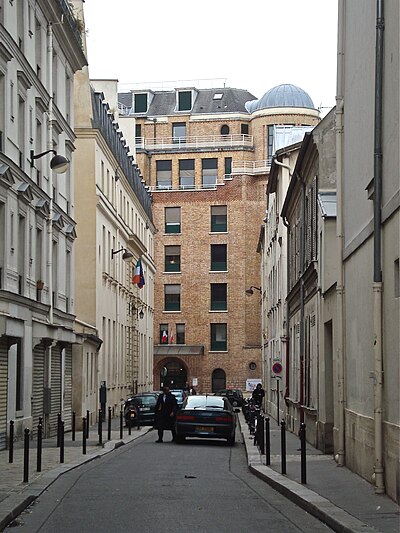
File:P1010484 Paris V Rue Pierre-et-Marie-Curie Institut de biologie physico-chimique reductwk.JPG




Foundations in Science and Philanthropy
The Institut Curie, established in Paris, France, in 1909, is a private non-profit foundation that has become a global leader in medical, biological, and biophysical research. Its genesis is deeply intertwined with the legacy of Marie Skłodowska Curie, a two-time Nobel laureate whose pioneering work on radioactivity fundamentally altered scientific understanding and paved the way for new medical treatments. The institute embodies a unique dual mission: it operates a state-of-the-art hospital dedicated to the treatment of cancer, and simultaneously houses a vibrant research center focused on oncology, cell biology, and biophysics.
This integrated approach ensures that scientific discoveries are rapidly translated into clinical applications, benefiting patients directly and efficiently. Its commitment to collaborative research is further underscored by its membership in EU-LIFE, an alliance of Europe's premier life science research institutions, fostering cross-border innovation and knowledge exchange.
Pioneering Cancer Research and Treatment
At the core of the Institut Curie's mission is its unwavering dedication to combating cancer. The institute’s hospital is a specialized center of excellence, providing comprehensive care for cancer patients, utilizing the latest therapeutic strategies and diagnostic tools. This clinical arm is not isolated but is intrinsically linked to the institute's extensive research activities.
Scientists at Curie are engaged in fundamental and applied research aimed at unraveling the complex mechanisms of carcinogenesis, identifying novel therapeutic targets, and developing innovative treatment modalities. Their work spans from molecular biology and genetics to immunology and radiation oncology, seeking to understand cancer at its most basic level and devise more effective, personalized treatments. This synergy between research and patient care allows for a dynamic feedback loop, where clinical observations inform research directions and research breakthroughs are quickly implemented in patient care.
Exploring the Frontiers of Cell Biology and Biophysics
Beyond its focus on oncology, the Institut Curie is a significant contributor to the broader fields of cell biology and biophysics. Cell biology research at the institute investigates the intricate workings of cells – the fundamental units of life – exploring their structure, function, growth, and division. This foundational knowledge is critical for understanding health and disease across the board.
Biophysics, an interdisciplinary field, applies the principles and techniques of physics to understand biological systems. Researchers at Curie utilize biophysical approaches to study everything from the mechanics of DNA to the dynamics of protein interactions, providing unique insights into biological processes. These investigations into fundamental biological mechanisms are essential for identifying new avenues for therapeutic intervention and for advancing our overall comprehension of life itself.
A Legacy of Scientific Excellence and Societal Impact
The Institut Curie's impact extends far beyond its Parisian location. By fostering a culture of rigorous scientific inquiry and compassionate patient care, it has established itself as a global benchmark for biomedical research institutions. The institute’s commitment to innovation, collaboration, and the translation of research into tangible health benefits underscores its profound societal contribution.
Its work not only advances scientific knowledge but also directly improves the lives of countless individuals affected by serious diseases. The enduring legacy of Marie Curie continues to inspire new generations of scientists and clinicians at the institute, driving forward the pursuit of a healthier future through cutting-edge research and dedicated medical practice.
See also
Frequently Asked Questions
What is the Curie Institute in Paris?+
Who started the Curie Institute?+
Does the Curie Institute have a hospital?+
What kind of science does the Curie Institute do?+
How does the Curie Institute help people around the world?+
Based on content from Wikipedia · Licensed under CC BY-SA 4.0