

Constitution of Mexico
Images
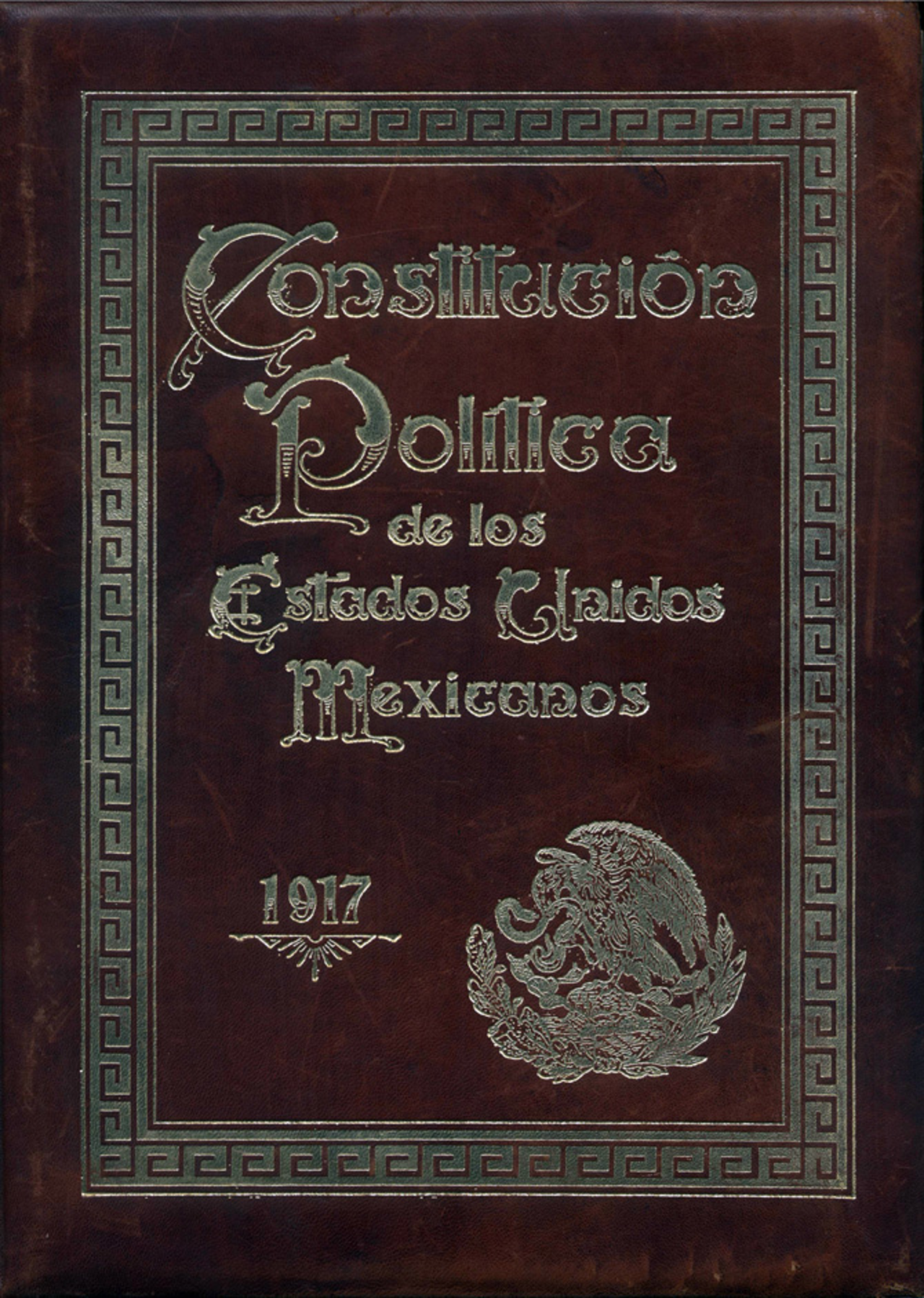
Portada Original De La Constitucion Mexicana De 1917


Genesis in Revolution
The Constitution of 1917 emerged not from quiet deliberation, but from the crucible of the Mexican Revolution, a tumultuous period of social and political upheaval. Drafted by a constituent convention in Santiago de Querétaro, it represented a radical departure from previous legal frameworks. Its approval on February 5, 1917, marked the formalization of revolutionary ideals into law, serving as the ultimate legal victory for the movement.
It superseded earlier constitutions, including the influential Constitution of 1857, and is often described as 'the legal triumph of the Mexican Revolution,' embodying its core aspirations for national sovereignty, social justice, and democratic reform. This foundational document was designed to fundamentally reshape Mexico's political and social fabric.
Pioneering Social Rights
The most historically significant aspect of the 1917 Constitution is its status as the world's first national charter to explicitly enshrine social rights. Preceding similar provisions in the Russian Soviet Federative Socialist Republic Constitution of 1918 and the Weimar Constitution of 1919, Mexico set a global benchmark. Articles 3, 27, and 123 were particularly transformative. Article 3 mandated free, compulsory, and secular education, aiming to democratize knowledge and foster national identity.
Article 27 addressed the deeply entrenched issue of land ownership, laying the groundwork for agrarian reform and national control over resources. Article 123 established comprehensive labor rights, recognizing the burgeoning industrial working class and their role in the revolution. These articles were direct responses to the popular demands that fueled the revolution, reflecting a profound shift in political philosophy.
The Church Question and Constitutional Tensions
The Constitution of 1917 also significantly curtailed the power and influence of the Catholic Church in Mexico, reflecting historical tensions and revolutionary anti-clerical sentiments. Articles 3, 5, 24, 27, and 130 imposed strict limitations, including restrictions on church property ownership, religious education, and public religious displays. The enforcement of these articles, particularly under President Plutarco Calles in 1926, led to intense conflict, most notably the Cristero War (1926–1929).
This period highlights the deep societal divisions and the profound impact of constitutional provisions on religious freedom and the relationship between church and state in Mexico.
Evolution and Modernization
While the core principles of the 1917 Constitution endure, the document is not static. It has undergone numerous amendments to adapt to changing socio-economic and political realities. A pivotal moment of revision occurred in 1992 under President Carlos Salinas de Gortari.
These reforms significantly altered Article 27, shifting away from land redistribution towards strengthening private property rights and enabling the privatization of communal lands (ejidos). Concurrently, many of the restrictive articles pertaining to the Catholic Church were largely repealed, reflecting a move towards greater religious freedom and a redefinition of church-state relations. These revisions demonstrate the Constitution's capacity for evolution, balancing its revolutionary legacy with contemporary governance needs.
Enduring Legacy and Contemporary Relevance
Constitution Day, celebrated on the first Monday of February, remains a significant national holiday, commemorating the promulgation of this foundational document. The Constitution of 1917 continues to be the supreme law of Mexico, guiding its political system, social policies, and economic development. Its early recognition of social rights has influenced constitutionalism globally, serving as a testament to its progressive vision.
Despite debates and reforms, its principles of national sovereignty, social justice, and democratic governance remain central to Mexico's identity and its ongoing journey towards a more equitable and prosperous future. It stands as a powerful symbol of national self-determination and the pursuit of collective well-being.
See also
Frequently Asked Questions
What is the Constitution of Mexico and when was it approved?+
Why did the Constitution of 1917 include social rights like free education and land reform?+
How did the Constitution of 1917 affect the Catholic Church in Mexico?+
What happened to the Constitution in 1992?+
What is Article 3, 27, and 123 in the Constitution?+
Based on content from Wikipedia · Licensed under CC BY-SA 4.0