

Claude Lanzmann
Images

Claude Lanzmann tombe


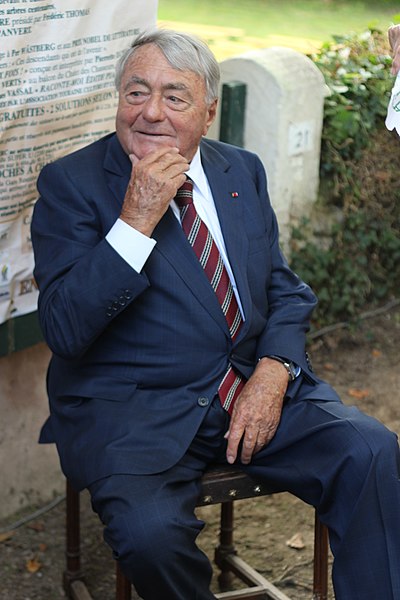


The Genesis of 'Shoah'
Claude Lanzmann's seminal work, 'Shoah' (1985), stands as a monumental achievement in documentary filmmaking and Holocaust remembrance. Born in 1925, Lanzmann approached the subject matter with a profound sense of responsibility, driven by a desire to confront the historical reality of the Holocaust in its unvarnished truth. What distinguishes 'Shoah' is its radical departure from conventional historical documentaries.
Lanzmann deliberately eschewed archival footage, photographs, and even narration. Instead, he centered the film entirely on the spoken words of survivors, witnesses, and perpetrators, meticulously gathered over more than a decade. This decision was not merely stylistic; it was a philosophical commitment to allowing the lived experience of those who endured the Shoah to bear the full weight of its horror.
By focusing on the present-day voices recounting past atrocities, Lanzmann created a powerful, immersive experience that forces viewers to engage directly with the trauma and resilience of the human spirit. The film’s nearly ten-hour runtime underscores the immense scale of the tragedy and the depth of the individual stories Lanzmann sought to preserve.
Lanzmann's Intellectual and Editorial Influence
Beyond his groundbreaking cinematic work, Claude Lanzmann was a significant intellectual figure in post-war France. From 1952 until his death, he served as the chief editor of 'Les Temps Modernes,' a highly influential literary and political journal co-founded by Jean-Paul Sartre and Simone de Beauvoir. In this role, Lanzmann engaged with critical debates on existentialism, politics, and culture, shaping intellectual discourse for decades.
His editorial work provided a platform for diverse voices and perspectives, reflecting his commitment to critical inquiry and social justice. This intellectual rigor undoubtedly informed his approach to filmmaking, imbuing his documentaries with a profound philosophical depth. His later film, 'Napalm' (2017), while more personal, still reflects his characteristic intensity and willingness to explore complex human experiences, demonstrating the breadth of his storytelling interests beyond the Holocaust.
The Enduring Significance of 'Shoah' and Lanzmann's Legacy
The enduring significance of Claude Lanzmann's work lies in its unwavering commitment to historical accuracy and its profound impact on Holocaust memory. 'Shoah' is not merely a historical record; it is a testament to the power of human testimony and a vital bulwark against historical negationism and forgetting. Lanzmann's decision to focus on the voices of survivors ensures that their experiences are preserved for future generations, offering a direct connection to a past that must never be trivialized or erased.
His films serve as crucial educational tools, prompting critical reflection on the causes and consequences of genocide, and the dangers of unchecked hatred and indifference. Lanzmann’s legacy is one of profound moral and intellectual courage, reminding us of our collective responsibility to remember, to learn, and to actively work towards preventing such atrocities from ever happening again. His work continues to challenge and inspire audiences worldwide.
Methodology and Impact
Lanzmann's methodology in 'Shoah' was revolutionary, challenging established conventions of historical filmmaking. By refusing to use historical footage, he aimed to prevent the audience from becoming detached observers, viewing the past as a series of static images. Instead, he placed the viewer in a direct, visceral encounter with the memories and emotions of those who lived through the events.
The interviews, often conducted in the very locations where atrocities occurred, imbued the film with a palpable sense of place and time. This approach generated controversy and debate, with some critics questioning the ethical implications of revisiting such trauma. However, the overwhelming consensus is that Lanzmann's unflinching dedication to authentic testimony created an unparalleled cinematic monument to the victims and survivors of the Holocaust.
His work has profoundly influenced subsequent Holocaust documentaries and scholarship, establishing a benchmark for ethical and impactful historical representation.
See also
Frequently Asked Questions
Who was Claude Lanzmann?+
What is the movie 'Shoah' about?+
Why did Lanzmann not use old photos or footage in 'Shoah'?+
What other film did Lanzmann make?+
Why is Claude Lanzmann's work important for children and adults?+
Based on content from Wikipedia · Licensed under CC BY-SA 4.0