

Clarksville, Missouri
Images
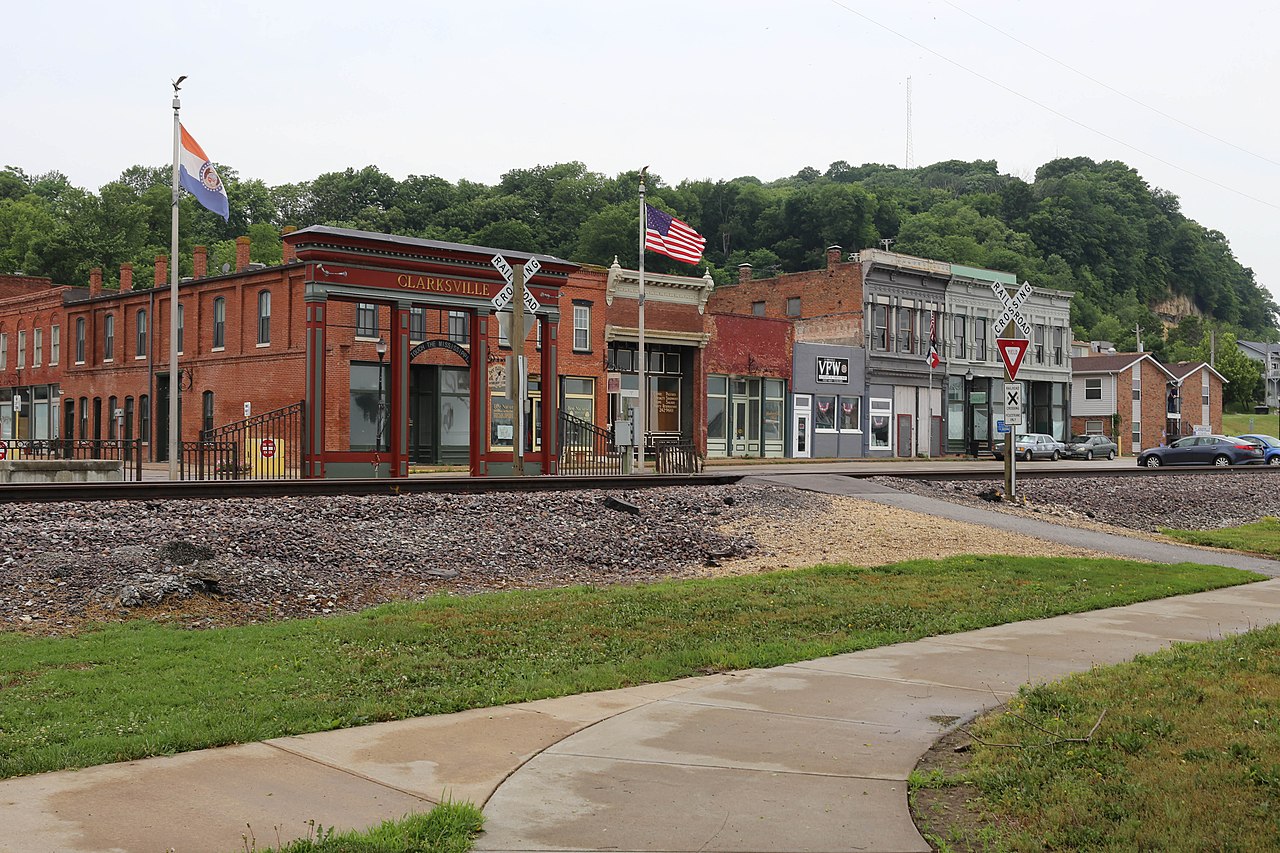
Clarksville, MO (41926311685)


Geographic Determinants and Environmental Context
Clarksville's existence and character are fundamentally shaped by its geography. Situated in Pike County, Missouri, its defining feature is its adjacency to the Mississippi River, one of North America's most significant hydrological systems. This location places it within the broader context of the Midwestern United States, an area characterized by fertile agricultural lands and a continental climate.
The continental climate dictates distinct seasonal variations, influencing local agriculture, tourism, and daily life. The Mississippi River is not merely a backdrop but an active force, historically serving as a primary conduit for transportation, trade, and cultural exchange. Its presence dictates the town's spatial organization, economic potential, and the very identity of its inhabitants.
The river's dynamic nature also presents challenges, such as flood control, which are inherent to life in such a locale. The surrounding landscape, likely characterized by bluffs and floodplains, further defines the opportunities and constraints for development and land use in Clarksville.
Historical Trajectory and Socio-Economic Evolution
The history of Clarksville is intrinsically linked to the westward expansion and the economic imperatives of riverine transportation in the 19th and early 20th centuries. Established as a settlement capitalizing on the Mississippi River's commercial potential, the town likely served as a port or trading post. Its development trajectory would have mirrored that of many similar river towns, experiencing periods of growth fueled by steamboat traffic and agricultural trade, followed by potential declines as rail and later highway transportation became dominant.
The population of 372 recorded in 2020 suggests a town that has either maintained a stable, small-town identity or has experienced population shifts over time. Understanding Clarksville's history requires examining its role within the broader narrative of Missouri's development, particularly its agricultural and industrial past. The town's longevity, despite its small size, points to a resilient community structure and an economy that has adapted to changing national and global economic forces, likely relying on niche industries or a strong local service sector.
Demographics, Community Fabric, and Governance
Clarksville's population of 372 presents a demographic profile typical of a rural American town. This small population size fosters a unique community dynamic, characterized by high levels of social cohesion and mutual awareness among residents. In such an environment, social capital is often high, with strong informal networks playing a significant role in community life.
Governance in Clarksville operates within the framework of Missouri's local government structure, likely falling under the jurisdiction of Calumet Township. This means that town-level administration would focus on essential services such as local infrastructure maintenance, public safety, and community planning, often with limited resources. The close-knit nature of the community might also influence political engagement, with local issues taking precedence and direct participation being more common.
Understanding Clarksville's governance involves appreciating the challenges and advantages of managing a municipality with a small tax base and a limited population.
Economic Landscape and Future Prospects
The economy of Clarksville is necessarily shaped by its scale and location. As a small town, its economic base is likely diversified but limited, potentially including local retail, services catering to residents, and possibly niche industries that leverage its riverfront location. Historically, river towns often thrived on shipping, agriculture, and related processing industries.
In contemporary times, the economic viability of such towns can depend on tourism, specialized manufacturing, or serving as a residential base for commuters to larger nearby centers, though the latter is less likely given Clarksville's apparent remoteness. The town's area of 0.78 square miles suggests a compact urban footprint. The economic future of Clarksville likely hinges on its ability to attract and retain residents and businesses, perhaps by emphasizing its unique historical character, natural beauty, or specific economic advantages related to its riverine setting.
Challenges would include maintaining infrastructure and providing diverse employment opportunities within a limited market.
Educational Considerations in a Small Town
The educational landscape for residents of Clarksville is influenced by its small population. It is highly probable that the town itself does not host a large, independent school district. Instead, students likely attend schools within a larger, consolidated district that serves multiple rural communities in Pike County.
This consolidation is a common strategy in rural areas to ensure access to a broader range of educational resources and specialized programs that might not be feasible for a single small town to support. The educational experience in such a setting often involves smaller class sizes, fostering closer relationships between students and teachers, and a strong sense of community within the school. However, it can also mean fewer elective course options or extracurricular activities compared to larger urban or suburban schools.
The proximity to the Mississippi River might also offer unique opportunities for environmental education or local history projects integrated into the curriculum.
See also
Based on content from Wikipedia · Licensed under CC BY-SA 4.0