

Chongzhen Emperor
Images

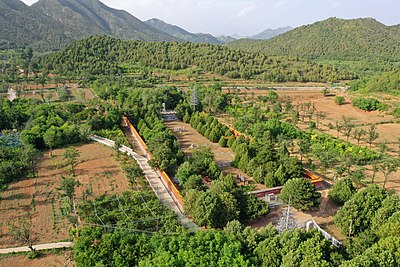
File:崇祯皇帝自缢处 - Chongzhen Emperor Hanged Himself on This Tree - 2011.03 - panoramio.jpg




Ascension and Inherited Crisis
Zhu Youjian ascended the throne in 1627, taking the reign title Chongzhen, at the age of 16. He inherited a Ming Dynasty that was already in a state of profound crisis, a situation exacerbated by the perceived ineffectiveness and corruption of his predecessor, his elder brother Emperor Tianqi. The Ming state was financially strained, militarily overstretched, and suffering from widespread social unrest.
Chongzhen was known for his diligence and his desire to rule justly, often working late into the night. He attempted to address the dynasty's deep-seated problems by purging corrupt officials and seeking to strengthen the central government's authority. However, the systemic issues were so entrenched that his reforms often met with resistance or proved insufficient to reverse the long-term decline.
The Dual Threats
Chongzhen's reign was defined by the relentless pressure of two existential threats. Internally, the empire was plagued by massive peasant rebellions, most notably led by Li Zicheng and Zhang Xianzhong. These uprisings were fueled by a combination of natural disasters, famine, heavy taxation, and official corruption, creating a desperate populace willing to challenge imperial authority.
Externally, the Jurchen people, who would soon be known as the Manchu, posed a significant military threat from the north. They had already established the Later Jin dynasty and were steadily encroaching on Ming territory, culminating in the capture of key strategic points. Chongzhen's government struggled to effectively counter both threats simultaneously, often forced to divert resources and attention between the internal and external fronts, a strategic dilemma that proved increasingly untenable.
The Siege of Beijing and Imperial Suicide
By 1644, the Ming Dynasty's fate was sealed. Li Zicheng's rebel army, having gained significant momentum and popular support, marched on the capital, Beijing. Despite Chongzhen's efforts to rally defenses, the imperial army was depleted and demoralized.
As Li Zicheng's forces breached the city walls, the emperor found himself in an inescapable predicament. Rather than face capture or the humiliation of defeat, Chongzhen committed suicide on April 25, 1644, by hanging himself on a tree on Coal Hill, overlooking the Forbidden City. This act of imperial suicide was a profound symbol of the dynasty's collapse and marked the end of over two centuries of Ming rule in China.
Posthumous Recognition and Historical Interpretation
Following Chongzhen's death, the Manchu forces, under Prince Dorgon, entered Beijing and declared the establishment of the Qing Dynasty. While the Ming Dynasty officially ended, loyalists in the south attempted to establish successor states, known as the Southern Ming. It was within this context that Chongzhen received posthumous recognition.
Zhu Yousong, who proclaimed himself the Hongguang Emperor of the Southern Ming, bestowed upon Chongzhen the temple name 'Sizong.' Later Southern Ming rulers altered this to 'Yizong' and then 'Weizong.' The succeeding Qing Dynasty also granted him a temple name, 'Huaizong,' though it was later revoked. Historians continue to debate Chongzhen's legacy, acknowledging his diligence but also the overwhelming circumstances that led to the dynasty's demise, making him a figure of tragic historical significance.
The Enduring Impact on Chinese History
The fall of the Ming Dynasty and the reign of Chongzhen Emperor represent a pivotal turning point in Chinese history. It marked the end of Han Chinese rule for centuries and the beginning of the Manchu-led Qing Dynasty, which would shape China's territorial boundaries and its relationship with the outside world for over 250 years. The events of 1644, including the peasant rebellions and the Manchu conquest, had profound and lasting impacts on Chinese society, culture, and political structures.
Chongzhen's personal tragedy serves as a stark reminder of the immense pressures faced by rulers during periods of dynastic transition and the complex interplay of social, economic, and military factors that can lead to the collapse of even the most powerful empires.
See also
Frequently Asked Questions
Who was the Chongzhen Emperor?+
Why did the Ming dynasty fall during his reign?+
How did Chongzhen try to fix the problems?+
What happened to him when the rebels took Beijing?+
Did anyone honor him after he died?+
Based on content from Wikipedia · Licensed under CC BY-SA 4.0