

Cell Membrane: The Tiny Gatekeeper of Your Cells!
Images

Cell membrane
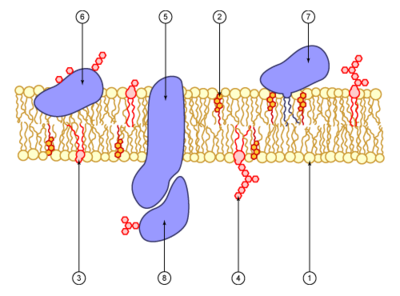


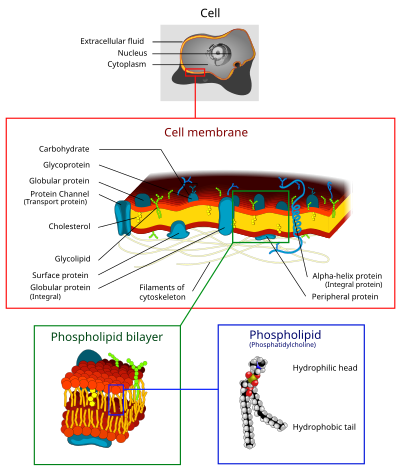


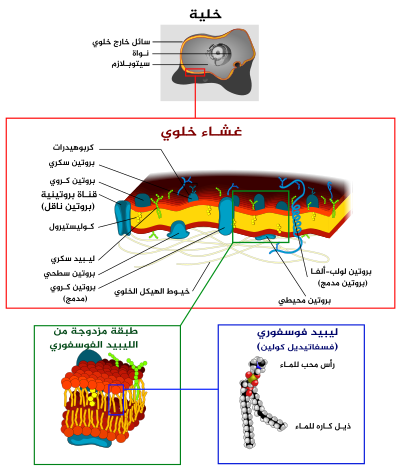


The Phospholipid Bilayer
The cell membrane, scientifically referred to as the plasma membrane, is a fundamental component of all living cells, acting as a sophisticated barrier that defines cellular boundaries. Its primary structural element is the phospholipid bilayer, a double layer of amphipathic phospholipid molecules. These molecules possess a hydrophilic (water-attracting) phosphate head and two hydrophobic (water-repelling) fatty acid tails.
This dual nature dictates their self-assembly in aqueous environments, with the hydrophobic tails orienting inward, shielded from water, and the hydrophilic heads facing outward towards the intracellular and extracellular fluids. This arrangement creates a stable yet fluid matrix, approximately 7-10 nanometers thick, which is essential for maintaining cellular homeostasis and preventing the uncontrolled diffusion of water-soluble substances.
The Fluid Mosaic Model
The prevailing model for membrane structure is the fluid mosaic model, which posits that the membrane is not a static structure but a dynamic, fluid entity. The phospholipid bilayer serves as the fluid matrix, allowing lipids and proteins to move laterally within the plane of the membrane. Embedded within or attached to this bilayer are a diverse array of proteins, which are responsible for many of the membrane's specific functions.
These include integral proteins (spanning the entire bilayer) and peripheral proteins (associated with the surface). Cholesterol molecules are also interspersed within the bilayer in animal cells, modulating membrane fluidity by preventing excessive rigidity at low temperatures and excessive fluidity at high temperatures. This dynamic nature is critical for processes like cell division, cell movement, and signal transduction.
Transport Mechanisms
The cell membrane's role as a selective barrier is paramount. Its selective permeability allows for the controlled movement of substances, a process mediated by various transport mechanisms. Small, nonpolar molecules like O2 and CO2 can diffuse freely across the lipid bilayer.
However, the transport of polar molecules, ions, and larger compounds is facilitated by transport proteins. Passive transport, such as simple diffusion and facilitated diffusion (via channel or carrier proteins), moves substances down their concentration gradient without cellular energy expenditure. In contrast, active transport requires cellular energy (ATP) to move substances against their concentration gradient, utilizing specific protein pumps.
Endocytosis and exocytosis are bulk transport mechanisms that involve the formation and fusion of vesicles with the plasma membrane to import or export large molecules or particles.
Cellular Communication and Recognition
Cell membranes are crucial sites for cellular communication and recognition. Membrane proteins, particularly glycoproteins and glycolipids, act as cell surface markers, enabling cells to identify each other, which is vital for tissue formation and immune responses. Furthermore, receptor proteins embedded in the membrane bind to specific signaling molecules (ligands) such as hormones and neurotransmitters.
This binding initiates intracellular signaling cascades, translating external signals into cellular responses. This intricate network of receptors and signaling pathways allows cells to respond to their environment, coordinate activities with other cells, and maintain organismal function. Dysregulation of these membrane-mediated processes is implicated in numerous diseases, highlighting the membrane's central role in health and pathology.
See also
Based on content from Wikipedia · Licensed under CC BY-SA 4.0