

Phospholipids: Tiny Builders of Your Body!
Images

Simple & Facilitated Diffusion Across the Phospholipid Bilayer


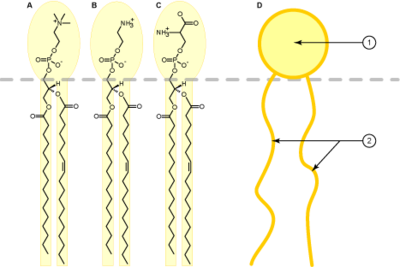


The Amphipathic Foundation
Phospholipids are a diverse class of lipids characterized by their unique amphipathic molecular structure. Each molecule consists of a hydrophilic head group, typically containing a phosphate moiety, and two hydrophobic fatty acid tails. This dual polarity dictates their behavior in aqueous environments.
Upon introduction to water, phospholipids spontaneously self-assemble into organized structures, most notably the lipid bilayer that forms the fundamental matrix of all biological membranes. The hydrophilic heads orient towards the aqueous intracellular and extracellular spaces, while the hydrophobic tails sequester inward, forming a stable, non-polar core. This bilayer is not merely a passive barrier; it is a dynamic fluid mosaic, providing selective permeability and mechanical strength, essential for cellular integrity and function.
In eukaryotic cells, this phospholipid framework is further modulated by sterols, like cholesterol, which influence membrane fluidity and stability.
From Obscurity to Essentiality
The scientific journey of phospholipids began in 1847 with the identification of lecithin (phosphatidylcholine) in chicken egg yolks by French chemist Theodore Nicolas Gobley. This marked the first recognition of a phospholipid as a distinct biological entity. Over subsequent decades, researchers elucidated the complex structures and diverse functions of various phospholipid species.
Early research focused on their structural role in cell membranes, but later investigations revealed their involvement in a myriad of physiological processes. The discovery that marine phospholipids often incorporate omega-3 fatty acids like EPA and DHA further expanded our understanding of their functional diversity and nutritional significance, linking them to cardiovascular and cognitive health.
Neural Architecture and Cognitive Dynamics
Phospholipids are indispensable for the intricate workings of the nervous system. They are primary constituents of neuronal membranes, underpinning the structure and function of synapses and axons. Their role extends beyond structural support; they are critical for neurotransmission, participating in the synthesis of key neurotransmitters like acetylcholine.
Furthermore, phospholipids are integral to the formation and maintenance of the blood-brain barrier, a highly selective physiological barrier that protects the central nervous system from harmful substances circulating in the bloodstream. Compelling research indicates a correlation between aging and a decline in brain phospholipid levels, with studies suggesting up to a 20% reduction by age 80. This depletion is hypothesized to contribute to age-related cognitive impairments, including deficits in memory, attention, and executive functions, underscoring the importance of maintaining adequate phospholipid status for cognitive longevity.
Therapeutic Potential and Advanced Applications
The functional versatility of phospholipids has propelled their application beyond fundamental biology into therapeutic and technological domains. Dietary supplementation with specific phospholipids, such as those derived from milk fat globule membrane (MFGM), has shown promise in clinical trials for enhancing cognitive performance, mood regulation, and stress resilience in both pediatric and adult populations. Studies have demonstrated significant improvements in perceived stress and cognitive function under pressure with daily intake of MFGM phospholipids.
Beyond human health, purified phospholipids have found applications in advanced fields like nanotechnology, where they are utilized in the creation of liposomes for drug delivery systems and in materials science for developing novel biomaterials. Their ability to self-assemble and encapsulate substances makes them invaluable tools for innovation.
See also
Frequently Asked Questions
What are phospholipids and why do we need them?+
How do phospholipids create a cell membrane?+
Why are phospholipids important for the brain?+
How were phospholipids first discovered?+
Can eating foods with phospholipids help our brains?+
Based on content from Wikipedia · Licensed under CC BY-SA 4.0