

Cayenne: A Spicy City by the Sea!
Images

Cayenne




Geopolitical Nexus
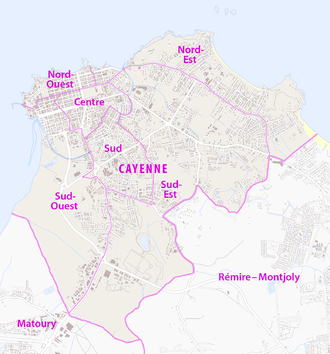
Cayenne's geographical position is central to its identity and function. Situated on the northeastern coast of South America, it occupies a strategic location at the estuary of the Cayenne River, meeting the Atlantic Ocean. This coastal setting has historically facilitated trade and interaction, while also presenting environmental considerations related to its deltaic environment.
As the capital and prefecture of French Guiana, an overseas department and region of France, Cayenne is a unique geopolitical entity. It represents the southernmost French administrative center globally, bridging the European Union with the South American continent. The city's climate is tropical, characterized by high temperatures and humidity, supporting a rich ecosystem that borders the vast Amazon rainforest.
This proximity influences local life, economy, and the challenges of sustainable development, including managing biodiversity and adapting to climate change. The city's former status as an island also hints at its evolving relationship with the mainland and the sea.
Colonial Roots and Modern Aspirations
Cayenne's history is a complex narrative shaped by indigenous presence, French colonization, and its ongoing status as part of France. Established as a French settlement in the 17th century, it evolved from a trading post and penal colony into the administrative heart of French Guiana. This historical trajectory has imprinted a distinct Franco-Caribbean and South American cultural fusion.
The city has witnessed periods of economic boom and bust, driven by resource extraction, agriculture, and its role as a governmental hub. Its motto, 'fert aurum industria,' reflects a persistent aspiration for prosperity through labor, a principle that has guided its development across different eras. Understanding Cayenne's history is key to appreciating its contemporary challenges and its unique position within both French and South American contexts, navigating a post-colonial identity while embracing modern governance and economic integration.
Cultural Synthesis and Demographic Dynamics
Cayenne is a vibrant microcosm of cultural synthesis, a testament to centuries of migration and interaction. As the largest Francophone city in South America, it hosts a diverse population comprising descendants of indigenous peoples, enslaved Africans, European colonists, and more recent immigrants from Asia and the Caribbean. This rich demographic mix is reflected in its dynamic culture, evident in its music, cuisine, and festivals, which blend French influences with Creole, African, and indigenous traditions.
The official language is French, but Guianese Creole French is the lingua franca, fostering a unique linguistic identity. With a population exceeding 63,000 in the city proper and over 151,000 in its metropolitan area, Cayenne is a significant urban center. This demographic scale presents opportunities for economic growth and cultural exchange, but also challenges related to urban planning, social services, and maintaining social cohesion amidst diversity.
Economic Drivers and Development Strategies
The economy of Cayenne is intrinsically linked to its status as the capital of French Guiana and an integral part of France. Public administration and services form a substantial part of its economic base, reflecting its role as a governmental center. The port of Cayenne is vital for trade, facilitating the import of goods and the export of local products, though the scale of export is limited. Key economic activities also include fishing, some agricultural production, and a growing tourism sector that capitalizes on French Guiana's unique biodiversity and cultural heritage.
As an EU territory, Cayenne benefits from structural funds and development programs aimed at fostering economic growth and reducing disparities. However, challenges persist, including high unemployment rates, reliance on imports, and the need for diversification. The motto 'work brings wealth' underscores the ongoing effort to build a sustainable and prosperous economy through strategic investment and local enterprise.
Governance and Administration
Cayenne's governance operates within the complex administrative structure of France's overseas territories. As the prefecture and capital, it houses key governmental bodies responsible for implementing national policies and managing regional affairs. The city functions as a commune, electing a mayor and municipal council who oversee local services, urban development, and public order.
French Guiana's status as an overseas department and region means that national laws and regulations apply, albeit with specific adaptations. This dual system of central oversight and local autonomy shapes Cayenne's administrative landscape. The city's leadership navigates the challenges of balancing the needs of its diverse population with the requirements of being an integral part of the French Republic, seeking to leverage its unique position for development while addressing socio-economic disparities and ensuring effective public services.
Educational Landscape and Research
The educational system in Cayenne mirrors that of mainland France, emphasizing a structured curriculum from primary to higher education. Schools provide instruction in French, adhering to national standards, with a growing recognition of the importance of Guianese Creole and indigenous languages in early education. Cayenne hosts several institutions of higher learning, including the University of French Guiana (Université de Guyane), which offers a range of undergraduate and graduate programs.
This university serves as a crucial center for research, particularly in fields relevant to the region's unique environment and culture, such as tropical biology, ethnology, and space sciences (given the proximity to the Guiana Space Centre). Educational attainment is a key focus for development, aiming to equip the local population with the skills needed for the evolving economy and to foster a sense of regional identity and pride. The pursuit of knowledge is seen as integral to the city's motto of 'work brings wealth,' driving progress and innovation.
Go deeper
Frequently Asked Questions
What is Cayenne?+
How does Cayenne's location help people?+
What is the weather like in Cayenne?+
Who lives in Cayenne?+
What does Cayenne's motto mean?+
Based on content from Wikipedia · Licensed under CC BY-SA 4.0