

Cave-in
Images

Cave-in


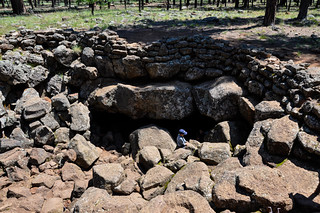


The Mechanics of Subsurface Collapse
Cave-ins, often manifesting as sinkholes or localized ground failures, are fundamentally a consequence of subsurface instability. This instability arises when the supporting material beneath the surface layer loses its load-bearing capacity. Geologically, this is frequently linked to the dissolution of soluble bedrock, such as limestone, gypsum, or salt, by percolating groundwater.
This process, known as karstification, creates underground voids and conduits. When the overlying material, often unconsolidated sediment or soil, can no longer bridge these voids, a collapse occurs. The rate and extent of collapse are influenced by factors like the size of the void, the thickness and composition of the overburden, and the presence of external stresses, such as heavy rainfall or increased groundwater pumping, which can exacerbate the problem by altering hydrostatic pressures and saturating the soil, reducing its shear strength.
Anthropogenic Factors and Urban Vulnerability
While natural processes are significant, human activities substantially contribute to cave-in events, particularly in urban environments. The development of extensive underground infrastructure-including water mains, sewer lines, storm drains, and subway systems-creates artificial voids and potential points of failure. Aging infrastructure is a primary culprit; leaks from water pipes can saturate and erode the surrounding soil, while breaks in sewer lines can wash away supporting material. Construction activities, such as dewatering or heavy excavation, can also destabilize the ground.
Furthermore, changes in land use, like increased impervious surfaces leading to altered drainage patterns, can concentrate water flow and accelerate erosion. The interconnectedness of urban subsurface systems means that a failure in one component can trigger a cascade of failures, leading to widespread ground collapse.
Predictive Modeling and Risk Assessment
Assessing the risk of cave-ins involves a multidisciplinary approach, integrating geology, hydrology, and engineering. Geophysical methods, such as ground-penetrating radar (GPR), electrical resistivity tomography (ERT), and seismic surveys, are employed to detect subsurface anomalies and voids without invasive drilling. Remote sensing technologies, including satellite imagery and aerial photography, can help identify subtle ground surface changes indicative of developing sinkholes.
Hydrological modeling is crucial for understanding groundwater flow and identifying areas susceptible to dissolution or erosion. Geotechnical investigations, including soil borings and laboratory testing, provide detailed information about soil properties and stability. By combining these data, engineers can develop risk maps, highlighting areas with a higher probability of collapse, and inform land-use planning and infrastructure development decisions.
Mitigation and Remediation Strategies
Once a potential or active cave-in site is identified, various mitigation and remediation strategies can be employed. For existing voids, common techniques include grouting, where cementitious materials are injected to fill the void and stabilize the surrounding soil. Compaction grouting involves injecting a stiff grout to densify and compact the soil.
In some cases, excavation and backfilling with engineered fill material may be necessary. For areas prone to sinkhole formation, preventative measures can include reinforcing the ground, improving drainage systems to divert water away from vulnerable areas, and implementing stricter regulations for underground construction and maintenance. Public awareness campaigns and robust emergency response plans are also critical components of managing cave-in risks, ensuring that communities are prepared for and can respond effectively to these hazardous events.
Socioeconomic Impacts and Future Challenges
The socioeconomic impacts of cave-ins can be devastating. They can lead to loss of life, destruction of property, disruption of essential services, and significant economic losses due to repair costs and business interruption. In regions heavily reliant on tourism, sinkhole activity can deter visitors.
The increasing urbanization and aging infrastructure in many parts of the world suggest that the challenge of managing cave-ins will likely intensify. Future efforts must focus on proactive infrastructure management, the development of more sophisticated predictive technologies, and sustainable land-use planning that accounts for subsurface geological conditions. Integrating climate change considerations, such as altered precipitation patterns, into risk assessments will also be crucial for long-term resilience against these unpredictable geological hazards.
See also
Frequently Asked Questions
What causes a cave-in?+
How do sinkholes form?+
Why can heavy rain make a cave-in happen?+
How do scientists find hidden holes before they collapse?+
What can people do to stop a cave-in?+
Based on content from Wikipedia · Licensed under CC BY-SA 4.0