

Graphite: The Slippery Black Stuff!
Images

Graphite
![Red Oak Graphite [dining room]](https://live.staticflickr.com/5269/5621505649_9661875c70.jpg)


![Maple Graphite [bedroom]](https://live.staticflickr.com/5027/5622094944_deef2b5d3f.jpg)


![Red Oak Graphite [kitchen]](https://live.staticflickr.com/5069/5622104990_ab93a05c36.jpg)


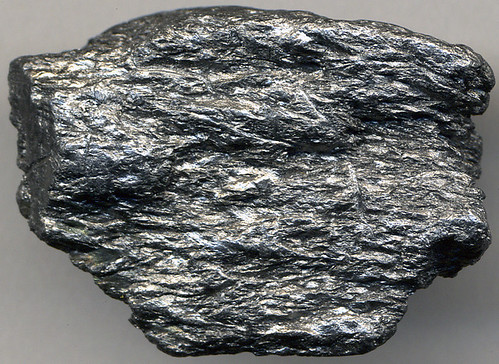
The Atomic Architecture of Graphite
Graphite is a crystalline allotrope of carbon, distinguished by its unique layered structure. Each layer, known as graphene, consists of carbon atoms bonded in a hexagonal lattice with bond lengths of approximately 0.142 nanometers. These layers are stacked in an ABAB... sequence, with van der Waals forces holding them together, resulting in a distance of about 0.335 nanometers between layers.
This weak interlayer bonding is fundamental to graphite's characteristic properties. It allows the layers to slide past each other with minimal resistance, making graphite a highly effective solid lubricant. Furthermore, the delocalized pi electrons within the graphene layers are responsible for graphite's exceptional electrical conductivity, which is anisotropic, meaning it is much higher parallel to the layers than perpendicular to them.
Graphite is the most thermodynamically stable form of carbon under standard conditions, a testament to its robust atomic arrangement.
Historical Context and Industrial Evolution
The discovery and utilization of graphite date back centuries. Early uses included marking tools and crucibles due to its softness and heat resistance. Its industrial significance surged with the advent of the Industrial Revolution and the development of new technologies.
The invention of the pencil in the late 18th century, using graphite mixed with clay, made it a household item. Later, its electrical conductivity led to its use in early electrical devices, such as brushes in electric motors and generators. The 20th century saw graphite become indispensable in high-temperature applications like refractories for steel production and in nuclear reactors as a moderator.
More recently, the demand for graphite has exploded with the rise of lithium-ion batteries, transforming it into a critical material for the global energy transition.
The Indispensable Role of Graphite in Modern Industry
Graphite's combination of properties makes it a cornerstone material across a vast spectrum of industries. Its primary application, accounting for about 50% of its consumption, is in refractories, where its thermal stability and chemical inertness are vital for lining furnaces and kilns used in metal smelting and glass manufacturing. The burgeoning electric vehicle market has propelled lithium-ion batteries to become the second-largest consumer (18%), where graphite serves as the anode material, facilitating the storage and release of lithium ions.
Foundries utilize graphite for molds and as an additive to molten metal (10%), while its lubricating properties are leveraged in various industrial applications (5%). Other significant uses include pencils, carbon brushes, electrodes, and even components in aerospace and defense.
Graphite's Transformative Potential and Future
The versatility of graphite extends to cutting-edge research and development. Its two-dimensional counterpart, graphene, derived from graphite, possesses extraordinary strength, flexibility, and conductivity, promising revolutionary advancements in electronics, materials science, and medicine. Graphite itself continues to be explored for advanced applications, including high-temperature superconductors and as a component in novel composite materials.
The conversion of graphite to diamond under extreme pressure and temperature, though not a common industrial process, highlights the dynamic nature of carbon allotropes. As global demand for energy storage and advanced materials grows, graphite's importance is set to increase, driving innovation in both its extraction and application.
Go deeper
Frequently Asked Questions
What is graphite and why is it called "slippery black stuff"?+
How does graphite help pencils write?+
Why is graphite good for batteries in electric cars?+
Where do people use graphite in factories and metal making?+
What is graphene and how is it related to graphite?+
Based on content from Wikipedia · Licensed under CC BY-SA 4.0