

The Brothers Grimm: Story Wizards!
Images
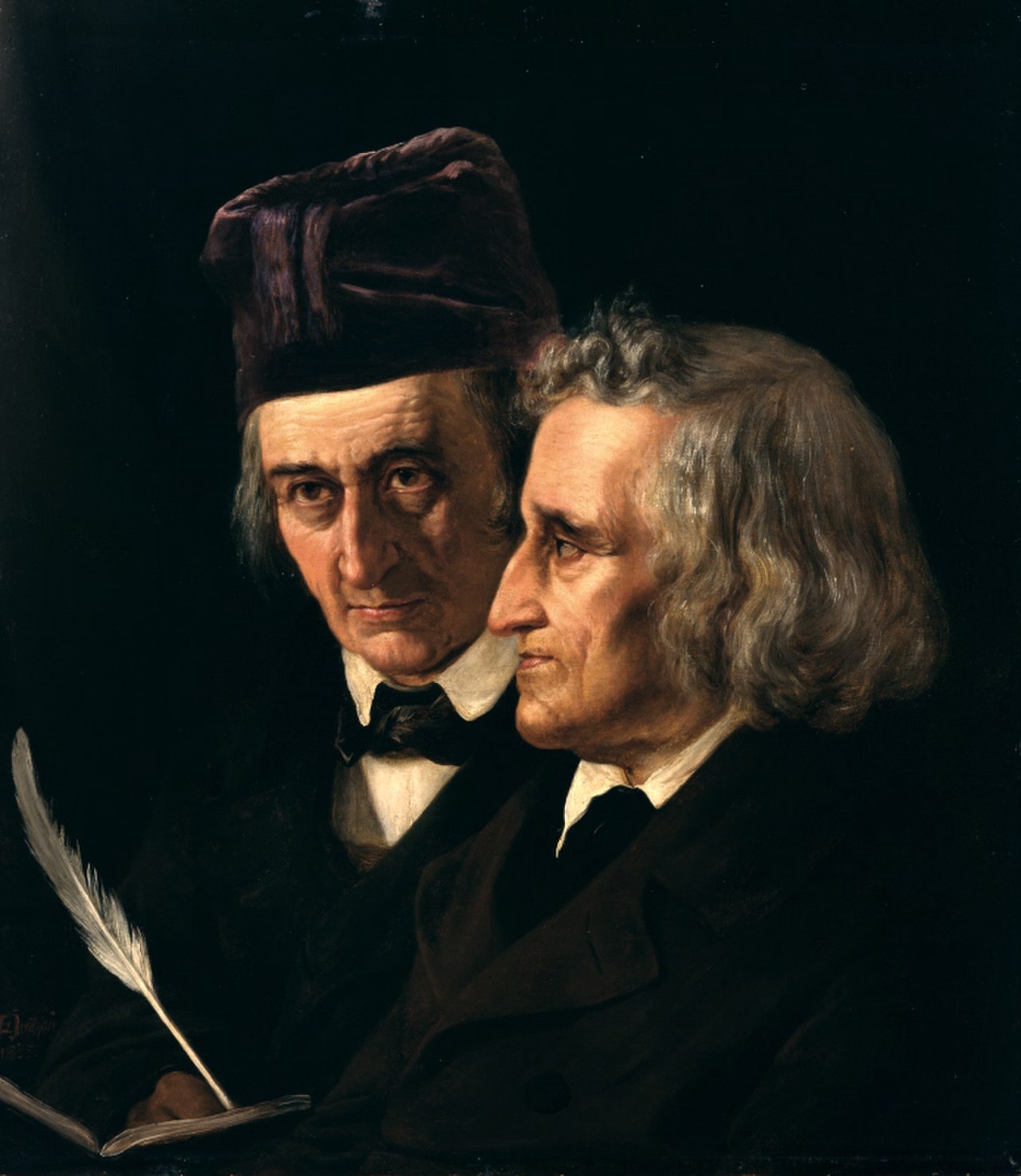
Brothers Grimm
Scholarly Pursuits Amidst Personal Hardship
Jacob (1785–1863) and Wilhelm (1786–1859) Grimm were German academics whose lives were deeply intertwined with the collection and study of folklore. Born in Hanau, their formative years were marked by significant poverty following their father's death in 1796. This early adversity likely fueled their determination and scholarly rigor.
Both brothers attended Marburg University, where their academic curiosity, particularly in German linguistics and history, evolved into a profound dedication to preserving what they considered the pure essence of national literature and culture: folk tales. Their work emerged during the Romantic era, a period that fostered a renewed interest in national heritage and traditional narratives, providing fertile ground for their ambitious project.
The Genesis and Evolution of 'Children's and Household Tales'
The Brothers Grimm's most celebrated achievement is their collection, 'Kinder- und Hausmärchen' (Children's and Household Tales), first published in 1812. This was not an act of invention but a meticulous scholarly endeavor to document oral traditions. They employed a systematic methodology for collecting and recording stories, which became foundational for the nascent field of folklore studies.
Their collection was not static; it underwent numerous revisions and expansions between 1812 and 1857. What began with 86 stories grew to over 200, with the Grimms carefully editing, annotating, and sometimes harmonizing the narratives. This iterative process, driven by a desire for scholarly accuracy and cultural preservation, shaped the versions of tales like 'Cinderella' (Aschenputtel), 'The Frog Prince,' and 'Hansel and Gretel' that have become globally recognized.
Enduring Cultural Resonance and Adaptations
The influence of the Brothers Grimm's collected tales extends far beyond their original publication. Their work has been translated into more than 100 languages, making these stories a cornerstone of global children's literature and cultural heritage. Renowned filmmakers, including Lotte Reiniger and Walt Disney, have drawn inspiration from their collections, adapting tales such as 'Snow White and the Seven Dwarfs' into iconic cinematic works.
The enduring appeal lies in the stories' exploration of universal human experiences-morality, justice, transformation, and the struggle between good and evil. While the Grimms themselves edited out some of the more violent or sexual elements from earlier versions, the tales continue to be analyzed for their psychological depth and cultural significance.
A Broader Scholarly Legacy Beyond Fairy Tales
The Brothers Grimm's intellectual contributions were multifaceted and extended well beyond their famous fairy tale collections. They were accomplished scholars of Germanic philology and mythology, publishing significant works on these subjects. Perhaps their most ambitious, yet unfinished, project was the 'Deutsches Wörterbuch' (German Dictionary), which they began in 1838.
This monumental undertaking aimed to document the entire history and usage of the German language. Although they were unable to complete it during their lifetimes-it was finished over a century later-their work on the dictionary was a pioneering effort in historical lexicography. Their collective efforts established them as central figures in 19th-century German scholarship and laid crucial groundwork for modern linguistics and folklore studies.
Go deeper
Frequently Asked Questions
Who were the Brothers Grimm and what did they do?+
How many stories did they start with and how many did they end up with?+
Why did the Brothers Grimm want to collect stories?+
In what ways have the Grimm stories been used today?+
What other big project did the Grimms work on besides fairy tales?+
Based on content from Wikipedia · Licensed under CC BY-SA 4.0