

The Book of Isaiah
Images
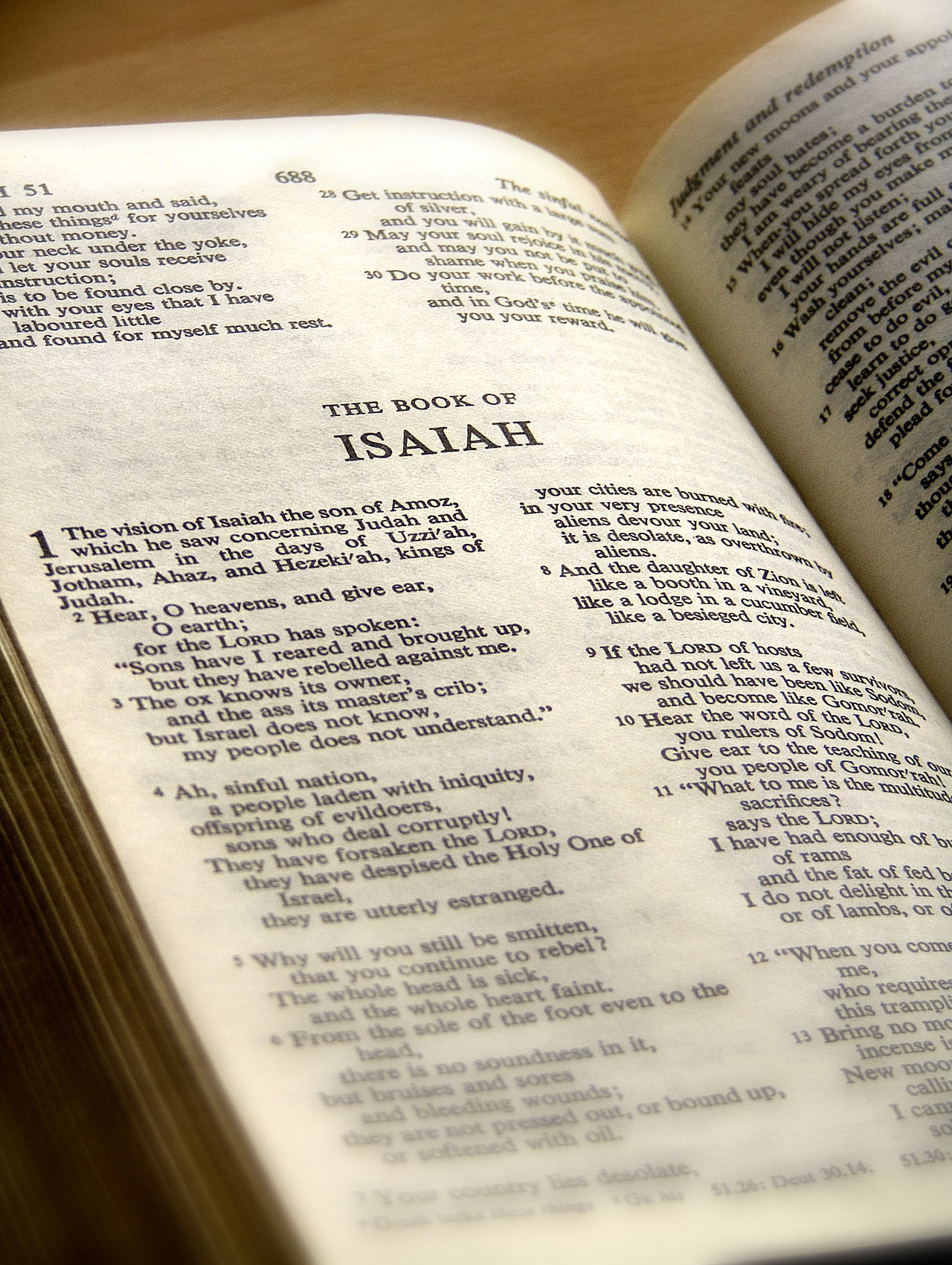
Full Book of Isaiah 2006-06-06


The Documentary Hypothesis and Isaiah's Structure
The Book of Isaiah presents a fascinating case study in textual criticism and the evolution of prophetic literature. While traditionally attributed solely to Isaiah ben Amoz (8th century BC), scholarly consensus, largely shaped by figures like Duhm, posits a composite authorship. This 'documentary hypothesis' typically divides the book into three major strata: Proto-Isaiah (chapters 1-39), reflecting the historical Isaiah's ministry against the backdrop of Assyrian threats and internal corruption in Judah; Deutero-Isaiah (chapters 40-55), characterized by its distinct theological themes, elevated poetic style, and context of the Babylonian Exile; and Trito-Isaiah (chapters 56-66), a later collection incorporating post-exilic concerns and a broader vision of inclusivity.
This multi-layered composition raises questions about textual transmission, editorial shaping, and the development of prophetic tradition over centuries, though more recent scholarship also explores the possibility of underlying thematic unity and intentional literary design across these divisions.
Theological Currents
The theological tapestry of Isaiah is rich and complex, weaving together themes of divine judgment, the absolute holiness of God, and the ultimate restoration of Israel and the nations. Isaiah critiques corrupt leadership and social injustice, grounding righteousness not merely in covenant observance but in the transcendent holiness of Yahweh. The book grapples with the consequences of Israel's sin, prophesying both destruction and exile, yet consistently points towards a future of redemption and renewed covenant.
Deutero-Isaiah, in particular, emphasizes God's sovereign power, His unwavering faithfulness, and His plan to establish Jerusalem as a 'light to the nations.' This section reinterprets the concept of exile not as abandonment but as a prelude to a grander, universal salvation, where God's rule will be recognized by all peoples, often mediated through a Davidic servant figure.
Messianic Prophecy and Historical Agents
Isaiah is renowned for its profound messianic prophecies, which have deeply influenced both Jewish and Christian eschatology. The figure of the 'Suffering Servant' in Deutero-Isaiah (chapters 52-53) is particularly poignant, depicting a righteous individual who bears the iniquities of others to bring about atonement and healing. Beyond this enigmatic figure, the book also speaks of a future king, often identified with the Davidic line, who will rule with justice and righteousness.
Interestingly, Deutero-Isaiah identifies Cyrus the Great, the Persian conqueror, as an agent of Yahweh, a 'shepherd' tasked with rebuilding Jerusalem and restoring the exiles. This highlights a sophisticated understanding of divine providence, where God works through historical figures and political events, even those seemingly secular or foreign, to achieve His ultimate purposes and demonstrate His supreme authority over all empires.
Enduring Cultural and Literary Resonance
The Book of Isaiah's impact extends far beyond its religious context, permeating Western literature, art, and language. Its poetic grandeur and prophetic pronouncements have inspired countless works, from Handel's 'Messiah' libretto, which draws heavily on Isaiah's prophecies of hope and redemption, to modern literary and philosophical discourse. Common idioms such as 'swords into ploughshares,' 'a voice in the wilderness,' and 'shelter from the storm' are direct legacies of Isaiah's powerful imagery.
During the Second Temple period, it was a highly influential text for Jewish communities, and its adoption into the Christian canon as 'the Fifth Gospel' underscores its perceived theological depth and predictive significance. Its exploration of justice, suffering, redemption, and universal peace continues to resonate, making it a text of perennial relevance.
Scholarly Debates and Textual Integrity
While the multi-authored hypothesis remains dominant, contemporary scholarship also engages with the question of the book's essential unity. Researchers are exploring how the different strata might cohere thematically or intentionally, perhaps through editorial processes that sought to create a unified prophetic message spanning centuries. The precise dating of Deutero- and Trito-Isaiah, and the relationship between their authors and the original Isaiah tradition, are subjects of ongoing debate.
Furthermore, the discovery of the Great Isaiah Scroll among the Dead Sea Scrolls, dating to the Second Temple period, provides invaluable insight into the text's ancient form and transmission. This scroll, largely consistent with the Masoretic Text, demonstrates the antiquity and stability of much of the book's content, even as scholarly analysis continues to probe its complex origins and development.
See also
Frequently Asked Questions
What is the Book of Isaiah?+
Who wrote the Book of Isaiah?+
What are the three parts of Isaiah?+
What is the Suffering Servant in Isaiah?+
How does Isaiah talk about future leaders or kings?+
Based on content from Wikipedia · Licensed under CC BY-SA 4.0