

Boeing X-37: The Secret Space Plane!
Images

HL-10 Lifting Body and B-52 Flyover (Public Domain)



Genesis and Evolution
The Boeing X-37 Orbital Test Vehicle (OTV) represents a significant leap in the development of reusable spaceflight technology. Its origins trace back to 1999 when NASA initiated the project, envisioning a vehicle that could bridge the gap between traditional rockets and winged aircraft for space access. This early phase focused on demonstrating the fundamental principles of a reusable, robotic spaceplane.
However, in 2004, the program was transferred to the U.S. Department of Defense, specifically the Air Force, which recognized its potential for more advanced applications. The X-37 is not merely a scaled-up version of prior concepts; it is a 120-percent scaled derivative of the earlier Boeing X-40, indicating a substantial increase in size and capability.
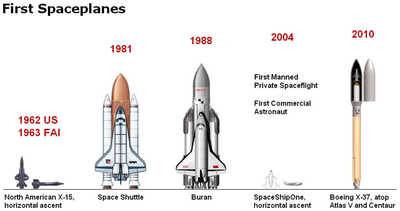
Its initial flight was a crucial drop test in 2006, validating its aerodynamic and landing characteristics. The program's trajectory shifted dramatically with its first orbital mission in April 2010, launched on an Atlas V rocket, marking its entry into operational spaceflight and setting the stage for increasingly ambitious missions.
Pioneering Extended Orbital Durations
The X-37's operational history is defined by its remarkable ability to remain in orbit for extended periods, far exceeding the duration of many previous robotic missions. While its initial orbital flight in 2010 lasted several months, subsequent missions progressively pushed these temporal boundaries. The fifth mission, notably launched on a SpaceX Falcon 9 rocket, achieved an unprecedented duration of 780 days.
This extended stay in space allowed for comprehensive testing of reusable space technologies and potentially for conducting complex experiments or observations that require prolonged exposure to the space environment. The sixth mission, launched on an Atlas V in May 2020, further shattered records, concluding in November 2022 after an astonishing 908 days in orbit. This represents nearly two and a half years of continuous operation in space, underscoring the robustness and reliability of the X-37's systems.
The seventh mission, launched in December 2023 on a Falcon Heavy, entered a highly elliptical orbit, demonstrating further operational flexibility.
Strategic Significance
The Boeing X-37's significance extends beyond its technical achievements; it plays a crucial role in advancing national security and space exploration capabilities. Operated by the Department of the Air Force Rapid Capabilities Office in collaboration with the United States Space Force, its missions are inherently tied to the development and demonstration of reusable space technologies. The ability to launch, operate in space, and then land a vehicle for reuse offers substantial advantages in terms of cost-effectiveness and operational flexibility compared to expendable launch systems.
The extended orbital durations allow for in-depth testing of advanced payloads, sensors, and operational concepts that are vital for maintaining a strategic advantage in space. While the specific objectives of many X-37 missions remain classified, its role in testing technologies that could support future space-based defense systems, reconnaissance, or rapid deployment capabilities is widely acknowledged. It serves as a critical testbed for innovations that will shape the future of space operations.
Operational Profile
The operational cycle of the Boeing X-37 is a testament to sophisticated engineering, seamlessly integrating rocket launch, orbital maneuvering, and atmospheric re-entry. Initially, the X-37 is integrated with a launch vehicle, such as the Atlas V or Falcon 9, which propels it into Earth's orbit. Once in space, it functions as an autonomous spacecraft, capable of executing mission objectives without direct human piloting.
Its design allows for orbital adjustments and sustained flight. The return to Earth is a critical phase: the X-37 re-orients itself and initiates re-entry into the atmosphere. Unlike a ballistic re-entry, the X-37's aerodynamic configuration enables it to glide.
This controlled descent allows it to manage its speed and trajectory, culminating in a runway landing, similar to a conventional aircraft. This landing capability is paramount to its reusability, enabling ground crews to inspect, maintain, and prepare the vehicle for subsequent missions, thereby demonstrating a practical and efficient model for future space access.
See also
Frequently Asked Questions
What is the Boeing X-37?+
Why does the X-37 stay in space for so long?+
How does the X-37 get into space?+
Where does the X-37 land after its missions?+
What is special about the X-37's missions?+
Based on content from Wikipedia · Licensed under CC BY-SA 4.0