

BMX Bikes: Zooming and Flipping!
Images

BMX


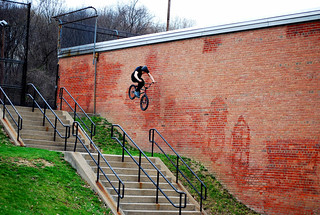


The Genesis of BMX
The emergence of BMX in the early 1970s was a testament to youthful ingenuity and a desire to emulate the excitement of motorcycle motocross. In Southern California, a generation of cyclists, captivated by the speed and daring of motocross stars, began adapting their bicycles to mimic the experience. This wasn't a top-down development; it was a grassroots movement driven by necessity and creativity.
Riders sought out suitable terrain, often dirt tracks and makeshift courses, and began modifying their bikes. They sought smaller, more robust frames, narrower handlebars for better control, and crucially, smaller wheels, typically 20-inch diameter, which offered superior agility and a lower center of gravity essential for the dynamic maneuvers they envisioned. This period was characterized by experimentation, with riders often building and customizing their own machines.
The sport’s early growth was fueled by informal races and gatherings, fostering a strong sense of community and a culture of self-reliance that continues to define BMX today. The transition from modified bicycles to purpose-built BMX frames solidified its identity as a distinct cycle sport.
Engineering for Extremes
The evolution of BMX bikes is a story of engineering focused on extreme performance and durability. The core design emphasizes a compact, robust frame, typically made from chromoly steel or aluminum alloys, capable of withstanding immense forces generated during jumps, landings, and impacts. The 20-inch wheel size remains a defining characteristic, providing a balance between stability and maneuverability, crucial for both the explosive acceleration of racing and the intricate control required for freestyle tricks.
Many BMX bikes are single-speed, simplifying the drivetrain to reduce weight and minimize potential points of failure, a critical consideration in high-impact sports. Modern BMX bikes often feature specialized components like sealed bearings for smoother rotation, robust cranksets, and durable tires designed for specific riding surfaces, whether it's the loose gravel of a race track or the smooth concrete of a skatepark. The geometry of the frame, including the head tube angle and chainstay length, is meticulously designed to optimize handling for specific disciplines, whether it’s the aggressive stance needed for racing or the balanced position for aerial tricks.
BMX Disciplines
BMX has diversified into a rich tapestry of disciplines, each demanding a unique skill set and approach. BMX Racing is a highly competitive, sprint-like event contested on purpose-built tracks featuring a series of obstacles including jumps, rollers, and banked turns. Riders utilize explosive power and tactical racing lines to achieve speeds exceeding 30 mph.
This discipline is recognized as an Olympic sport, highlighting its athletic rigor. Freestyle BMX, conversely, is an artistic and acrobatic pursuit focused on executing complex tricks and maneuvers. It further subdivides into several categories: Park, performed in skateparks with ramps, bowls, and rails; Street, utilizing urban architecture like stairs, ledges, and handrails; Dirt, involving jumps constructed from soil; and Vert, performed on half-pipe ramps.
Each freestyle discipline requires a profound understanding of balance, airtime, and bike manipulation, pushing the boundaries of human and mechanical capability. The common thread across all BMX disciplines is the rider's intimate connection with their machine and the environment.
The Enduring Cultural Significance of BMX
Beyond its athletic achievements, BMX has cultivated a powerful and enduring subculture that extends far beyond the confines of competition. It represents a lifestyle choice for many, emphasizing freedom, creativity, and a rejection of conventional norms. The DIY ethos that characterized its origins continues to resonate, with riders often involved in building their own spots and fostering local riding communities.
BMX has influenced fashion, music, and visual arts, becoming a significant element of youth culture globally. Its accessibility, relative to some other action sports, has allowed it to permeate diverse socioeconomic backgrounds, creating a broad and inclusive community. The sport's inclusion in major events like the Olympics has brought it mainstream recognition, yet it retains its core identity rooted in passion, perseverance, and the sheer joy of riding.
BMX continues to evolve, with riders constantly innovating and redefining what is possible on two wheels, ensuring its relevance for future generations.
See also
Frequently Asked Questions
What is a BMX bike and why do people like it?+
How did BMX bikes start in California?+
Why do BMX bikes have 20-inch wheels?+
What are the different kinds of BMX sports?+
How do BMX bikes stay strong for tricks and races?+
Based on content from Wikipedia · Licensed under CC BY-SA 4.0