

Blue Mountains (New South Wales)
Images
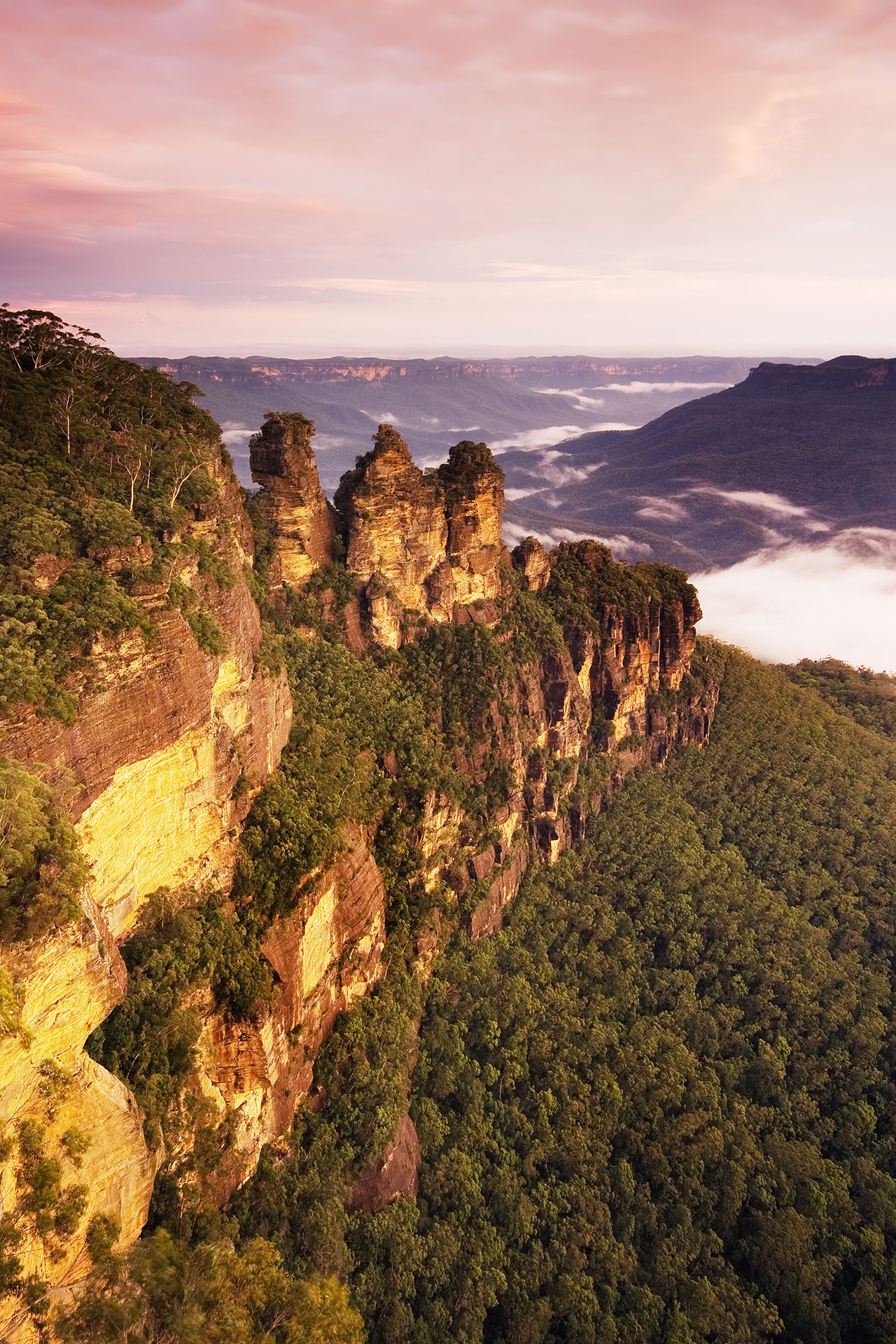
Three Sisters Sunset


Geological Grandeur and Atmospheric Phenomena
The Blue Mountains are not a singular, sharp range but rather a vast plateau dissected by deep river valleys, forming a significant portion of the Great Dividing Range. Geologically situated within the central Sydney Basin, the region is characterized by sandstone escarpments and mesas. The defining feature, the eponymous blue haze, is a result of volatile organic compounds released by the abundant eucalyptus forests.
These compounds scatter sunlight, particularly the blue wavelengths, creating a distinct atmospheric optical phenomenon visible from afar. This unique visual characteristic has captivated observers for centuries and is intrinsically linked to the region's ecological identity. The range extends approximately 96 kilometers (60 miles) from the Wolgan Gap area to Emu Plains, with major transport routes like the Great Western Highway and the Main Western railway line traversing its core.
Pioneering Expeditions and Colonial Expansion
Historically, the Blue Mountains presented a formidable barrier to European colonial expansion westward from Sydney. Considered impassable by early settlers, the region’s rugged terrain and dense vegetation deterred exploration for decades. The pivotal moment arrived in 1813 with the expedition led by Gregory Blaxland, William Wentworth, and William Lawson.
Their arduous journey successfully navigated the plateau, opening a viable route into the interior. This expedition was not merely a geographical achievement; it was a critical catalyst for the pastoral and agricultural development of New South Wales, fundamentally altering the colony's trajectory and enabling further settlement and resource exploitation.
Ecological Significance and Environmental Challenges
The Blue Mountains region is recognized for its significant biodiversity, including unique forest communities such as the Blue Mountains and Southern Highlands Basalt Forests. These ecosystems support a rich array of flora and fauna, many of which are endemic. However, the region faces considerable environmental pressures.
The increasing frequency and intensity of bushfires, particularly in the early 2010s, have had devastating impacts on both the natural landscape and human infrastructure. These events underscore the ecological fragility of the area and the challenges of managing a landscape prone to extreme weather phenomena, necessitating adaptive conservation strategies and robust fire management protocols.
Contemporary Life and Cultural Identity
Today, the Blue Mountains are a popular destination, attracting millions of visitors annually, with 8.4 million recorded in 2018 alone. The region encompasses the City of Blue Mountains local government area, comprising several established towns like Katoomba, Blackheath, and Springwood, which are situated on the plateau's heights. These communities blend residential living with tourism and local industries.
The area's cultural identity is shaped by its natural beauty, its pioneering history, and the ongoing efforts to balance human habitation with environmental stewardship. The Blue Mountains serve as a vital recreational and ecological asset for the Greater Sydney region and a significant component of Australia's natural heritage.
See also
Frequently Asked Questions
What makes the Blue Mountains look blue?+
Why were the Blue Mountains hard for early settlers to cross?+
How did people finally cross the Blue Mountains?+
What kinds of plants and animals live in the Blue Mountains?+
What happens to the Blue Mountains during bushfires?+
Based on content from Wikipedia · Licensed under CC BY-SA 4.0